
Last updated November 15, 2026
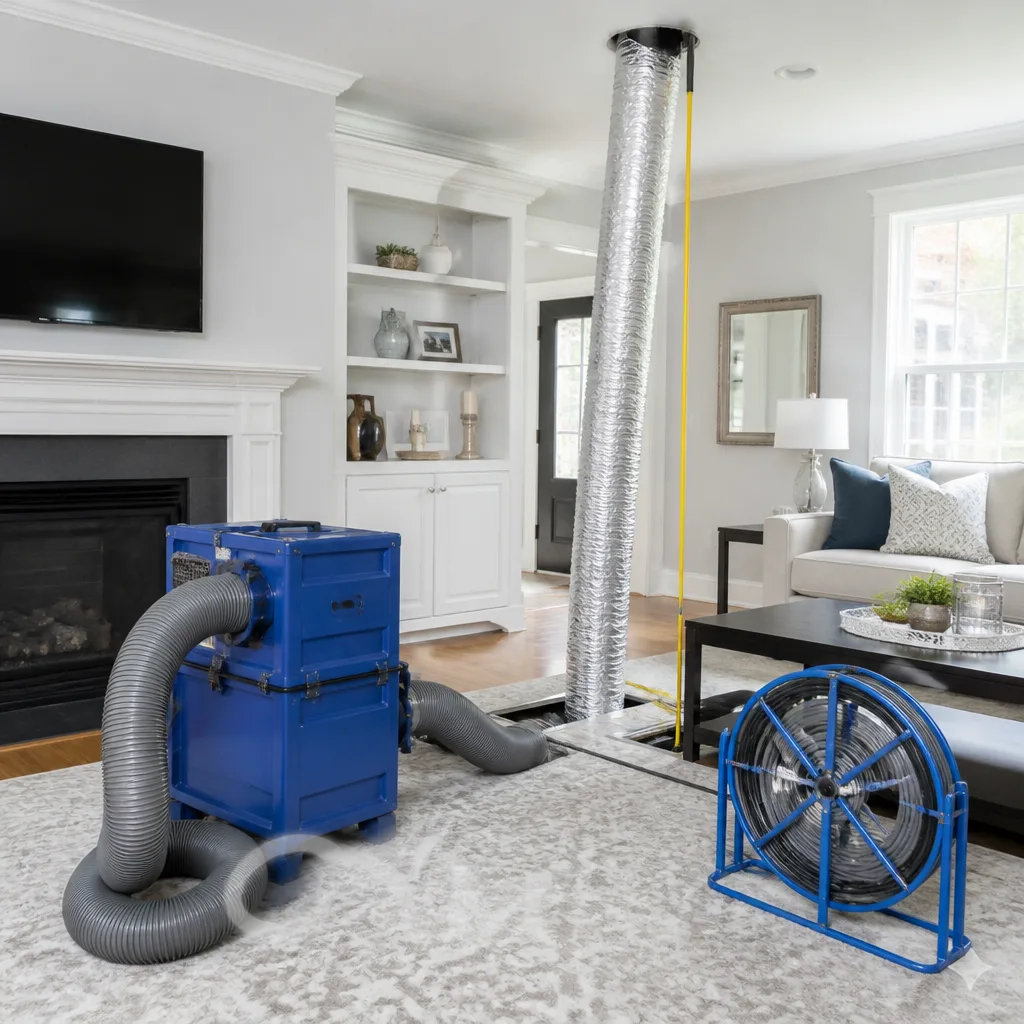 Whole-home duct cleaning
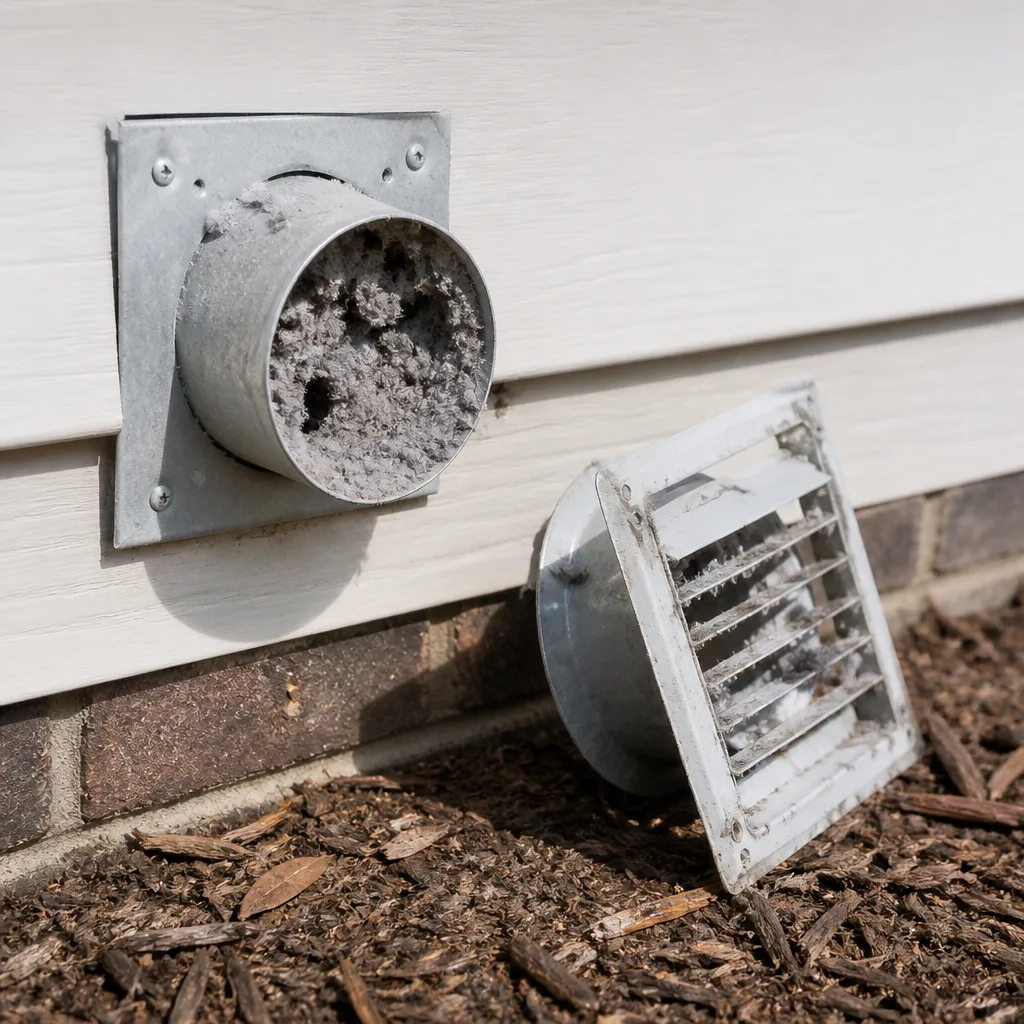 Dryer vent cleaning
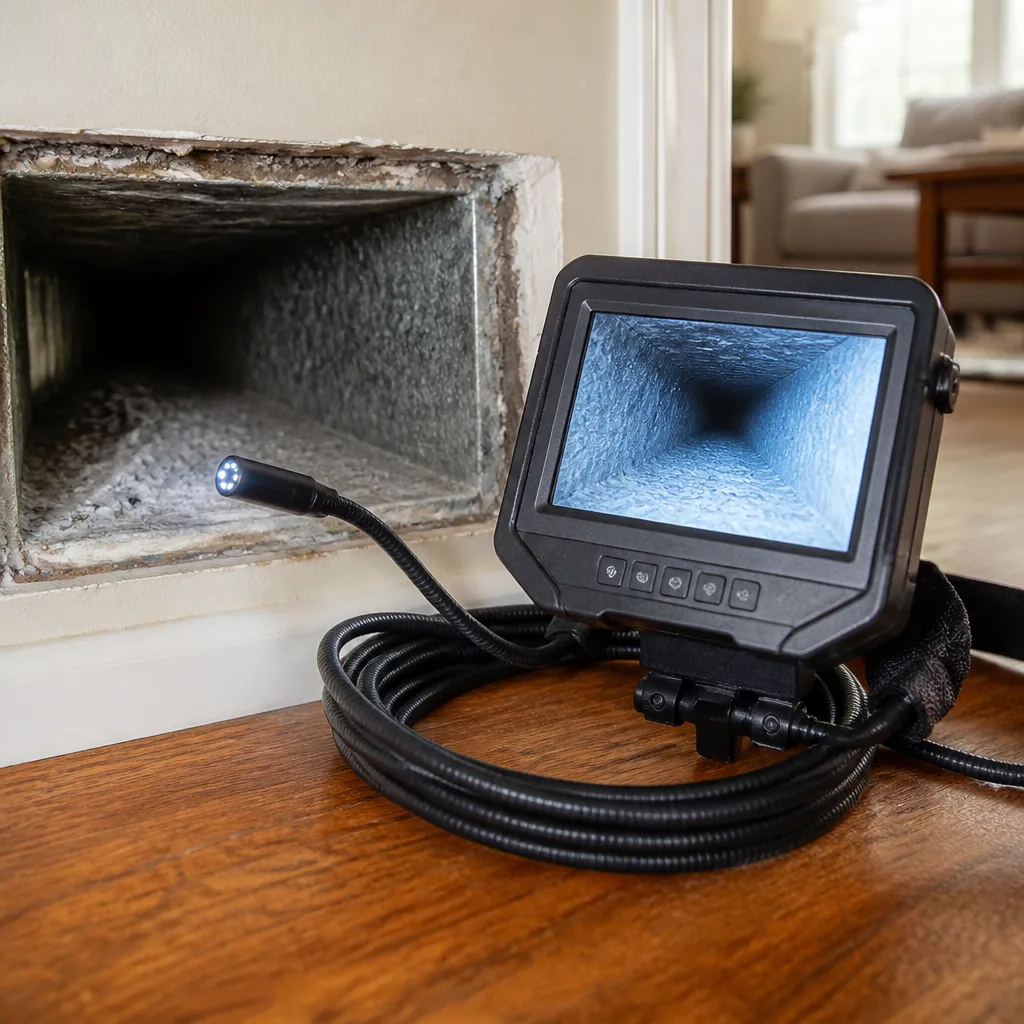 Camera inspection
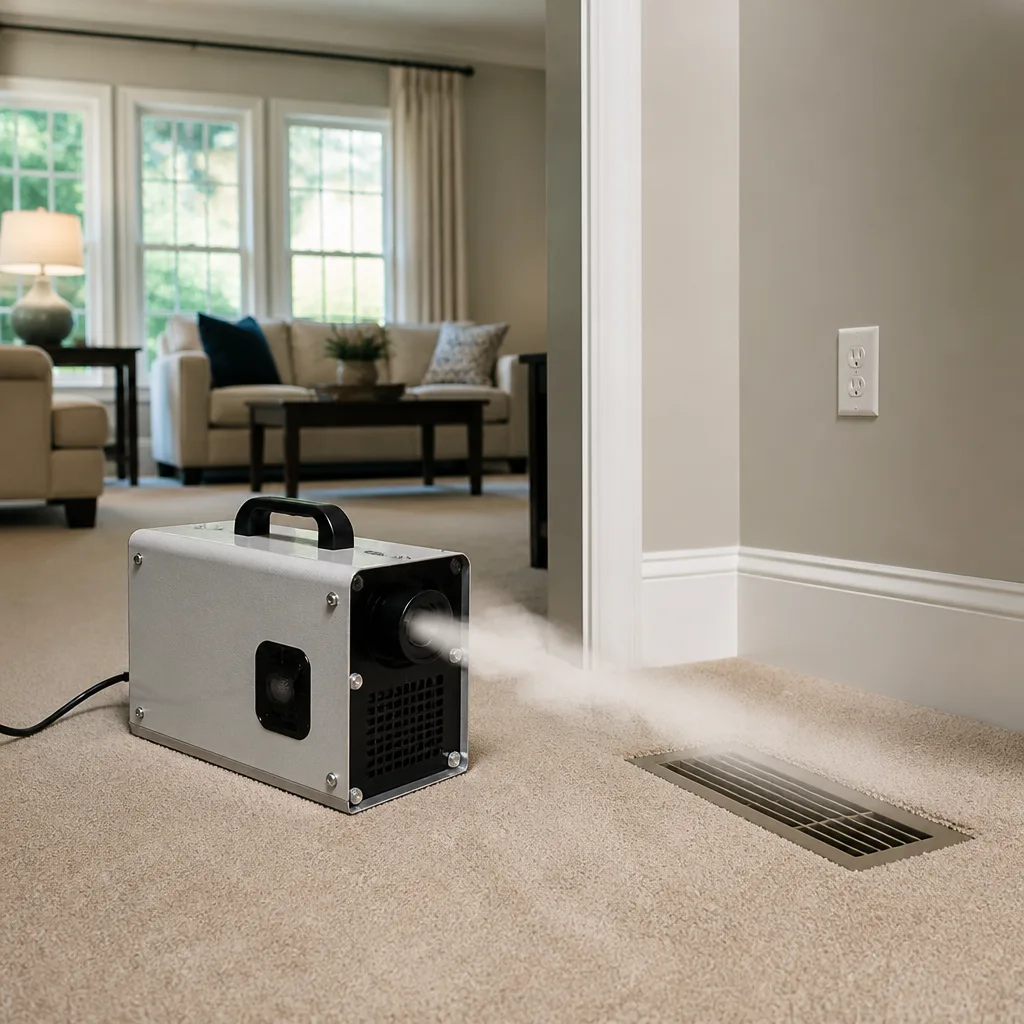 Sanitizing & deodorizing
Whole-system duct and dryer vent check with before-and-after photos - you see exactly what came out of your vents
That "$99 whole-house special" is a bait ad - the real number appears once they are in your hallway, or the "clean" is a shop-vac at the register. We photograph the inside of your ducts before and after instead.
Air Duct Cleaning Emergency Preparedness Guide for Tucson Homes
Most homeowners think of duct cleaning as routine upkeep, something to get around to eventually. That framing misses the point in Tucson. During a haboob, a home with a running HVAC system and a clogged filter is actively pulling fine particulate through every duct leak, every loose joint, every gap around a register boot. Ten minutes of preparation before the wall of dust arrives can prevent weeks of elevated indoor dust levels afterward. This guide walks through the specific protocols we recommend for dust storms, wildfire smoke events, and flash-flood moisture intrusion, plus how to document your system before emergency season starts so you have something concrete to work from. Tucson homeowners who understand how their ducts interact with these events get more out of their HVAC system and spend less on cleanup.
Quick Answer
Air duct cleaning after a major dust event in Tucson is worth scheduling when you can see visible dust accumulation at the registers, your filter loads up within days rather than weeks, or you notice increased dust settling on surfaces long after the storm has passed. For minor events, a filter change and a careful visual check are usually enough. For haboobs that push dense particulate into your home, or for smoke events that linger for days, a professional inspection and cleaning is the reliable way to confirm your ductwork is clean rather than just guessing that it is.
Styles & brands we work with
- Whole-home duct cleaning
- Dryer vent cleaning
- Camera inspection
- Sanitizing & deodorizing
Table of Contents
- The Pre-Haboob Protocol: What to Do Before the Dust Arrives
- Post-Haboob Inspection Checklist
- Wildfire Smoke Events and Your Duct System
- Flash Floods, Roof Leaks, and Duct Moisture Damage
- How to Document Duct Condition Before Emergency Season
- Filter Strategy for Tucson’s Dust and Smoke Seasons
- When Duct Repair Matters More Than Cleaning
- When in the Year to Schedule Professional Service
The Pre-Haboob Protocol: What to Do Before the Dust Arrives
A haboob is not a slow-moving weather system you can react to over the course of a day. It arrives with a wall of dust that can cut visibility to near zero within minutes. By the time you see it on the horizon, you have roughly the window you need to close windows, shut the HVAC system down, and swap a filter. That window matters enormously for what your ductwork looks like afterward.
Here’s the sequence we recommend, in order of priority:
- Shut down the HVAC system completely. Turn the thermostat to “off,” not just to a lower setpoint. A running air handler is actively pulling air into the return, and if the return is pulling dust from a house full of open windows, everything that dust encounters gets coated. Stopping the fan stops the draw.
- Close every exterior door and window. Sounds obvious, but the reality of a fast-moving haboob is that people leave windows cracked during a hot afternoon and can’t close them fast enough. Closing them before the wall arrives prevents the pressure-driven dust intrusion that fills a house in minutes.
- Swap in a fresh filter before the storm, not after. A new filter catches more dust during the event itself. A filter that was already loaded with dust from the previous week will pass far more particulate through to the ductwork and the coil. If you don’t have a fresh filter on hand, pull the current one out and put in whatever you have, even if it’s not the ideal MERV rating for your system. A clean filter of modest rating outperforms a dirty filter of high rating during a dust event.
- Seal obvious entry points. Weatherstripping around exterior doors, gaps around window frames, and the space where exterior penetrations meet the wall. This is not the same as sealing ductwork, but reducing the mass of dust that enters the house directly reduces what the HVAC system has to contend with.
- Do not run a whole-house fan or swamp cooler during the event. Evaporative coolers push exterior air directly into the living space, and during a haboob that means pushing dust straight into the house. Whole-house fans pull air through the house at a high rate. Neither belongs running while the dust is in the air.
In our experience working on homes across Tucson, the homes that come through dust season with the cleanest ducts are the ones where the homeowner treated the pre-storm window as a checklist rather than an afterthought. It takes maybe ten minutes, and it’s the difference between cleaning a filter and cleaning the whole system. If your ducts haven’t been serviced in a while and you’re going into dust season with an unknown baseline, scheduling air duct cleaning before the storms arrive puts you on solid footing.
Post-Haboob Inspection Checklist
Once the dust has settled, the question is whether your system pulled exterior particulate into the ductwork and, if it did, whether that contamination warrants professional cleaning or just a filter change. The honest answer is that it depends on the severity of the event and the condition of the system going in. Here’s how to assess it.
Start with a visual inspection you can do yourself. Walk through the house and look at each supply register. Shine a flashlight into the register boot if you can. What you’re looking for is a visible layer of fine, light-colored dust on the interior surfaces of the duct beyond the grille. Some surface dust is normal. A noticeable coating after a dust event is a signal worth acting on.
Next, check the filter. The question is not just whether the filter is dirty but how quickly it got dirty. A filter that would normally last several weeks loading up within a few days of the storm is telling you the system saw an unusually high particulate load. Pull the filter and hold it up to a light. If light passes through only in patches, it’s done.
Then check the return grille and the space immediately around the air handler. In many Tucson homes, the return is in a central hallway or a mechanical closet, and that’s where dust concentration will be highest. Look for accumulation on the return grille itself, on the blower wheel if you can see it, and on the evaporator coil access panel.
What threshold warrants professional cleaning versus a filter change alone? As a practical rule:
- Filter change alone is reasonable if the filter loaded up but the registers show only light dust, the return is not visibly coated, and you didn’t run the system during the event.
- Professional cleaning is worth considering if the system ran during the event, if you see visible dust coating on duct interiors past the register boot, if the return is noticeably coated, or if you’re seeing dust settle on surfaces in the days after the storm even with a fresh filter.
- Inspection with a scope is the right move if you’re not sure. A camera inspection through the ductwork tells you what’s actually there instead of guessing.
The homes we see with the worst post-haboob contamination almost always share one trait: the HVAC was running during the storm with a filter that was already past due. If that describes your situation, an inspection is worth the time. Otherwise, a filter change and a careful look may be all you need.
Wildfire Smoke Events and Your Duct System
Wildfire smoke is a different challenge from dust. Dust is particulate, and much of it is large enough that a decent filter catches it. Smoke is made up of much finer particulate, along with the gases and volatile compounds that give it the smell people notice. That finer size means it passes through filters that would stop dust, and it can infiltrate a home through the same small gaps that let dust in. The duct system’s role here is less about catching smoke and more about not making the problem worse.
The first instinct for many homeowners during a smoke event is to close up the house and run the AC on recirculation. That’s a reasonable starting point, and it’s better than leaving windows open. But recirculation mode has limits. Recirculation reduces how much new exterior air enters the system, but it does not eliminate it. Buildings leak. The HVAC system itself draws a small amount of exterior air through gaps in the return path, and smoke can find its way in through the same paths. Recirculation also does nothing to clean the air already inside the house; it just moves it around.
Where the duct system becomes genuinely useful during a smoke event is when filtration is matched to the particle size. A standard MERV 8 filter is not rated to capture smoke particulate at high efficiency. A higher-MERV filter in the MERV 13 range is. Before you upgrade, though, check whether your system’s air handler can handle the added static pressure. Many residential systems are not designed for a thick high-MERV filter, and forcing one in can reduce airflow to the point that the coil freezes or the blower overheats. Brands like Honeywell and Aprilaire make whole-home filtration systems designed to handle higher-MERV media without choking airflow, and understanding those systems is part of the value of working with a specialist rather than a generalist.
Where duct inspection becomes warranted during smoke season is when you notice smoke odor persisting indoors after the event has passed, or when you see visible staining on the filter or duct surfaces that suggests sustained high-particulate exposure. Smoke odor absorbed into duct lining or into the dust sitting in the ductwork can linger for a long time. That is a situation where cleaning, not just filter replacement, makes the difference.
Flash Floods, Roof Leaks, and Duct Moisture Damage
Tucson’s monsoon season brings the opposite problem from dust: sudden, heavy rainfall that can overwhelm drainage in minutes. Most of that water stays outside, but roof leaks and wind-driven rain around flashing and vents do get into attics. When they do, the ductwork in the attic is at risk. This is one of the least understood and most consequential scenarios in this part of the country.
Attic duct runs in Tucson homes are often flex duct, sealed at the joints and connections with mastic or tape. Those connections are the weak point. A roof leak that drips onto a flex duct run, or moisture that migrates into the attic insulation and wets the duct wrap, creates a condition where the duct insulation holds moisture against the duct surface. Warm, dark, humid conditions inside a duct wrap are ideal for mold growth. The 48 to 72 hour window after a moisture event is the window where action actually prevents mold from establishing. After that, the remediation becomes substantially more involved.
The signs to check after a storm with heavy rain:
- Water staining on the ceiling below the attic, which tells you water got in near ductwork.
- A musty or damp smell that appears a day or two after the storm, which can indicate moisture in the attic or duct insulation.
- Condensation or water droplets on visible ductwork in the attic or mechanical closet.
- Visible water staining or dark spots on the exterior of flexible duct runs.
- Reduced airflow after a storm, which can indicate a duct connection that came loose or was damaged by water.
If you find evidence of moisture entry near ductwork, the correct next step is not to run the system harder to dry it out. It’s to stop the moisture source, inspect the affected duct section, and in many cases replace the affected run. Drying duct insulation in place is unreliable; replacing the damaged section is the definitive fix. This is also where separate duct repair service matters as opposed to cleaning around the problem. If a connection was loosened or a run was wetted and needs replacement, cleaning only kicks the can down the road.
How to Document Duct Condition Before Emergency Season
This is the part of emergency preparedness that almost nobody thinks to do, and it’s the part that pays off most when something actually goes wrong. If your home sustains contamination damage from a dust storm, smoke event, or moisture intrusion, and you want to make a claim or at least establish a baseline for what your system looked like before, you need documentation. Insurance companies and adjusters do not work from memory.
Before emergency season arrives, do the following:
- Photograph the accessible parts of your duct system. Open each register and photograph what you can see. Photograph the return grille and the air handler area. Photograph any visible attic duct runs. Date the photos. These baselines are what you compare against after an event.
- Record your current filter type, MERV rating, and change date. A simple note is enough. If you upgrade filters for smoke season, record that. If your system uses a Honeywell or Aprilaire filtration cabinet, note the model of media it takes.
- Keep your service records together. If your ducts were professionally cleaned at some point, keep the documentation. A dated cleaning record and before/after photos are strong evidence that the ducts were in a specific condition at a specific point in time.
- Note any known issues. If a duct run has a known loose connection, a known leak at the air handler, or a run you know is older and worn, write it down. These known issues become important context when assessing post-event damage.
- Do a baseline walkthrough in the spring, before dust and monsoon season. A short video walkthrough on a phone is enough. The point is to have a contemporaneous record, not a professional inspection report, though the latter is a stronger document if you can arrange it.
When a professional cleaning is performed, before-and-after photos of your own ducts are part of what a serious company provides. Those photos serve double duty: they confirm the work was actually done, and they become part of your documentation for the future. Professional-grade cleaning with systems from Rotobrush and Nikro produces visual results worth documenting. Negative-air equipment from Abatement Technologies with HEPA filtration is what we use when the ductwork is contaminated enough that containment matters.
Filter Strategy for Tucson’s Dust and Smoke Seasons
Filter choices in Tucson are not one-size-fits-all, and they change across the year. The right filter for dust season is different from the right filter for smoke season, and both are constrained by what your HVAC system can actually handle. Getting this right is the single cheapest form of duct protection you can buy.
For dust season, the priority is frequent changes with a filter that has enough loading capacity to make it a few weeks. A MERV 8 to MERV 11 filter changed on a disciplined schedule outperforms a MERV 13 filter that gets left in for six months and chokes the system. The dust in Tucson’s air during storm events is fine enough that standard pleated filters do a lot of work, and their capacity is the limiting factor. If your system has a 1-inch filter slot, plan on changing more often than the packaging suggests during dust season.
For smoke season, higher filtration matters more because particle size is finer. MERV 13 is the practical target if your system can handle it. Whether it can is a question for your HVAC technician, not a label on the filter. Central to this is static pressure: every filter adds resistance to airflow, and the system’s blower is sized for a range. If you want whole-home smoke filtration without compromising airflow, a dedicated filtration cabinet like those from Aprilaire or Honeywell is the correct solution. These systems use deeper media that filters better without the pressure penalty of a thick 1-inch filter.
Across both seasons, some basics apply. Change the filter on a schedule, not based on how dirty it looks, because the internal structure of a pleated filter loads in ways that aren’t always visible from the surface. Write the date on the filter frame when you install it. If you’re in a home where the return is central and serves the whole house, that one filter does all the work – keep it clean. And if you’ve just been through a major event, change the filter regardless of what the schedule says.
When Duct Repair Matters More Than Cleaning
Cleaning a duct system that has compromised connections, loose boots, or damaged flex runs is treating the symptom. In our experience, this is one of the most common things generalist HVAC companies gloss over: they clean the ducts, the homeowner sees a short improvement, and a few months later the same problems return because the leaks that let contamination in are still there. Air duct repair as a standalone service is a different skill set and worth pursuing when the evidence points to it.
Signs that repair matters more than cleaning:
- Rooms that never get adequate airflow despite the system running correctly, which can indicate a disconnected or crushed duct run.
- Visible gaps at register boots, loose mastic at joints, or tape that has failed on attic duct runs.
- Dust accumulating in specific rooms after a cleaning, which points to a leak drawing unfiltered air into the airstream.
- Higher energy bills without a corresponding change in usage, which can indicate conditioned air escaping into the attic or crawlspace.
- Post-flood visible damage to a duct run that cleaning won’t resolve.
The sequence matters: identify the leak, repair the duct, then clean if cleaning is warranted. Cleaning first and repairing after wastes some of the cleaning effort and is one of the reasons people sometimes report that a duct cleaning “didn’t stick.” Done in the right order, the result lasts. If you’re uncertain whether repair is needed, ask for a scope inspection of the system during the estimate. A professional duct company should be willing and equipped to look, not just quote.
Our technicians have up to 11 years of experience with this work, and we focus exclusively on air duct cleaning, dryer vent cleaning, and air duct repair. Some of that dryer vent cleaning work is a safety matter in itself – lint buildup is a leading cause of house fires, and it’s treated as a fire-safety service rather than a quick add-on. If your duct system has been through multiple dust seasons and has never been assessed for leaks and connections, that assessment belongs on the calendar.
When in the Year to Schedule Professional Service
The right time to schedule professional duct work in Tucson depends on what you’re preparing for. There are two natural windows into the year: before dust season and before the primary monsoon period. Each addresses a different risk.
Late spring, before the first major dust events, is the best time for a cleaning and inspection of the ductwork. You want a clean baseline going into dust season, which means a cleaning before the storms rather than after. A system that enters dust season clean tolerates the inevitable particulate load much better than one that enters the season already compromised. If you’re unsure whether a cleaning is needed, the pre-season inspection answers that question.
Early summer, before the heavier monsoon rains, is the natural window for inspection of attic duct runs and connections. This is also the right time to address any known duct repair issues, because a compromised duct run plus a wet attic creates the moisture-and-mold scenario discussed earlier. If a fixable duct connection is going to fail somewhere, better it fails before the wet season than during it.
After a major event (a haboob, a smoke event, a roof leak), the timing is immediate rather than scheduled. Post-dust cleaning is best done within a week or two of the event, while the contamination is still concentrated in the ductwork and hasn’t migrated to surfaces and soft goods throughout the house. Post-smoke inspection is worth doing if odor persists after the event has passed. Post-flood inspection is urgent, inside 48 to 72 hours of the moisture event.
For most Tucson homes, a single professional cleaning and inspection per year, timed before dust season, covers the baseline. If your home has specific vulnerabilities (a family member with asthma, a system that’s been through several events without service, or a known duct repair issue), a second inspection after monsoon season is worth considering.
See the difference
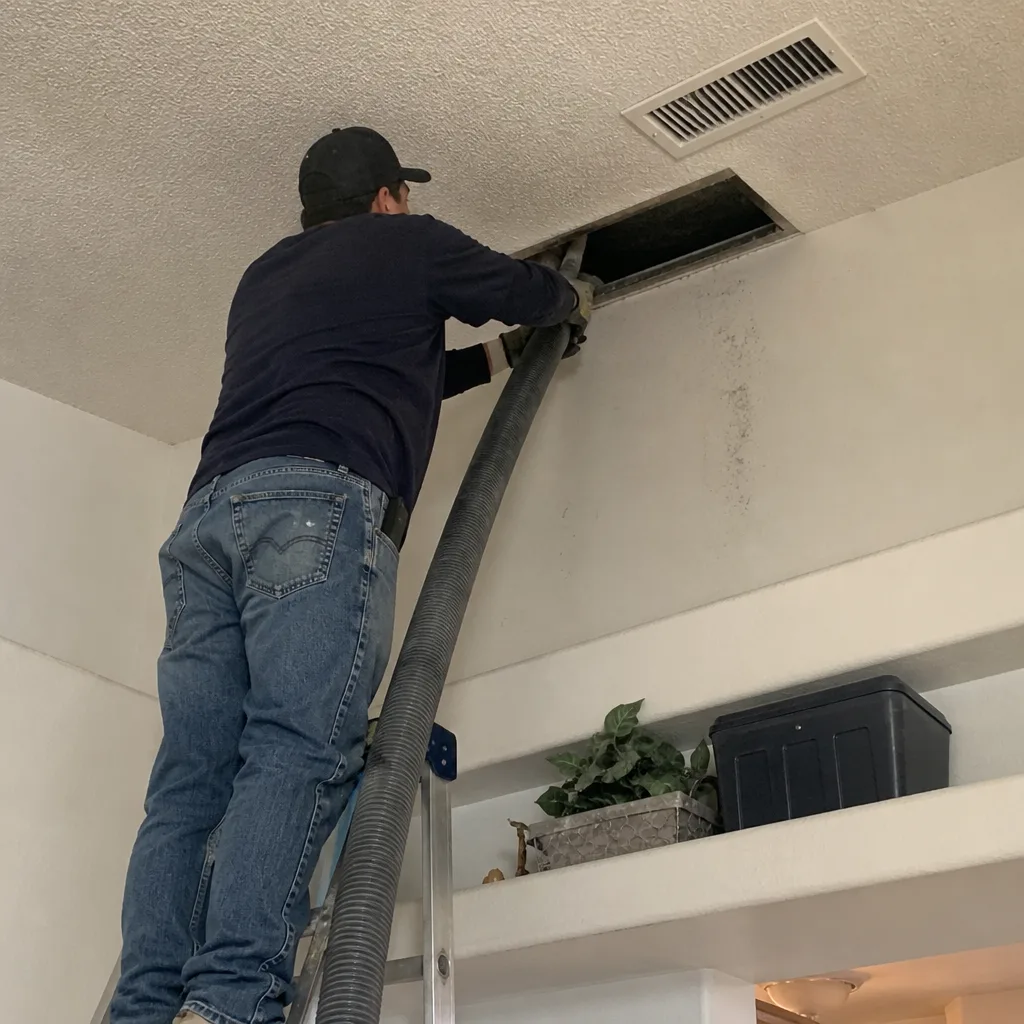 Before
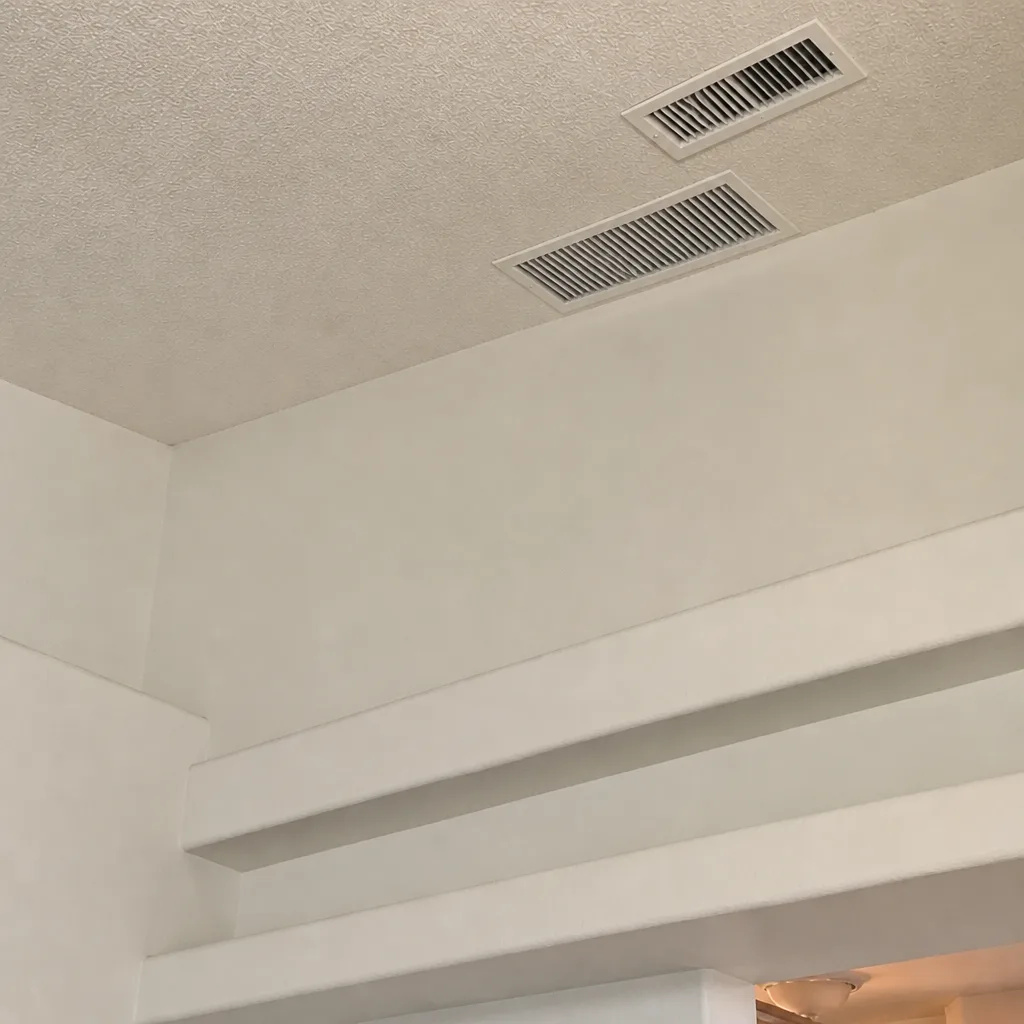 After
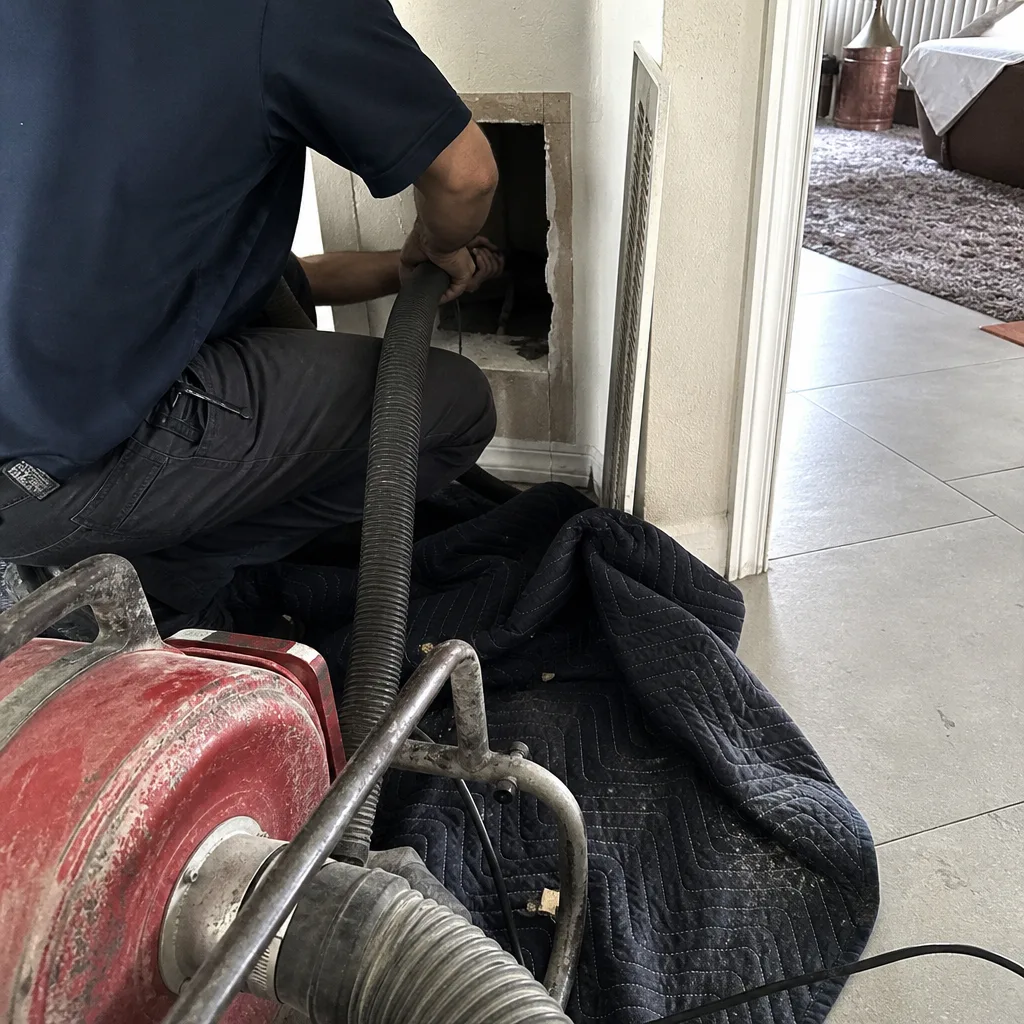 Before
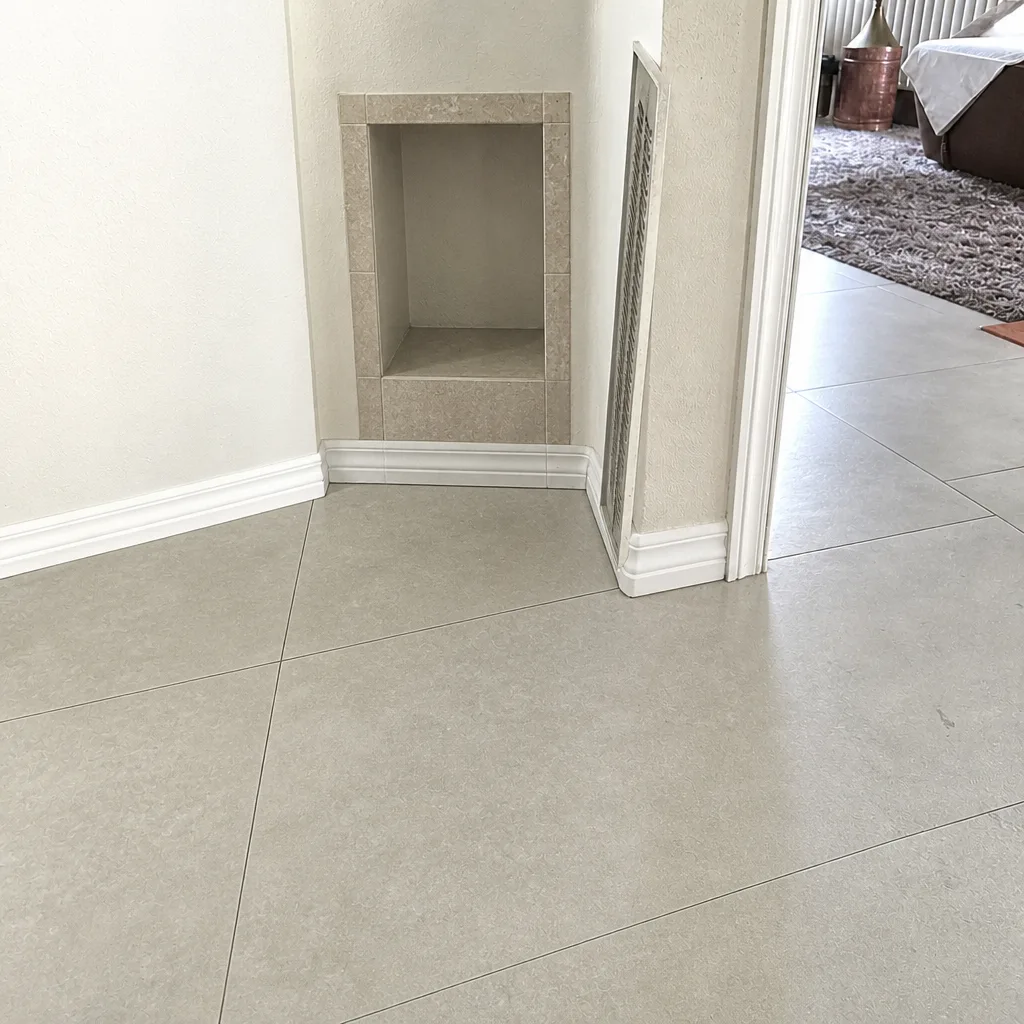 After
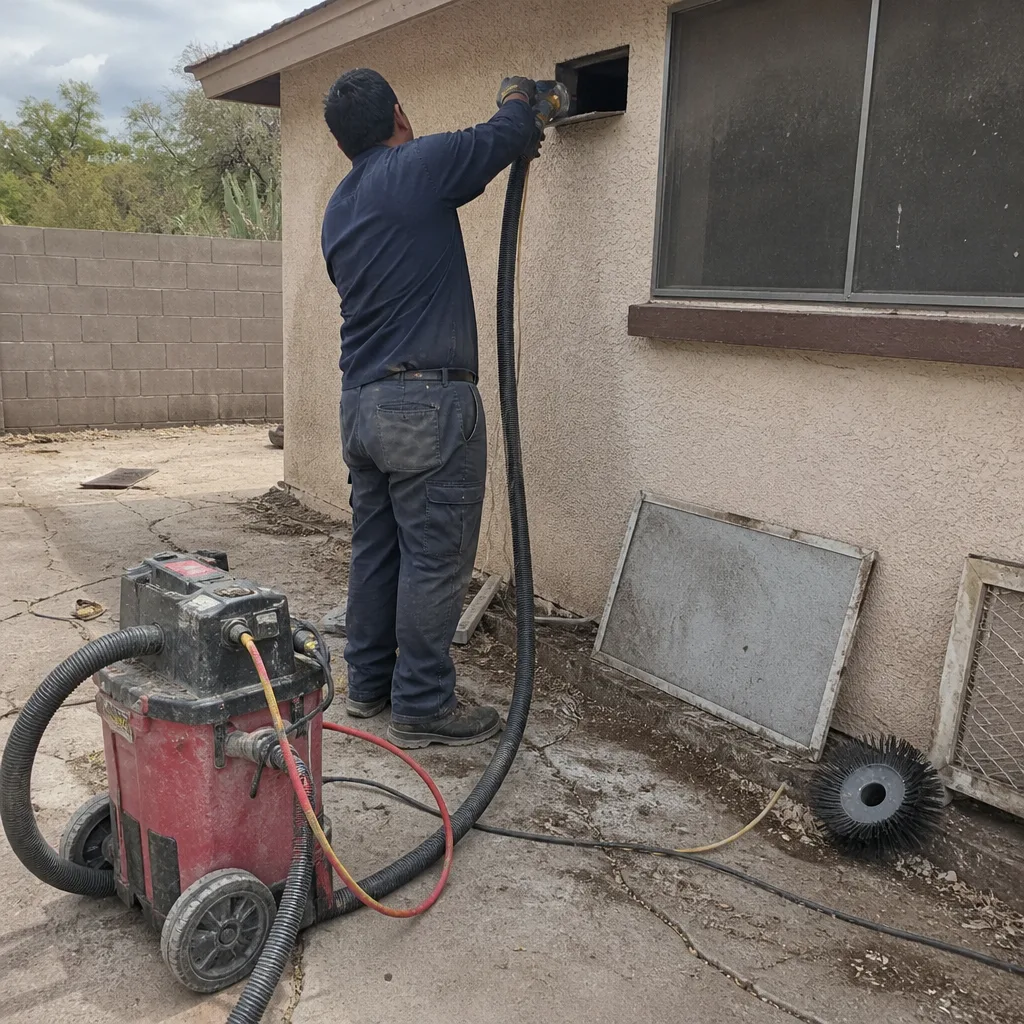 Before
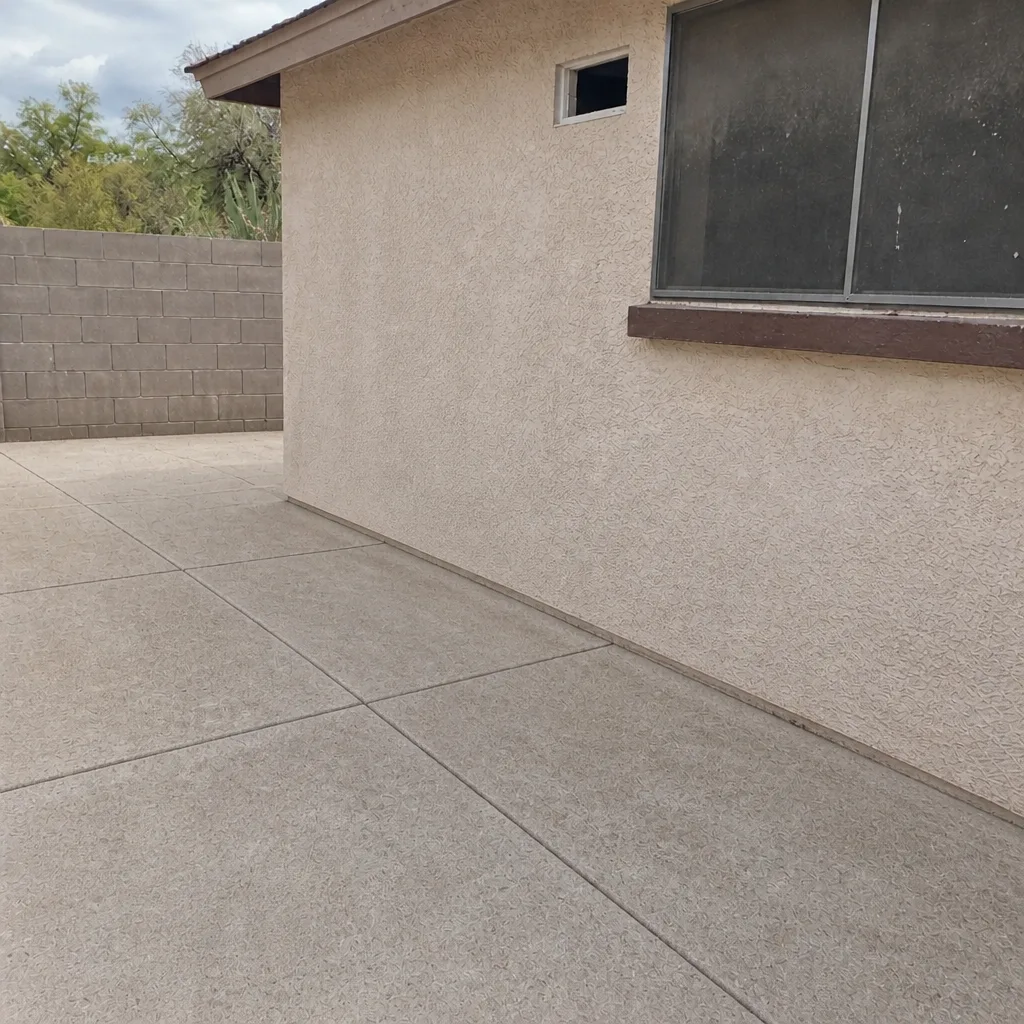 After
Common Mistakes to Avoid
- Running the HVAC during a haboob to “filter the air.” During a dust event, that operation does the opposite of what’s intended, pulling exterior particulate through the system while the filter loads far past its capacity. Shut the system down before the dust arrives, not after.
- Replacing a dirty filter with a thicker one without checking airflow. In the weeks after a major dust event, the instinct to install a MERV 13 filter makes sense, but many residential systems can’t handle the static pressure of a 1-inch MERV 13. If airflow drops, the coil freezes, and the fix costs more than the filter saved.
- Skipping post-flood inspection because the ceiling didn’t visibly leak. Water can travel through attic insulation and along duct wrap without showing on the ceiling below. The musty smell that shows up several days after a monsoon storm is often the first visible signal, and by that point the mold window is closing.
- Assuming a cleaning “didn’t work” when the problem was a repair issue. A fresh cleaning followed by the same return of dust in a few months usually means a leak is drawing unfiltered air into the system. That needs repair, not another cleaning.
- Not documenting the system before storm season. After an event, when a claim or a decision about the repair is at hand, having a photo baseline, a filter change record, and any prior service documentation can save significant time and money.
- Opening windows during a smoke event to “clear the air.” The instinct is wrong. During a heavy smoke event, keeping the house sealed and running the system with an appropriate filter is the better move. Save the open-windows approach for a day when the air outside is genuinely cleaner.
- Choosing a cleaning provider based on price alone and ignoring equipment. A shop-vac and a brush is not the same service as a rotary-brush and negative-air system. Ask what equipment will be used and whether you’ll get before-and-after photos of your own ducts. The answer tells you what kind of service you’re actually buying.
When to Call a Professional
The line between “handle it yourself” and “call a professional” is clearer than most homeowners expect. Call a professional when the system ran during a major dust event with a compromised filter, when you can see dust coating on duct interiors past the register boot, when a moisture event has touched ductwork and you’re within the 48 to 72 hour window, when odor persists after a smoke event, or when you suspect a duct leak from airflow problems that didn’t exist before. Call also when you simply don’t know the condition of your system and you want an honest look. Blackwell Air Duct Cleaning offers free estimates in Tucson – call (855) 618-0955. We answer 24/7. Fast dispatch from 7am to 7pm, Sunday through Friday. For more on our full service range, start at Blackwell Air Duct Cleaning.
Frequently Asked Questions
Within a week or two of the event, if cleaning is warranted. The point is to clean before contamination migrates to surfaces and soft goods throughout the home, and before the dust in the ductwork consolidates into a coating that resists removal. If the system was off during the storm and the filter was in good condition, you may not need a cleaning at all. Call (855) 618-0955 for an exact quote – estimates are free.
Not always. A fresh filter plus a visual inspection of the registers is enough for many minor dust events. What filter changes can’t address is contamination that got past the filter – visible coating inside the ductwork, dust accumulating at the register boots, or odor. If your filter loads up quickly after each event and the registers stay clean, you’re in reasonable shape. If the registers show a coating that doesn’t clear, it’s worth an inspection. Call (855) 618-0955 for an exact quote – estimates are free.
Yes, it can. The mechanism is moisture getting into the duct insulation or into a joint where the interior of the duct is exposed, then staying wet because it can’t air out. Warm attic air in Tucson plus a wet flex duct run creates conditions where mold can establish within a few days. The 48 to 72 hour window after a moisture event is the time to act. Call (855) 618-0955 for an exact quote – estimates are free.
Cost depends on the size of the system, its condition, and whether repair work is needed, so it’s set per job by a written estimate. What we recommend looking for from any provider is a flat price per system that you agree to before work begins, not per-vent pricing that can balloon. Ask for before-and-after photos of your own ducts as part of the job. Call (855) 618-0955 for an exact quote – estimates are free.
Usually because the equipment and scope are different. A shop-vac and a brush is not the same service as a rotary-brush and negative-air system, and a low teaser price that becomes a much larger invoice once the technician is on site is a well-known pattern in this industry. Ask specifically what equipment will be used, whether containment and HEPA filtration are involved, and whether the price is flat per system or per-vent. That tells you what you’re actually being quoted. Call (855) 618-0955 for an exact quote – estimates are free.
Ask for before-and-after photos of your own ducts. Photos taken of the actual ductwork before and after cleaning are the straightforward way to verify what was done, and a serious provider will include them without you needing to ask. Keep those photos with your home records; they double as documentation if you ever need them. Call (855) 618-0955 for an exact quote – estimates are free.
For most homes, once a year timed before dust season works well. Homes with pets, allergy or asthma concerns, or a history of multiple dust and smoke events may benefit from a second inspection after monsoon season. The honest answer is that it depends on the specific conditions your system sees, which is why an initial inspection gives you a better basis than a fixed schedule. Call (855) 618-0955 for an exact quote – estimates are free.
The Bottom Line
Duct system preparation in Tucson is a sequence of small, specific moves: shut the system down before a haboob, swap the filter as a pre-storm step rather than a post-storm chore, keep a high-MERV filter option for smoke season and check that your system can handle it, and inspect duct connections quickly after any moisture event. Document your system before emergency season so a claim or a repair decision has evidence behind it. And when in doubt, get an inspection rather than guessing. Professional-grade cleaning with rotary-brush and negative-air equipment is a different service than the cheap alternative, and it’s worth insisting on.
Blackwell Air Duct Cleaning handles air duct cleaning, dryer vent cleaning, and air duct repair with professional-grade equipment from Rotobrush, Nikro, and Abatement Technologies. Call (855) 618-0955 for a free estimate. We answer 24/7. Fast dispatch from 7am to 7pm, Sunday through Friday.
Written by the team at Blackwell Air Duct Cleaning.