
Honeywell Air Duct Cleaning in Tucson: A Homeowner’s Guide
Honeywell doesn’t clean air ducts. They make the filtration and air quality equipment sitting inside or beside your HVAC system, and that’s a different job entirely. So when Tucson homeowners search for Honeywell air duct cleaning, the real question underneath is usually this: does my Honeywell filter, purifier, or UV system change how often my ducts need cleaning, or does it replace the need altogether? That’s the question worth answering, and it’s the one we’ll take apart here.
What Does Honeywell Actually Make for Home Air Quality?
Honeywell is a controls and filtration manufacturer, not a duct cleaning company. In a Tucson home you’re most likely to run into four product families, and each one solves a different problem:
- Media filters – a deep-pleated filter cabinet mounted at the air handler that captures particulate before it enters the duct system. This is the workhorse for most homes.
- Electronic air cleaners – powered units that charge particles and trap them on collection cells. They catch finer material than a standard filter but need washing and occasional cell service.
- UV systems – lamps installed near the coil or in the return, aimed at microbial growth on wet surfaces. They treat surfaces, not moving air, and they don’t remove dust.
- Smart thermostats – the control layer. Useful for runtime and filter reminders, but not an air-cleaning device on their own.
Knowing which of these you own matters because each one changes the dust load in your ducts differently. A home with a well-sealed media cabinet is a different cleaning proposition than a home relying on a one-inch filter slot that whistles when the blower kicks on.
Does a Honeywell Filter Reduce How Often Ducts Need Cleaning in Tucson?
Yes, a properly rated media filter captures more particulate before it reaches the ductwork, and that genuinely extends cleaning intervals. But the filter only helps if it’s the right rating and if it’s actually sealing. A filter that bypasses air around its frame is doing very little, no matter what’s printed on the cardboard.
On MERV ratings for Tucson systems, the practical range for most residential equipment is MERV 8 to MERV 13. MERV 8 handles the bulk of dust and pollen without meaningful airflow restriction. MERV 11 to 13 catches finer particulate, which matters in a desert climate where fine dust is a constant. Higher than that and you start asking a standard blower to work harder than it was designed for, which shows up as reduced airflow and a coil that runs colder than it should. If you’re not sure what your system can handle, that’s a question for the HVAC contractor who services the equipment.
One Tucson-specific note: our dust season doesn’t politely stop. Between windy spring conditions and the fine particulate that settles everywhere, filters load faster here than in greener climates. Check your media filter monthly during the dry, windy stretches and replace it on condition, not just on the calendar. We see plenty of ducts carrying years of accumulation simply because the filter was treated as a yearly chore instead of a monthly check.
Do Electronic Air Cleaners and UV Systems Eliminate the Need for Duct Cleaning?
No. Electronic air cleaners and UV systems change what you’re cleaning for, but they don’t do the mechanical removal. An electronic air cleaner pulls charged particles out of the airstream, and it does that well when the cells are clean. A UV system limits microbial growth on wet surfaces near the coil. Neither one scrubs the settled dust, debris, and construction residue off the interior walls of your ductwork.
What they do change is the target. In a home with a Honeywell electronic air cleaner running properly, the material that accumulates in the ducts tends to be finer and less biological. In a home with a UV system, the coil side stays cleaner, which means less of that material gets carried downstream. The cleaning still has to happen; it’s just a different cleaning. That’s the honest answer, and it’s why we treat air quality equipment and duct cleaning as complementary tools rather than substitutes.
This is also where the right equipment on our end matters. We run professional-grade platforms from Rotobrush and Nikro, and Abatement Technologies negative-air units for contained, HEPA-filtered extraction. The same tools used in certified remediation, applied to your home. When a system has both an electronic air cleaner and settled debris in the return, the extraction side has to be able to handle what the air cleaner missed.
How Do You Tell If Your Honeywell IAQ Equipment Is Actually Working?
Most air quality equipment fails quietly. It doesn’t throw a code; it just stops doing its job while the homeowner assumes everything is fine. Here’s what to check and what to measure:
- Filter load and fit. Pull the media filter and hold it up to light. If it’s matte and gray across the whole face, it’s loaded. Check the frame seal too: any visible gap means bypass.
- Electronic cell condition. Collection cells should come out, wash clean, and slide back without arcing. If the unit is clicking, buzzing, or the indicator stays in a wash cycle, it’s not collecting.
- UV lamp output. Lamps dim over time even when they still glow blue. If the lamp is more than a couple of years old and the coil area still shows growth, it’s not doing its job.
- Airflow at the registers. Weak, uneven flow across rooms points to a restriction somewhere in the system, whether that’s a loaded filter, a failing blower, or a duct problem.
- Dust settling on surfaces. A visible dust film returning within days of cleaning suggests the filtration isn’t capturing what it should.
If a Honeywell or Aprilaire unit is failing any of these checks, the fix is usually service or replacement of that component, not more frequent duct cleaning. In our experience, a lot of “my ducts are dirty again” complaints trace back to a filter cabinet that’s been bypassing air for years.
When Should You Call a Professional in Tucson?
Call a pro when the evidence points to the ductwork itself, not the filter. That means visible debris blowing out of registers, a musty or dusty smell that returns after cleaning the house, noticeably uneven airflow between rooms, or dust settling faster than a good filter should allow. Those are signs the interior of the system needs mechanical cleaning, and no filter or UV lamp substitutes for that.
If your ducts have physical damage, like disconnected runs, crushed flex, or torn insulation in the attic, cleaning alone won’t fix the airflow. That’s an Air Duct Repair job, and it’s why we handle repair as a standalone service rather than cleaning around the problem. We clean the ducts. We repair them when they need it. We don’t hand that off.
For a routine assessment, our air duct cleaning page lays out what a proper cleaning actually involves. If your dryer vent is also due, that’s a separate fire-safety service, covered on our dryer vent cleaning page.
How Does Professional Duct Cleaning Work Alongside Your Honeywell System?
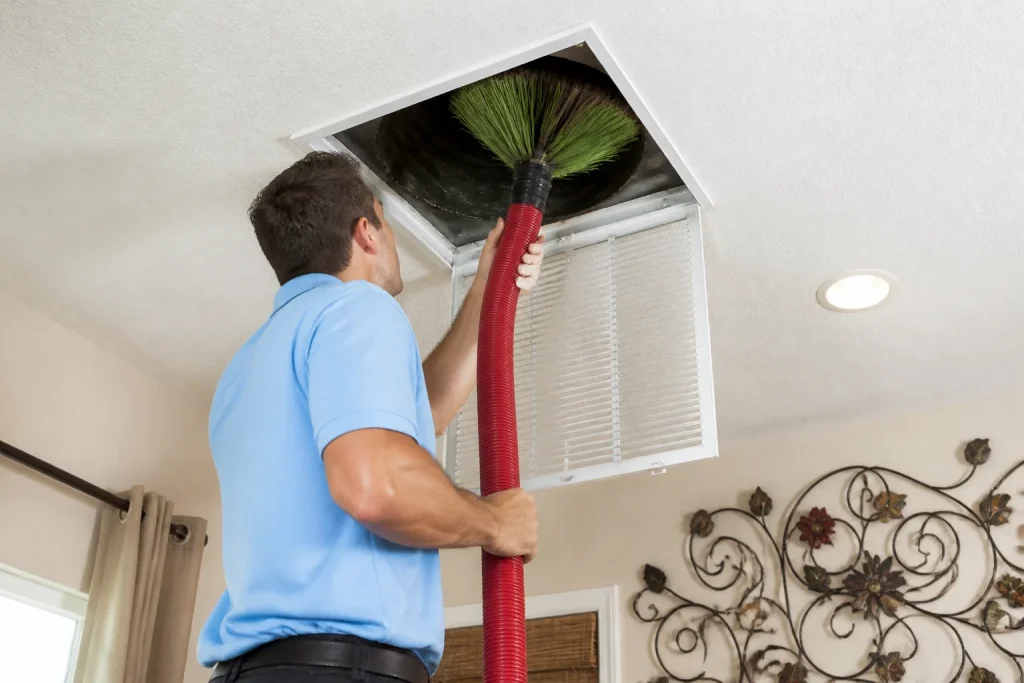
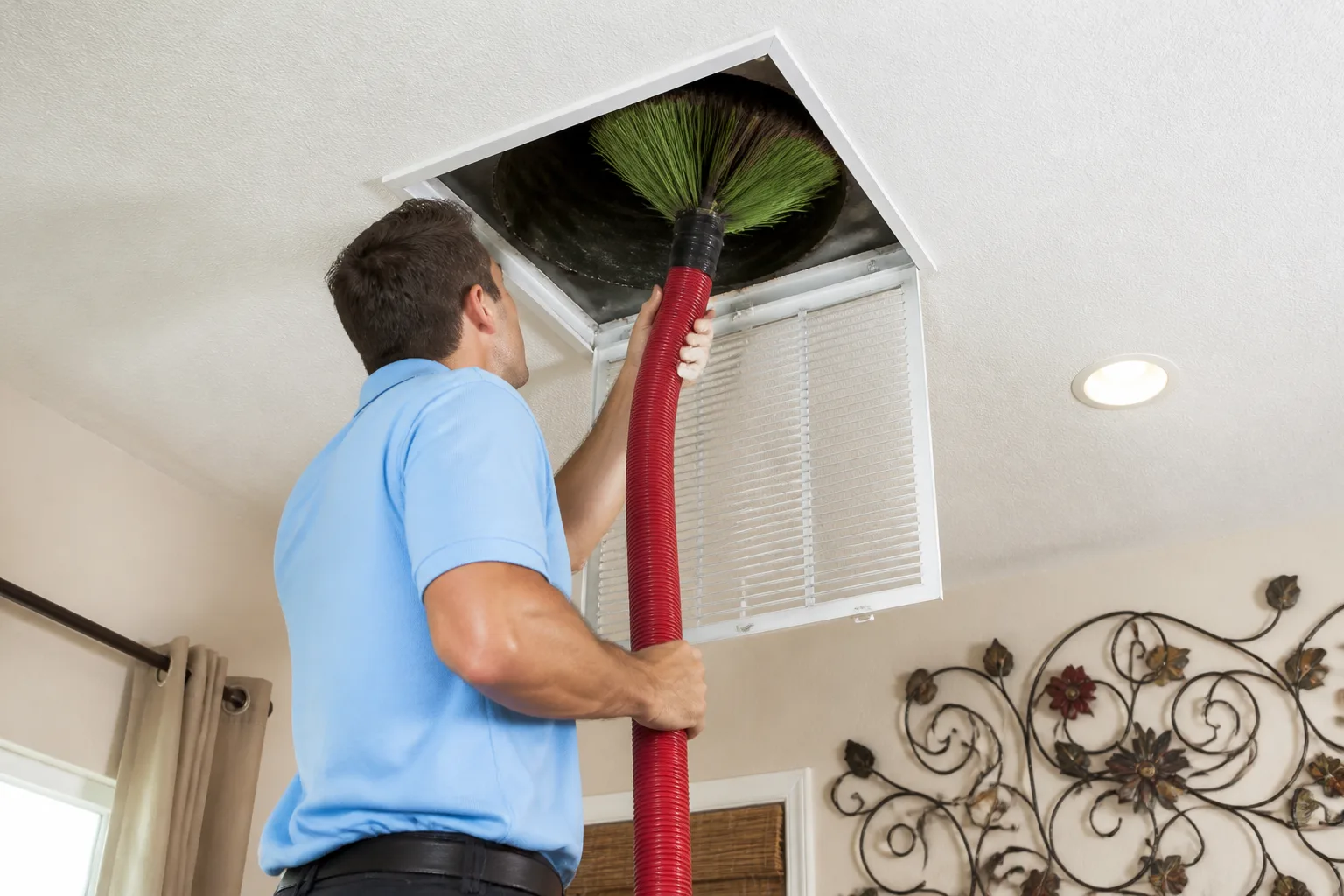
When we clean a home with a Honeywell media cabinet or electronic air cleaner, the process accounts for that equipment. The filter or cells come out before cleaning begins, the system is isolated, and negative-air HEPA extraction keeps debris contained rather than pushing it through the house. Rotobrush rotary-brush tools agitate the duct walls, and the extraction pulls the loosened material out. Afterward, the filter or cells go back in, and we note what we found: bypass gaps, a filter that’s undersized for the cabinet, a UV lamp that’s past its useful life.
That’s the value of a specialist who understands the air quality brands, not just the cleaning. We work with Honeywell and Aprilaire systems regularly, which means we can tell you whether the equipment is doing its job, or whether you’ve been running a filter cabinet that lost its seal years ago. Cleaner air starts with understanding what’s actually inside your ductwork, and that includes the equipment attached to it.
For context on the local climate and what drives dust load in Tucson, it’s worth understanding the seasonal patterns before deciding on a cleaning interval.
The Bottom Line
Honeywell makes equipment that captures particulate and controls air quality; it doesn’t clean ducts, and it never has. A well-rated media filter in the MERV 8 to MERV 13 range extends how long ducts stay clean in Tucson’s dusty climate, and a working electronic air cleaner or UV system reduces what accumulates. But none of it replaces mechanical cleaning when debris has already settled in the system. Check your equipment honestly, replace filters on condition rather than the calendar, and schedule a professional cleaning when the airflow and dust tell you it’s time.
If you’re in Tucson and need help, Blackwell Air Duct Cleaning offers free estimates and uses professional-grade equipment on every job. Our technicians have up to 11 years of experience, and the estimate is free with one flat price per system agreed before work starts. Call (855) 618-0955. We answer 24/7. Fast dispatch from 7am to 7pm, Sunday through Friday.
Frequently Asked Questions
No. Honeywell manufactures filtration and air quality equipment like media filters, electronic air cleaners, UV systems, and thermostats. It does not provide duct cleaning services. Duct cleaning is performed by a separate specialist.
No. A Honeywell air purifier or media filter captures particulate before it enters the duct system, which extends cleaning intervals and reduces dust load. It doesn’t remove debris already settled inside the ductwork. The two are complementary, not substitutes. Call (855) 618-0955 for a free estimate if you’re not sure which you need.
Most residential systems in Tucson handle MERV 8 to MERV 13 without restricting airflow. MERV 8 is the practical baseline, and MERV 11 to 13 catches finer particulate, which helps in a dusty climate. Ratings above that can strain a standard blower. Ask your HVAC contractor what your specific equipment supports.
A working unit runs without arcing or buzzing, its collection cells wash clean and slide back into place, and its indicator cycles normally. If it’s clicking, stuck in wash mode, or the cells won’t come clean, it’s not collecting. That’s a service issue on the equipment, not a sign you need more frequent duct cleaning.
Call (855) 618-0955 for a free estimate. We answer 24/7. Fast dispatch from 7am to 7pm, Sunday through Friday.
Written by the team at Blackwell Air Duct Cleaning.
Need Air Duct Cleaning Help?
Call Blackwell Air Duct Cleaning - licensed & insured, with free written estimates in Tucson.
(855) 618-0955