
Last updated November 15, 2026
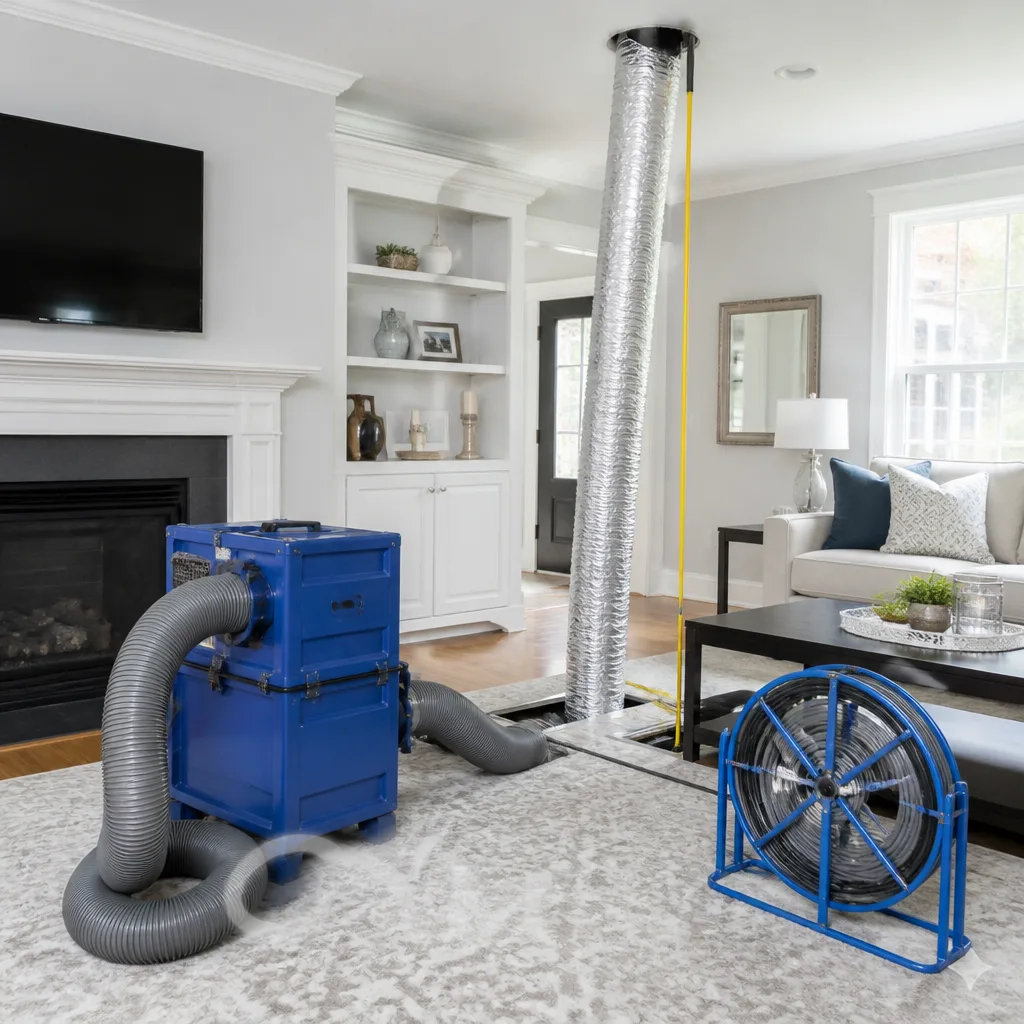 Whole-home duct cleaning
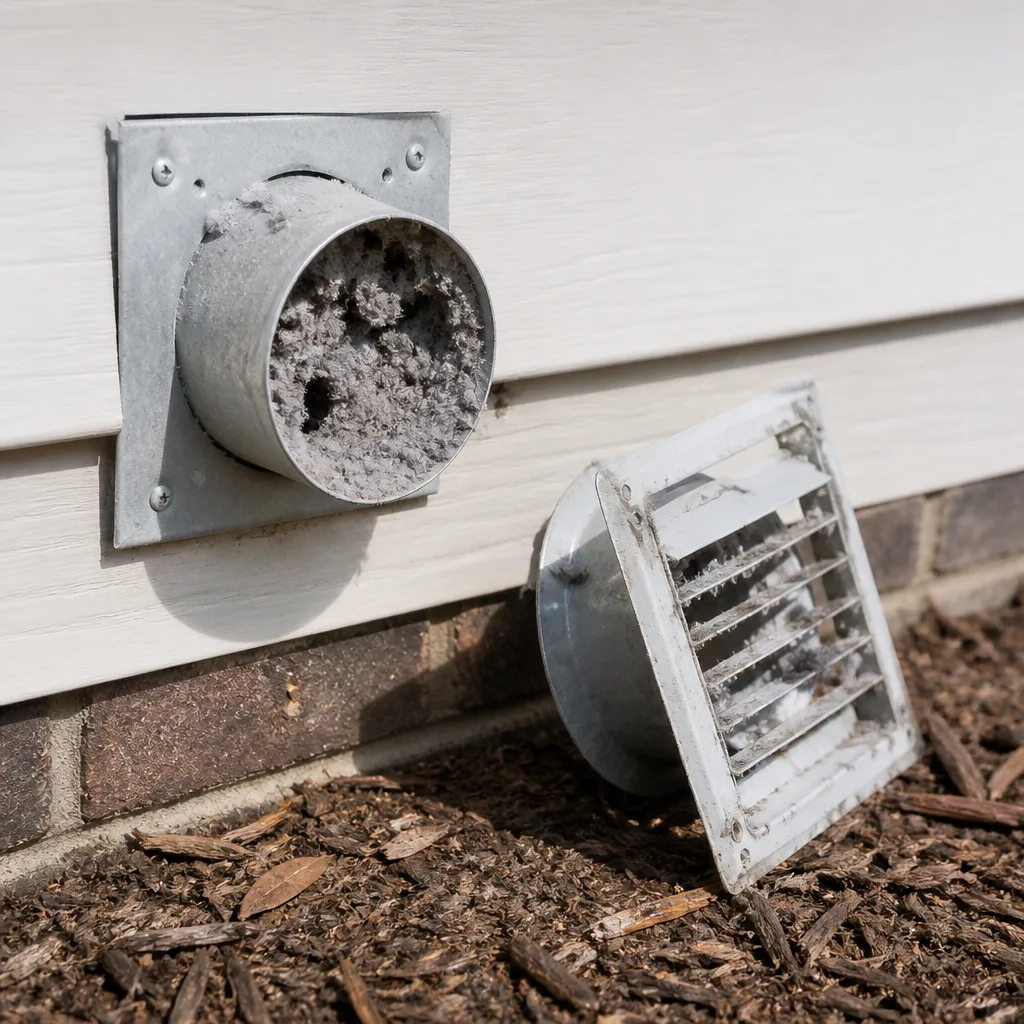 Dryer vent cleaning
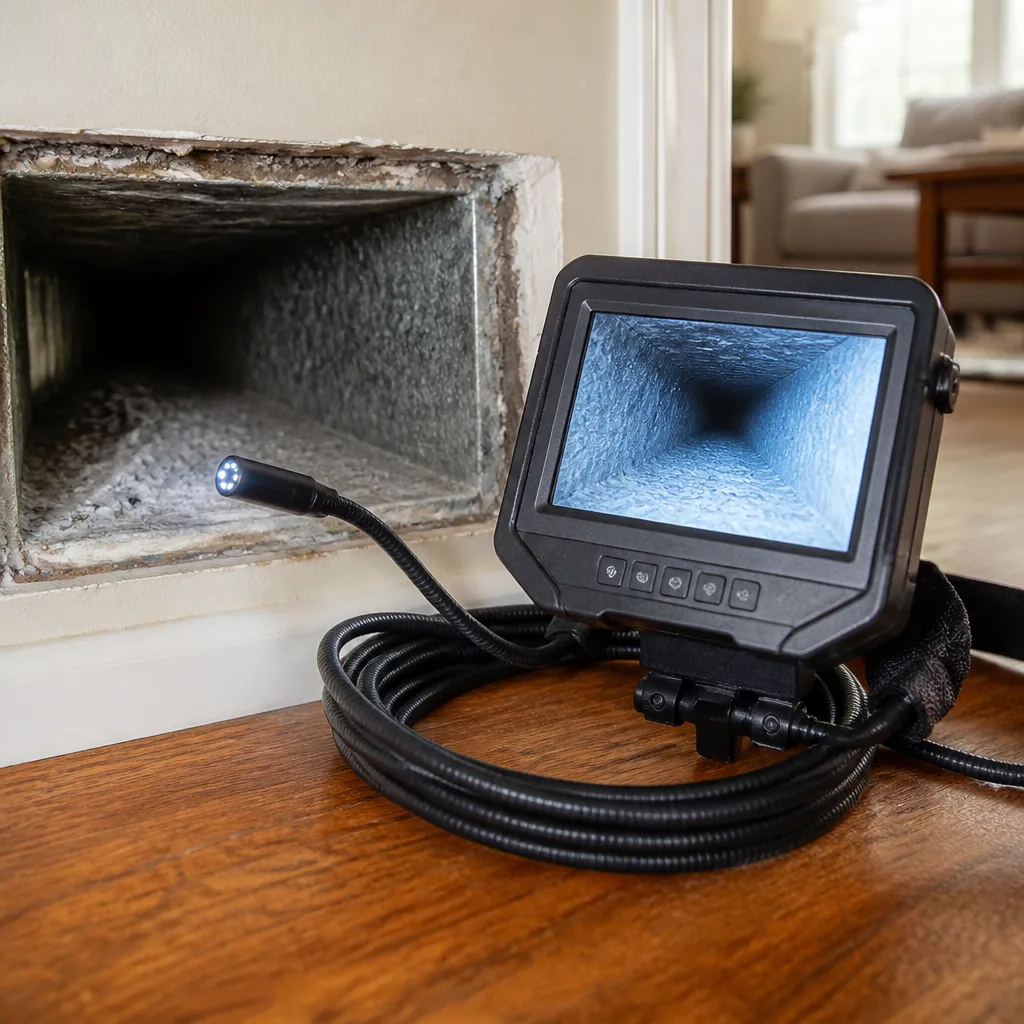 Camera inspection
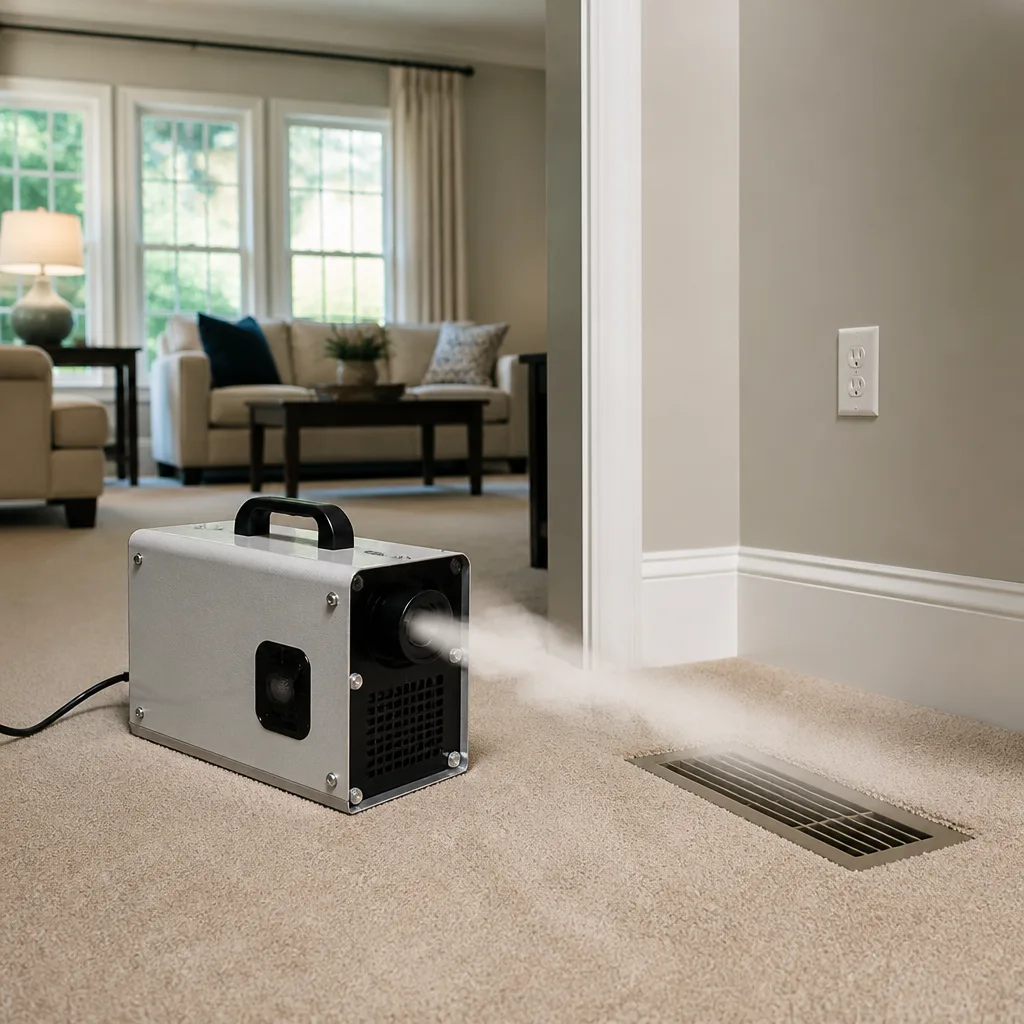 Sanitizing & deodorizing
Whole-system duct and dryer vent check with before-and-after photos - you see exactly what came out of your vents
That "$99 whole-house special" is a bait ad - the real number appears once they are in your hallway, or the "clean" is a shop-vac at the register. We photograph the inside of your ducts before and after instead.
The Complete Guide to Air Duct Cleaning in Tucson
Most duct cleaning advice you’ll find online was written for a temperate climate with a heating season and an off-season. Tucson doesn’t have an off-season. Your air conditioner runs hard for months, the desert hands your filters a constant supply of fine caliche dust, and the monsoon arrives each summer to spike humidity inside ducts that spend the rest of the year bone dry. That combination produces contamination patterns that a generic national guide simply doesn’t account for. This guide looks at duct cleaning through the lens of Tucson’s climate first, then covers how source-removal cleaning actually works, what professional equipment does that a shop vac can’t, and how to judge whether the crew at your door is doing the real job.
Quick Answer
Air duct cleaning in Tucson means removing accumulated dust, caliche particulate, and any microbial growth from the inside of your ductwork using negative-air pressure combined with mechanical agitation, not just blowing air around. Because Tucson HVAC systems run well over 2,800 cooling hours in a typical year, roughly double the national average, ducts here load up faster than standard cleaning intervals assume. A whole-system professional cleaning, with a written flat price agreed before work starts, is the standard most Tucson homes should be measuring quotes against.
Styles & brands we work with
- Whole-home duct cleaning
- Dryer vent cleaning
- Camera inspection
- Sanitizing & deodorizing
Table of Contents
- Why Tucson Ducts Get Dirty Faster Than the National Average
- How Caliche Dust Behaves Inside Your Ductwork
- Monsoon Humidity and the Microbial Question
- Source-Removal Cleaning vs. Blow-and-Go
- What Professional Equipment Actually Does
- When Cleaning Isn’t Enough: Duct Repair as the Root Fix
- How Often Should a Tucson Home Clean Its Ducts?
- The Dryer Vent: A Separate Fire-Safety Job
Why Tucson Ducts Get Dirty Faster Than the National Average
Tucson’s cooling demand is the single biggest factor in how fast ductwork soils. National cleaning guidelines were largely written for climates where a system runs a few months a year; here, the air handler moves thousands of cubic feet of air every single day for most of the calendar. Every one of those hours carries dust past the filter, through the plenum, and into the branch runs. Filter efficiency matters, but no filter catches everything, and the fine fraction that slips through is exactly the fraction that sticks.
That runtime is paired with a dust supply most cities don’t have. Desert soil around Tucson is high in calcium carbonate, the cemented layer locals call caliche. When it dries and breaks down, it becomes an extremely fine, slightly alkaline powder. It coats evaporator coils, settles on blower wheels, and lines the horizontal runs in attics and crawlspaces. Because Tucson homes often have long, low-slope attic duct runs where airflow is slowest, that material has time to deposit rather than stay suspended. In our experience, a Tucson return plenum after several cooling seasons carries a visible layer that a Midwest home of the same age simply wouldn’t show.
Older construction adds to it. Homes built in the middle of the last century, common across central Tucson neighborhoods, frequently have original or partially retrofitted ductwork with more joints, more flex duct, and more opportunities for leakage. Leaky return ducts pull attic air, and attic air here is unfiltered desert air. That’s a source problem, not just a cleanliness problem, and it’s one reason a straight cleaning without an inspection can miss the real issue.
How Caliche Dust Behaves Inside Your Ductwork
Caliche dust does not behave like ordinary household dust, and that changes how it has to be removed. Ordinary dust is largely fibrous and organic: lint, skin cells, pet hair, fabric fibers. It clumps, it’s relatively light, and a moderate brush pass lifts it readily. Caliche particulate is mineral, extremely fine, and slightly alkaline. It behaves more like a powder that has been pressed into a surface than like lint sitting on top of one.
Inside a duct, that means a few specific things:
- It bonds to surfaces. The fine mineral fraction packs into microscopic pits and seams in galvanized metal and into the porous inner surface of flex duct. A light brush pass can skim the top layer and leave the bonded layer behind.
- It resists plain vacuuming. Because it’s dense, it needs both agitation to break the bond and enough sustained negative pressure to carry it away once it’s airborne. Suction alone tends to leave a film.
- It travels to the coil. The finest particles stay suspended long enough to reach the evaporator, where they combine with condensate to form a mud-like coating. A dirty coil loses capacity, and in a Tucson summer a coil running below capacity works even harder.
- It’s mildly alkaline. Over time that chemistry is unkind to older duct liners and to the seals at joints, which is part of why we treat duct repair as a natural companion to cleaning rather than a separate conversation.
The practical takeaway is that brush agitation by itself is often not enough for caliche-loaded Tucson ductwork. The job needs contact agitation that reaches the duct wall combined with negative pressure strong enough to capture the loosened material at the source. That combination is what separates a real cleaning from a cosmetic one.
Monsoon Humidity and the Microbial Question
For most of the year Tucson is genuinely dry, and dry ducts don’t support much microbial growth. Monsoon season changes that. Between roughly late June and September, humidity spikes for days or weeks at a time, and the inside of a duct system can cross the moisture threshold where spores that have been sitting dormant all year become active. The ducts aren’t wet in the way a flooded building is wet. They’re damp enough, long enough, for growth to start on the dust film that’s already there.
The pattern we see is consistent. A system that was merely dusty in May can carry a musty odor by August. That smell usually isn’t coming from the air handler alone; it’s coming from the dust-and-moisture layer on the duct walls, which is the perfect substrate. When the dry season returns, the growth goes dormant but the material stays. Next monsoon, it reactivates. Cleaning removes the substrate, which is why the timing of a cleaning relative to monsoon season matters more in Tucson than in most places.
There’s a second monsoon effect worth knowing about. Humid air is denser and carries more latent load, so the system runs longer and the coil stays wet longer between cycles. A coil that stays damp is a coil that grows things. If your ducts smell musty after the rains, that’s a signal to have both the ductwork and the coil inspected together, not just one or the other. Homes with whole-home humidity control, which we see with Honeywell and Aprilaire systems, tend to hold up better through the season, but the control system doesn’t clean the ducts. It just slows the buildup.
Source-Removal Cleaning vs. Blow-and-Go
Source-removal cleaning means the contamination is captured where it sits and taken out of the building. Blow-and-go cleaning means the contamination is knocked loose and left to settle somewhere else, often back into the living space. In a Tucson home, that difference is not academic. Caliche powder that gets blown into the rooms ends up on every surface, and microbial material that gets dispersed goes straight into the air your family breathes.
Here’s how to tell which one you’re getting, ideally before anyone starts work:
- Look for a negative-air machine. Real source-removal work uses a high-volume vacuum connected to the duct system, usually through the main trunk, that puts the whole system under negative pressure so loosened material is pulled toward the machine, not into the house. If the only vacuum on site is a portable shop vac, the job isn’t contained.
- Look for HEPA filtration on the exhaust. A machine that simply exhausts to the outdoors is better than nothing, but exhausting without filtration can spread fine particulate around the exterior. HEPA filtration on the unit’s output captures it.
- Watch for mechanical agitation. Compressed air alone is not agitation. Real cleaning uses rotary brushes or whip lines that physically contact the duct walls to break the bond, especially important with caliche deposits.
- Ask about before-and-after photos. A crew doing genuine source removal can show you what the inside of your ducts looked like before and after. A blow-and-go outfit usually can’t, because there’s nothing worth showing.
- Ask whether the price is per system or per vent. Per-vent pricing encourages a fast pass; a flat price per system aligns the crew’s incentive with doing the whole job properly.
This is the core of the bait-and-switch reputation the duct cleaning trade has earned. A low teaser price that becomes a much larger invoice once the technician is on site usually signals that the initial number wasn’t for real source-removal work. One flat price per system, agreed in writing before work starts, is the standard to hold any provider to.
What Professional Equipment Actually Does
Equipment is where the difference between a real cleaning and a quick one lives, and it’s worth understanding what the machines are doing rather than just taking a brand name on faith. Professional duct cleaning relies on three functions working together: containment, agitation, and extraction.
Containment comes first. Abatement Technologies negative-air machines are the kind of equipment used in contained remediation work, and they do the same job here: they hold the duct system under negative pressure and filter the exhaust through HEPA media so nothing escapes into the home. That’s the foundation. Without it, everything downstream is compromised.
Agitation comes second. Rotobrush rotary-brush systems are the industry-standard platform for contacting the duct wall with a rotating brush on a flexible shaft, driven from outside the duct. They reach into branch runs and around bends where a hand brush can’t, and they do the physical work of breaking the bond that caliche dust forms. Nikro equipment covers the same ground from a different angle, with high-volume vacuum and agitation tooling that certified restoration contractors use. The point isn’t the logo. The point is that these machines deliver sustained suction and real mechanical contact at the same time, which a shop vac and a dryer vent brush cannot replicate. A shop vac has neither the airflow nor the filtration, and a hand brush can’t reach the surfaces that matter.
Extraction completes the job. Once material is loosened, it has to be captured and removed, not redistributed. That’s what the negative-air machine does throughout the process.
Familiarity with air-quality equipment matters too. If a home has a Honeywell or Aprilaire filtration or humidity system installed, the cleaning has to account for how that equipment interacts with the ductwork, and the inspection should include it. That’s not a sales opportunity; it’s part of understanding the system you’re working on.
When Cleaning Isn’t Enough: Duct Repair as the Root Fix
Cleaning a duct system that leaks is like mopping a floor with the window open. If the return side is pulling attic air, or a joint has separated in the attic run, or a section of flex duct has collapsed, the system will re-contaminate quickly no matter how well it was cleaned. In Tucson, that’s a common finding on older homes and on any home where ductwork was retrofitted rather than designed with the house.
Common problems we look for during an inspection include:
- Disconnected or separated joints in attic and crawlspace runs, often at flex-to-metal transitions
- Crushed or kinked flex duct, which restricts airflow and creates a low-velocity pocket where dust settles
- Leaky return plenums pulling unfiltered attic air into the system
- Failed seals at registers and boots where the duct meets the ceiling or floor
- Deteriorated duct liner from years of alkaline dust contact and monsoon moisture
Duct repair is a standalone service because it’s a different job from cleaning, and it addresses the root cause of inefficiency and re-contamination. If airflow is weak in certain rooms, the duct may be the reason, and a cleaning alone won’t fix a collapsed run. In our experience, the right sequence is inspection first, then a decision: clean only, repair then clean, or repair a specific section and clean the rest. We clean the ducts. We repair them when they need it. We don’t hand that off. You can read more about how we handle air duct cleaning as a service, and about the repair side when we get to the inspection.
How Often Should a Tucson Home Clean Its Ducts?
There’s no single correct interval, and any provider who quotes one without asking about your home is guessing. The national rule of thumb, roughly every three to five years, was written for average climates. Tucson homes run their systems far more than average, which pushes the useful interval shorter, but several other factors move it further.
Use this as a starting framework, then adjust for your situation:
- Baseline for a typical Tucson home: every three to five years, with the shorter end of that range for homes running the AC nearly year-round.
- Homes with pets: lean toward the shorter end. Pet hair and dander add a fibrous load that combines with caliche dust to form a denser, more adhesive layer.
- Older construction: homes with original or retrofitted ductwork often need more frequent attention because leakage brings in unfiltered air. An inspection will tell you which runs are the problem.
- After a renovation: clean once construction is finished. Drywall dust, sawdust, and debris from the work migrate into the system and should be removed before the system runs normally again.
- After a monsoon season with musty odors: have the system inspected. Odor is a signal that microbial material has taken hold, and the earlier it’s removed, the less it spreads.
- New-to-you home: if you don’t know the cleaning history, get an inspection. It’s cheap information and it tells you what you’re working with.
The honest answer is that frequency should follow evidence: visible dust at the registers, weak airflow, musty odor after the rains, or a recent renovation. Those signals are more reliable than a calendar.
The Dryer Vent: A Separate Fire-Safety Job
Dryer vent cleaning is not the same job as duct cleaning, and it shouldn’t be treated as an add-on. Lint buildup in a dryer vent restricts airflow, causes the dryer to run hotter and longer, and is a leading cause of house fires. In Tucson, the dry climate means lint dries out and becomes highly combustible, and the long vent runs common in homes with interior laundry rooms give lint more places to collect.
The signs a vent needs cleaning are consistent: clothes take longer than one cycle to dry, the dryer feels hot to the touch on top, the outside vent flap doesn’t open fully when the dryer runs, or there’s visible lint around the exterior termination. Annual cleaning is a reasonable baseline for most households, and more often for large households or anyone running multiple loads a day. We treat dryer vent cleaning as a fire-safety and efficiency service in its own right, because that’s what it is. It’s also worth knowing that the technician who cleans your dryer vent is looking at a different system than the one cleaning your air ducts, and the two should be scheduled as distinct jobs.
Common Mistakes to Avoid
- Judging by the teaser price alone. A very low quoted number often becomes a much larger invoice once the technician is in the attic. Ask for a flat price per system in writing before work starts, and be wary of per-vent pricing that rewards a fast pass.
- Choosing a provider who doesn’t use negative air. Tucson’s caliche dust and monsoon-related microbial material require containment to remove safely. A shop vac and a hand brush do not provide it, and the material ends up back in your living space.
- Skipping the inspection. Cleaning a leaking or collapsed duct system wastes money because it will re-contaminate. The inspection should come first and should include the attic runs, not just the accessible registers.
- Cleaning at the wrong time of year. Scheduling in spring, before the monsoon humidity arrives, means your ducts are clean going into the season that stresses them most. Cleaning right after the rains removes whatever the humid weeks left behind.
- Ignoring the coil. In Tucson, the evaporator coil collects fine dust that becomes a mud-like coating with condensate. If the coil is dirty, cleaning the ducts alone won’t restore airflow or capacity.
- Treating dryer vent cleaning as an upsell. Lint buildup is a genuine fire hazard. If a provider mentions it only at the end of a duct job and offers to “throw it in,” ask whether they’re actually cleaning the full vent run or just the first few feet.
- Not asking for before-and-after photos. A crew doing real source-removal work can show you evidence. A crew that can’t show you anything is telling you something about the job.
See the difference
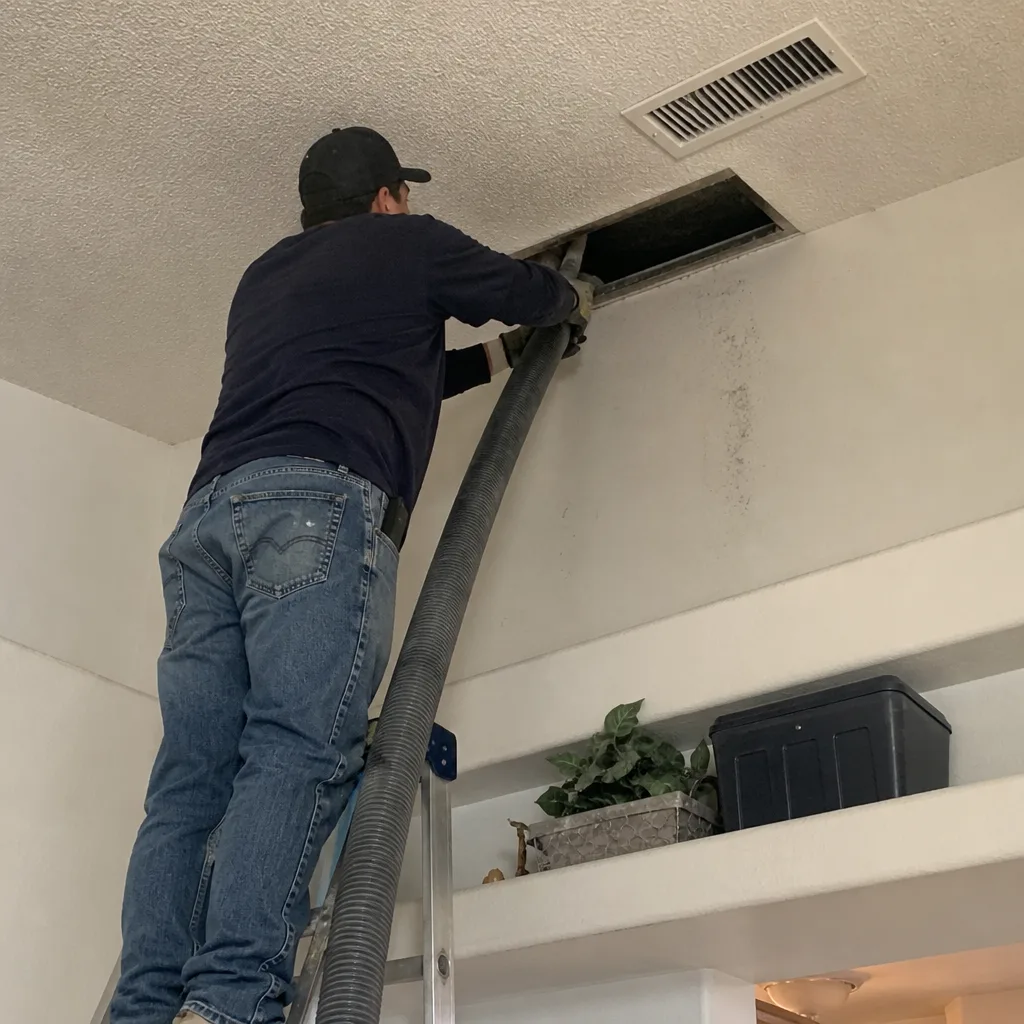 Before
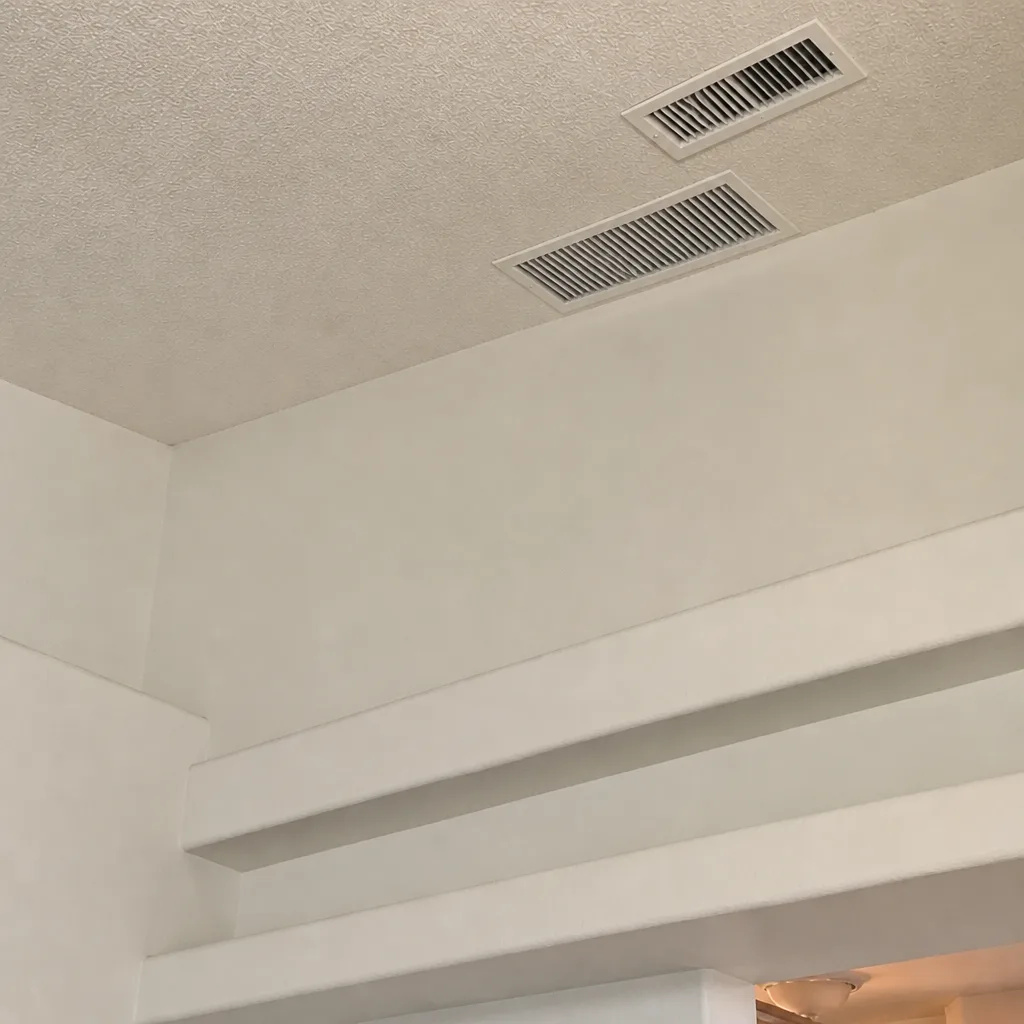 After
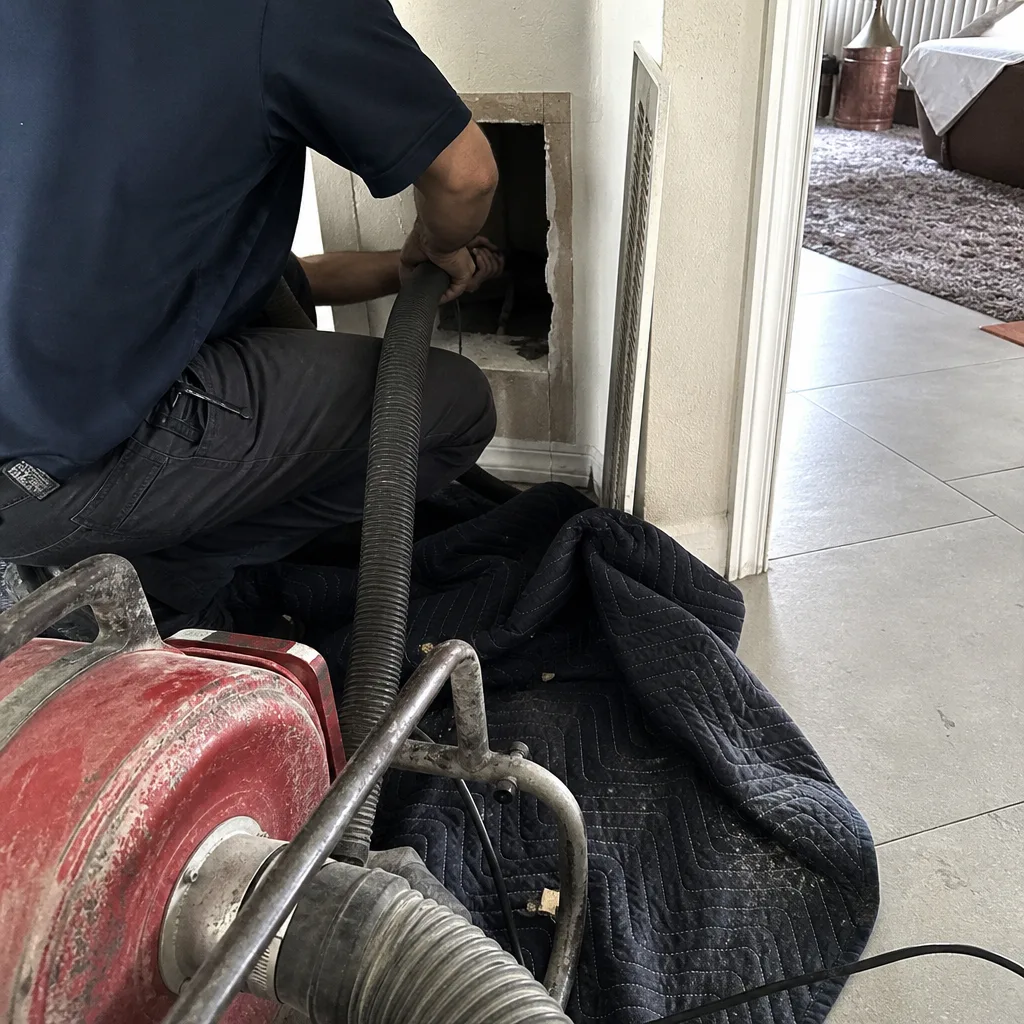 Before
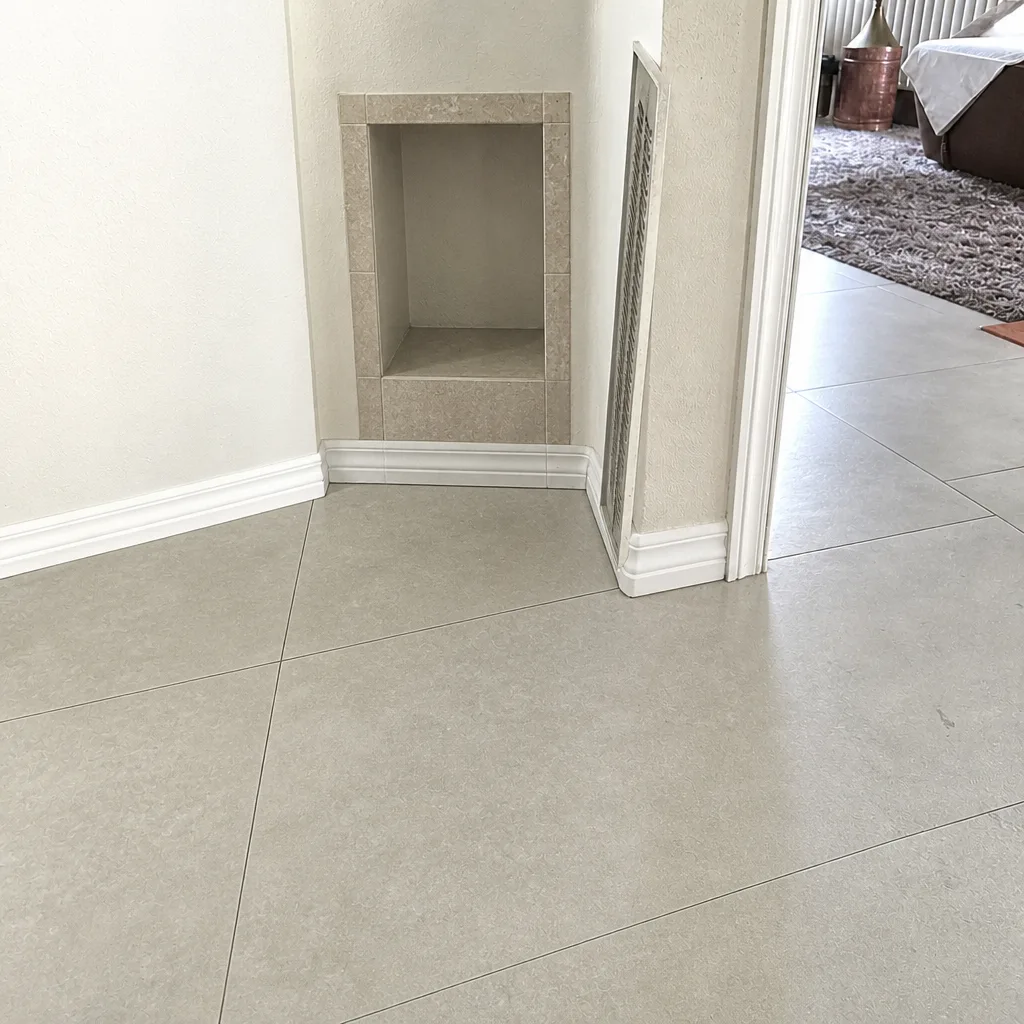 After
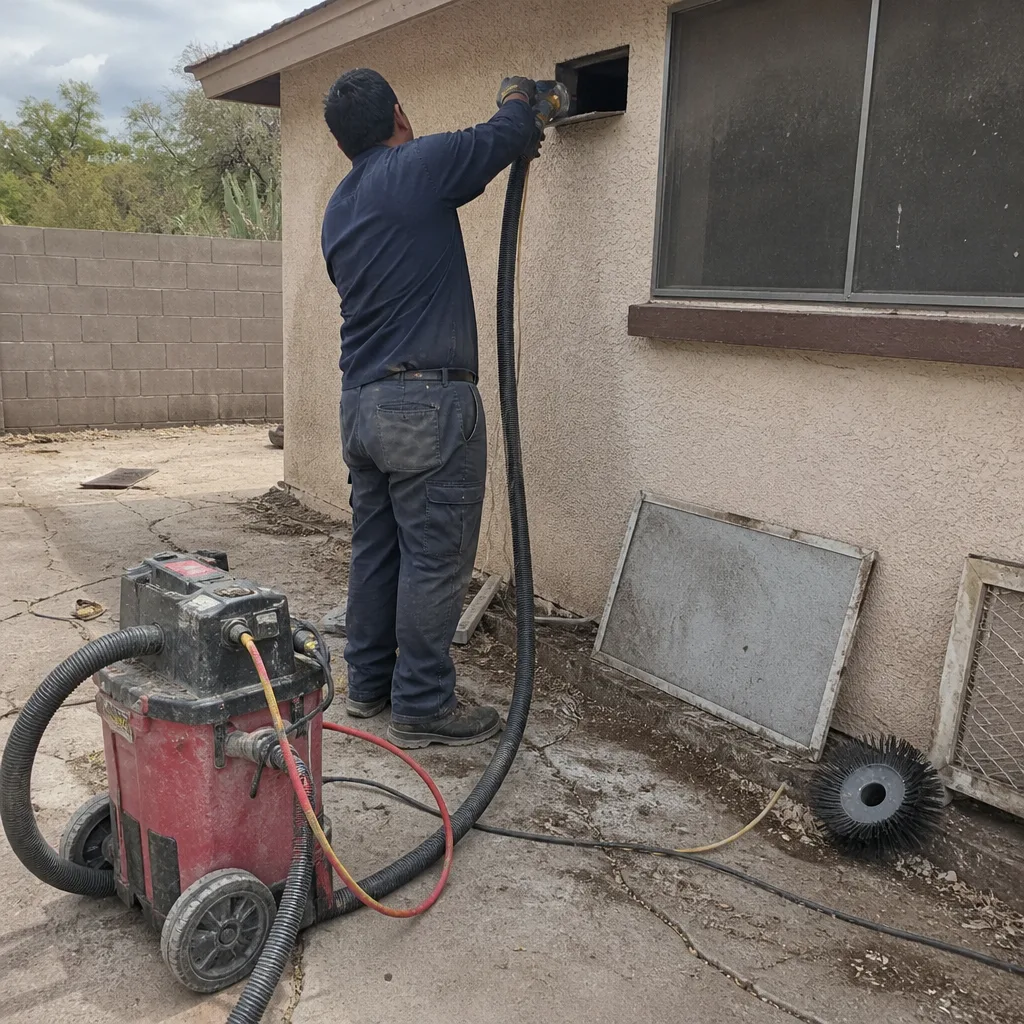 Before
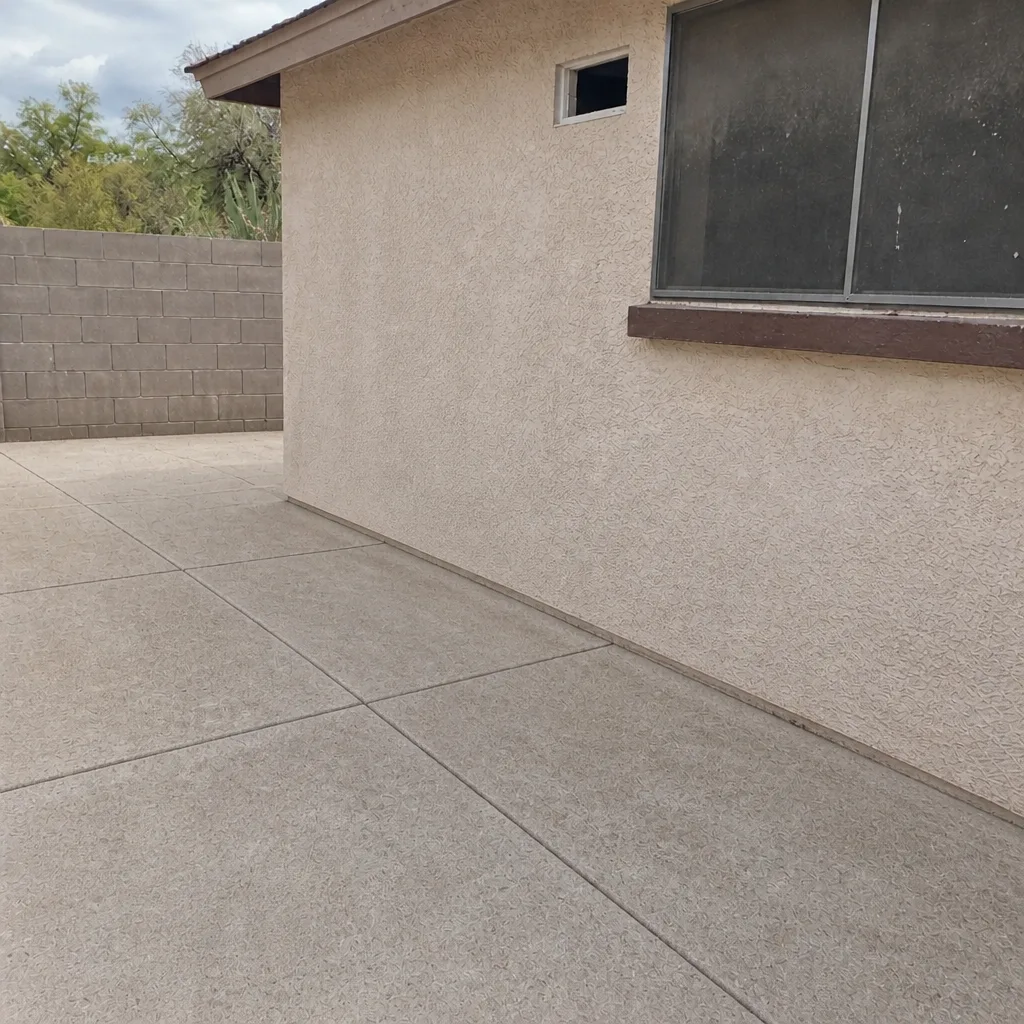 After
When to Call a Professional
Some signs mean it’s time for a professional inspection rather than another filter change. If you’re seeing visible dust puffs from the registers when the system starts, weak airflow in particular rooms, or a musty smell that shows up with the monsoon and lingers, the ductwork itself is the likely source. The same is true after a renovation, after moving into a home with unknown duct history, if anyone in the household has worsening allergy symptoms that seem tied to the HVAC system, or if the dryer is taking more than one cycle to dry a load. Our technicians have up to 11 years of experience and work with professional-grade Rotobrush, Nikro, and Abatement Technologies equipment on every job. Blackwell Air Duct Cleaning offers free estimates in Tucson. Call (855) 618-0955. We answer 24/7. Fast dispatch from 7am to 7pm, Sunday through Friday.
Frequently Asked Questions
Whole-system air duct cleaning for a typical Tucson home is usually quoted as a flat price per system rather than a per-vent figure, and that flat price is set by a written estimate after an inspection of the ductwork. Be cautious of very low teaser prices; they often become much larger invoices once the technician is on site. Call (855) 618-0955 for an exact quote. Estimates are free.
Cheaper quotes usually reflect a different job: compressed air or a shop vac instead of real negative-air containment and rotary-brush agitation, and a fast pass instead of source removal. In Tucson, that matters because caliche dust bonds to duct surfaces and needs mechanical contact to break loose, and microbial material from the monsoon months needs HEPA-filtered capture to remove safely. Ask what equipment will be on site before you compare prices. Call (855) 618-0955 for an estimate based on real equipment and a flat per-system price.
Ask for before-and-after photos of your own ducts, taken during the job. A crew doing genuine source-removal work can provide them, and a crew that can’t is telling you the job was cosmetic. A flat price agreed in writing before work starts is the other safeguard. Call (855) 618-0955 to schedule an inspection and a free estimate.
Every three to five years is a reasonable baseline for a typical Tucson home, and shorter for homes with pets, older ductwork, recent renovations, or signs of microbial growth after the monsoon. Because Tucson systems run well over 2,800 cooling hours a year, they accumulate dust much faster than national guidelines assume. An inspection tells you which interval fits your home. Call (855) 618-0955 for a free estimate.
Yes, and it’s one of the reasons Tucson duct cleaning differs from a generic national guide. The summer humidity spike raises moisture inside ducts enough for dormant spores to activate on the dust film already present, which is why musty odors often appear in late summer. Cleaning after the rains removes the substrate. Call (855) 618-0955 for an estimate.
We do both, as distinct services. Cleaning uses professional-grade equipment from Blackwell Air Duct Cleaning to remove contamination; repair addresses leaks, disconnected joints, and crushed runs that cause re-contamination. If the inspection shows damage, we tell you, and we handle the repair rather than referring it out. Call (855) 618-0955 for a free estimate in Tucson.
The Bottom Line
Tucson’s climate is the variable most duct cleaning advice ignores. Near-continuous cooling runtime, fine caliche dust that bonds to duct surfaces, and a monsoon season that creates humidity windows for microbial growth all combine to load ductwork faster than standard intervals assume. The right response is real source-removal cleaning: negative-air containment with HEPA filtration, rotary-brush agitation strong enough to break the caliche bond, and a written flat price agreed before work starts. Pair that with an inspection that catches duct damage before it causes re-contamination, and add dedicated dryer vent cleaning on its own schedule. Professional-grade equipment, not shop-vac shortcuts, is the difference. We clean the ducts, repair them when they need it, and don’t hand that off. Call (855) 618-0955 for a free estimate. We answer 24/7. Fast dispatch from 7am to 7pm, Sunday through Friday.
Written by the team at Blackwell Air Duct Cleaning.