
Last updated November 15, 2026
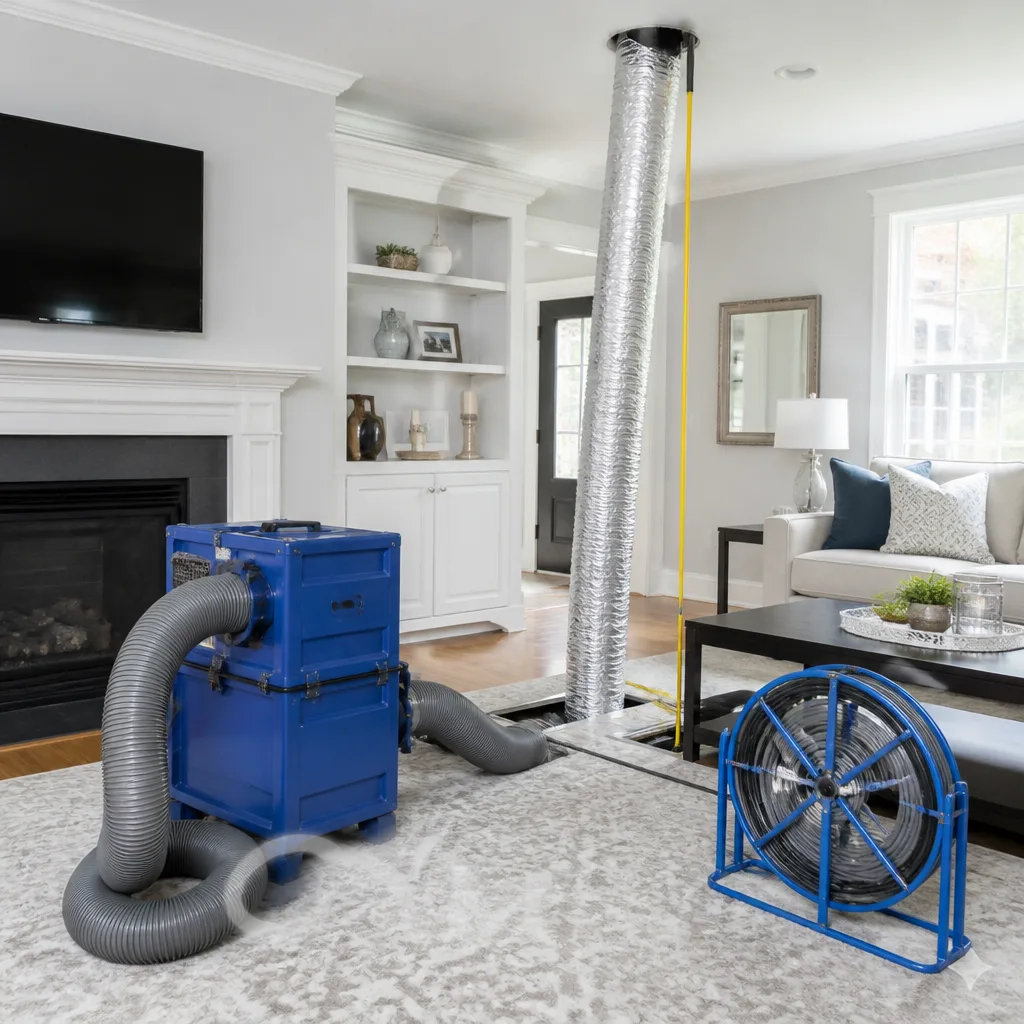 Whole-home duct cleaning
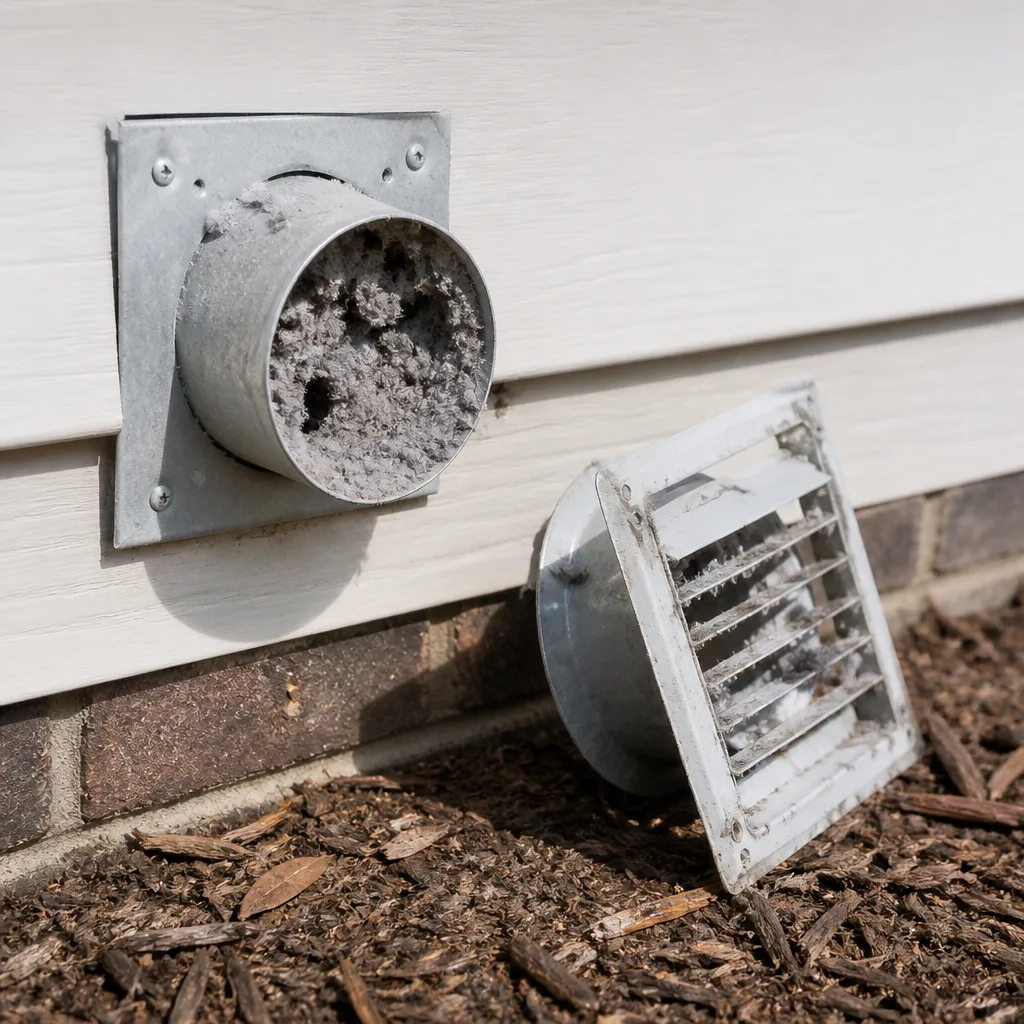 Dryer vent cleaning
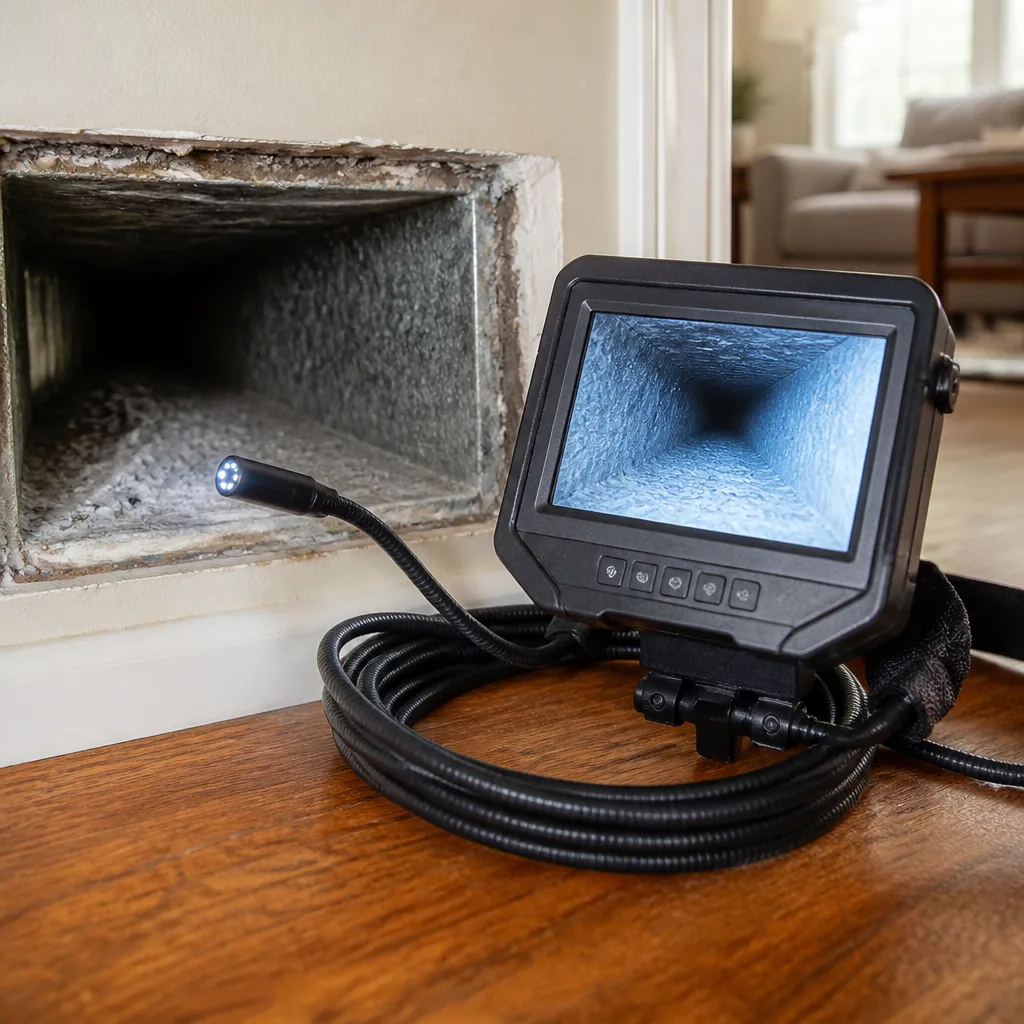 Camera inspection
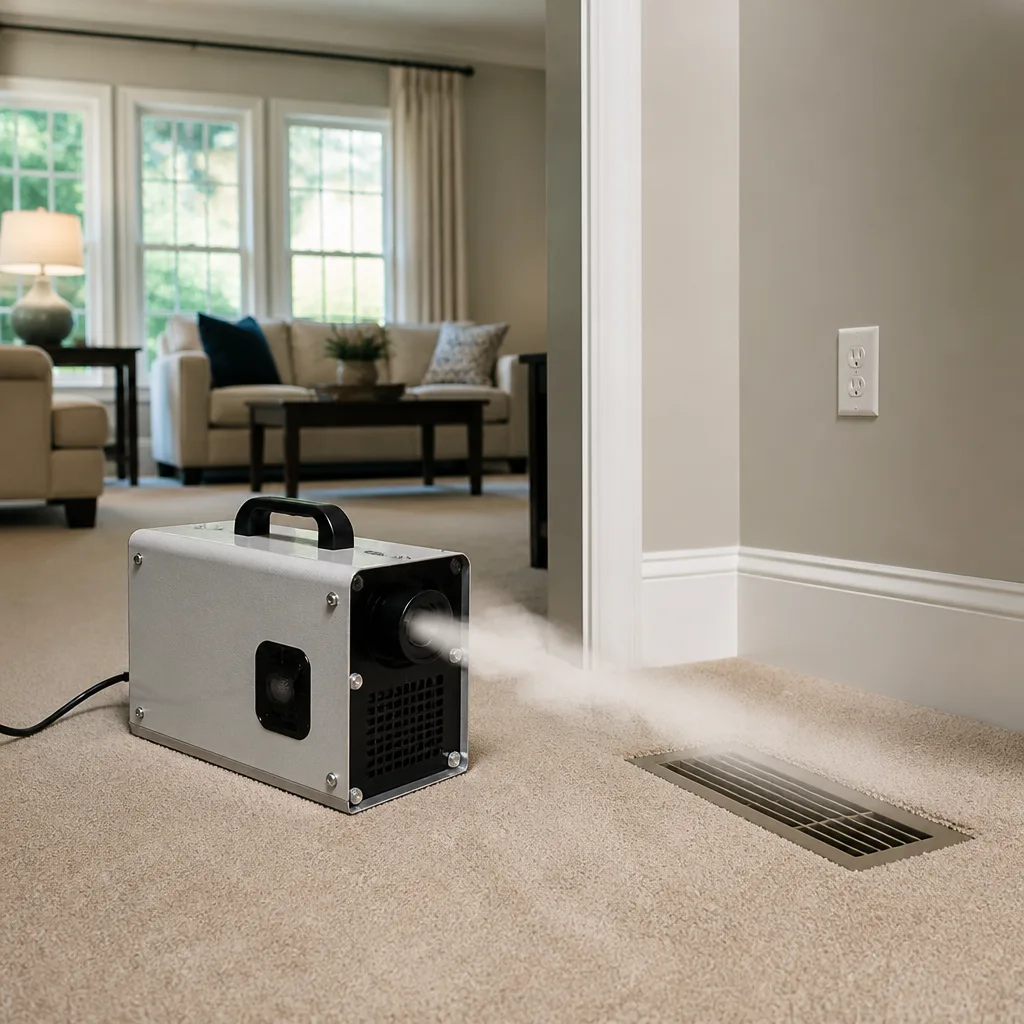 Sanitizing & deodorizing
Whole-system duct and dryer vent check with before-and-after photos - you see exactly what came out of your vents
That "$99 whole-house special" is a bait ad - the real number appears once they are in your hallway, or the "clean" is a shop-vac at the register. We photograph the inside of your ducts before and after instead.
Air Duct Cleaning Troubleshooting in Tucson: Common Problems and How to Fix Them
If a technician can’t tell you which section of ductwork is causing your airflow problem before they start cleaning, they’re guessing, and you’re paying for it. Most homeowners in Tucson assume every air quality complaint traces back to dirty ducts. That’s often wrong. Weak airflow from one room, dust that resettles days after a cleaning, or an odor that comes and goes with the thermostat usually points to a mechanical cause: a crushed flex run, a disconnected joint, an undersized return, or a gap in the duct system that opens to the crawlspace or attic. This guide maps symptoms to causes so you can describe what you’re hearing, seeing, and smelling accurately, and avoid paying for a cleaning that fixes nothing.
Quick Answer
Air duct problems in Tucson usually fall into one of three buckets: a dirty duct system that genuinely needs cleaning, a physical defect like a disconnected or crushed duct run that needs repair, or a design problem such as undersized returns or unbalanced airflow that cleaning won’t solve. The right fix starts with identifying which bucket you’re in. A visual inspection at the registers and air handler, followed by camera inspection when the source isn’t obvious, tells you that before anyone charges you for work.
Styles & brands we work with
- Whole-home duct cleaning
- Dryer vent cleaning
- Camera inspection
- Sanitizing & deodorizing
Table of Contents
- Is It Dirty Ducts or a Duct Problem? How to Tell the Difference
- What to Look For at Your Registers Before You Call Anyone
- What Each Odor Tells You About Your Duct System
- Why Tucson’s Caliche and Slab Construction Create Unique Duct Problems
- Weak Airflow in One Room: Causes and Fixes
- When a Flashlight Isn’t Enough: Negative-Pressure Camera Inspection
- Cleaning vs. Repair: Which Does Your Duct System Actually Need?
- What Air Duct Cleaning and Repair Cost in Tucson
Is It Dirty Ducts or a Duct Problem? How to Tell the Difference
Cleaning a duct system with a crushed or disconnected run is like washing a car with a broken fuel line. The ducts come out cleaner, but the air still doesn’t move the way it should. In our experience, roughly a third of the airflow complaints we see in Tucson trace to a mechanical defect rather than dirt buildup. That distinction matters because the fix and the price are completely different.
Use this quick check to sort your situation into the right bucket.
- Dirt or debris signal: Dust settles evenly on registers across the house, no single room is dramatically worse, and a tissue held to a supply register gets pushed out with steady force.
- Defect signal: One or two rooms get almost no airflow while the rest are fine, the register fogs or sweats, or you can hear a whistling or whooshing sound from the vent.
- Design signal: Airflow improves when you close a register in another room, or the system only performs well after a filter change and then drops off within days.
- Intrusion signal: You find droppings, nesting material, or loose insulation at a register, or a musty smell shows up only during heating and cooling season.
- Pressure signal: The air handler runs continuously or short-cycles, and the return grille is noticeably louder than the supply vents.
If two or more defect, design, or intrusion signals fit, a cleaning alone won’t get you the result you’re after. Call air duct cleaning only after you’ve confirmed the problem is actually dirt. Confirm a mechanical issue and you’re looking at repair, not cleaning. The distinction saves money.
What to Look For at Your Registers Before You Call Anyone
A few minutes of careful looking at each supply and return register tells you more about your duct system than a phone conversation with a call center. Before you schedule anyone, walk the house and check the following.
- The tissue test. Hold a tissue against a supply register while the fan runs. It should flutter steadily. If it barely moves, that run has restricted airflow. If it pulls backward, the register is acting as a return and something is miswired or mis-taped downstream.
- Dust pattern on the grille. Even dust means the dust is coming through the duct. Streaky dust, or dust concentrated on one side of a grille, points to a joint that’s leaking and pulling attic or wall-cavity air into the duct stream.
- Dark rings around ceiling registers. A sooty halo on the drywall around a ceiling vent usually means the boot (the transition between the duct and the register) is unsealed, and unfiltered air from the attic is bypassing the filter.
- Access panel at the air handler. Shine a light inside the return boot and plenum. Sheet metal rattling loose at a seam, torn flex duct tape, or a crushed flex run bunched at a corner is a repair problem, not a cleaning problem.
- Filter fit. A filter that is too small for its slot, bowed forward, or sitting loosely lets dust bypass it entirely and coat the evaporator coil and every duct downstream.
- Return grille placement. Every bedroom door should have clearance under it (roughly an inch) or a return-air path. Sealed bedrooms with no return path starve the system and cause the exact symptoms people misdiagnose as dirty ducts.
If everything checks out visually but the symptoms persist, the next step is a camera inspection. We’ll cover that in detail below.
What Each Odor Tells You About Your Duct System
Not all duct odors are created equal, and treating them as one problem is the fastest way to waste money on the wrong service. Each smell points at a different source and a different remedy.
Musty, damp, or “basement” smell
Musty air almost always means moisture and biological growth somewhere in the system, most often on the evaporator coil, in a wet duct liner, or in a p-trap that’s dried out during a shoulder-season stretch when the system sits idle. In Tucson, this smell shows up most in homes with unconditioned returns pulling air from a hot attic that cools overnight and condenses moisture on sheet metal. Cleaning is part of the answer, but so is finding the moisture source and drying it. A rotary-brush cleaning with contained, HEPA-filtered extraction addresses the surface but not a wet liner or a leaking drain pan. Both need fixing.
Burnt, hot, or electrical smell
This is the one smell to treat as urgent. A burnt smell from the ducts usually means overheating at the blower motor, a failing run capacitor, or a wire junction in the air handler failing under load. It’s a fire and safety issue before it’s a duct issue. Turn the system off and call for service on the equipment. Never chase a burnt smell with a duct cleaning; the ducts aren’t the source.
Chemical, solvent, or “new plastic” smell
A chemical smell can come from off-gassing insulation, adhesives, or a manufacturing residue in a new flex duct run. It can also come from cleaning chemicals someone else used on the system and never fully removed. If a previous cleaning left a sharp odor, contained, HEPA-filtered extraction with a proper rinse step usually resolves it. If the smell is coming from the ducts themselves and the system is older, have the duct material inspected before doing anything else.
Dead animal or decay smell
This is the intrusion category, and it’s the one most likely to be drug out by cleaning alone without ever resolving. See the caliche section below for how a rodent gets into a Tucson duct system and what repairing the entry point requires.
Why Tucson’s Caliche and Slab Construction Create Unique Duct Problems
Homes in Tucson sit on ground that isn’t like ground most of the country deals with. Caliche is a hard, cement-like calcium layer just below the topsoil that builders have to break through to reach grade for foundation work. That same hard layer, plus a slab-on-grade foundation design, shapes how duct systems behave here in ways most general guides never mention.
Return ducts that run through the slab
Many Tucson homes use under-slab return duct runs or returns that drop through the slab and pick up air near the perimeter. In summer the ground is warm, so these returns don’t cool the way a Chicago basement return would, but they also can’t be visually inspected from above. When a return run in the slab develops a crack or a joint separates, the whole system pulls caliche dust and outside-grade air into the return stream. The symptom is dust everywhere and a return grille that runs loud, and the fix involves camera inspection and, in some cases, rerouting the return above the slab.
Rodent entry points specific to Tucson construction
Caliche is hard enough that rodents can’t burrow through it, so they don’t. They go around it, following the foundation edge, the plumbing penetrations, and the gaps at the base of exterior walls. In Tucson, pack rats and roof rats gain access to attic duct systems through surprisingly small gaps at the roof-wall intersection, at the evaporative cooler penetrations, and where older duct tape has dried and split. Once inside the attic, a rat will chew through flex duct in minutes. The noise and the smell at a register is often the only sign something’s wrong. Repair requires sealing the entry point, not just cleaning the duct. Cleaning the duct and leaving the hole open guarantees the problem comes back.
Ducts in the attic that bake in the sun
Attic temperatures here routinely push past 150°F in summer, which accelerates the failure of flex duct tape, mastic, and duct insulation. When the tape gives out, the duct separates at a joint and blows conditioned air into the attic instead of the room. If two or three rooms are warm while the rest are fine, and the outdoor unit is running normally, a separated attic duct joint is a strong suspect. Repair usually involves reconnecting and re-sealing the joint, not replacing the entire run.
Weak Airflow in One Room: Causes and Fixes
A single room with poor airflow is the most common complaint we hear, and it has a specific, short list of causes. Work through them in order and you’ll usually find the answer.
- Crushed or kinked flex duct. Flex duct has to be pulled tight between hangers and can’t be bent tighter than the manufacturer’s bend radius. A run that was shoved into a tight space at install will be crushed at the bend and deliver almost no air. Fix: straighten or replace the run.
- Disconnected joint. Anywhere two flex sections meet, or a flex meets a metal boot, they need a proper mechanical connection plus mastic. Tape alone fails in a hot attic. Fix: reconnect and mastic-seal.
- Closed or blocked damper. Older systems have manual dampers at the trunk that get closed and forgotten. Fix: open and rebalance.
- Undersized supply branch. A run that’s too small for the room’s load will never perform regardless of what’s done to it. Fix: upgrade the run, which is a design problem rather than a repair.
- Undersized return. If the whole house struggles and every room runs a little weak, the return is the problem. Fix: add return capacity, which is design work.
- Object in the duct. Construction debris, a dropped item, or rodent nesting blocks a run. Fix: extract and clean, then repair whatever allowed the object in.
- Filter, coil, or blower restriction. Anything upstream of the ducts that restricts the whole system mimics a duct problem at one register. Fix: replace the filter, clean the coil, and check the blower wheel for heavy dust loading.
If two or more of these fit at once, the fix is almost always a combination of cleaning the duct system and repairing the mechanical defect. Doing one without the other produces the “I cleaned the ducts and nothing changed” outcome that makes people stop trusting the whole category.
When a Flashlight Isn’t Enough: Negative-Pressure Camera Inspection
A flashlight and a phone camera tell you what’s visible in the first foot of a duct. The problems that matter usually live ten or twenty feet in, past a bend, or inside a chase wall where nothing reflects back. That’s where camera inspection earns its keep.
A proper duct inspection uses a small camera advanced through the duct while the system is held under negative pressure inside a containment. The negative pressure does two things. It keeps dust and debris from escaping into living space during the inspection, and it lets the camera see the difference between a settled layer of dust on the bottom of a duct (cleanable) and biological growth on a liner (a different problem entirely). Practical camera inspection makes sense when:
- A single register has poor airflow and the visible run looks fine.
- You suspect a disconnected joint inside a chase wall or inaccessible ceiling cavity.
- Rodent activity is suspected and you need to find where they’re coming in and what they’ve damaged.
- A previous cleaning didn’t change the symptom, and you need to confirm what was actually done.
- You’re buying or selling a home and want a documented condition of the duct system.
On the equipment side, this is where it matters which tools show up. A camera pushed through with no containment is a look, not an inspection. When we inspect, we run the system under containment with Abatement Technologies negative-air equipment so the case is documented, not estimated. Rotobrush and Nikro rotary-brush systems then let us clean what the camera found without tearing the duct apart.
Cleaning vs. Repair: Which Does Your Duct System Actually Need?
Here’s the honest split. Cleaning addresses accumulated dust, debris, and settled debris from construction or renovations. Repair addresses the structural and mechanical problems that a cleaning can’t touch. Most Tucson homes that call us about a symptom need one or the other, rarely both. But when both are needed, cleaning first and repairing second is the order. Cleaning first lets the repair crew see the duct surfaces.
- You need cleaning if: The ducts have never been cleaned, you recently finished a renovation, the dust on the registers is even and heavy, or allergy symptoms track with the system running.
- You need repair if: One room is dramatically worse, you hear a whistling or whooshing, you can see loose tape or sheet metal at the air handler, or the system has water damage inside a flex run.
- You need both if: A disconnected joint has been blowing attic dust into the duct system for months, or a rodent intrusion means both damaged flex and contaminated duct surfaces.
We treat duct repair as its own service rather than an add-on to a cleaning, because that’s what it is. Cleaning without repair leaves the airflow problem exactly where it started.
What Air Duct Cleaning and Repair Cost in Tucson
Air duct cleaning in Tucson typically runs $350 to $600 for a standard single-story home, and air duct repair typically runs $150 to $450 per defect depending on access. Camera inspection and any work on the return plenum sit at the higher end. Quotes vary wildly in this market, and the variation is almost always about scope and equipment, not about the customer’s address. Prices below are estimates. Your written estimate sets the final price.
| Service | Typical estimate in Tucson |
|---|---|
| Standard duct cleaning, single-story home | $350 – $600 |
| Duct cleaning, two-story or larger home | $500 – $850 |
| Camera inspection with containment | $150 – $350 |
| Repair a disconnected or crushed flex run | $150 – $350 per defect |
| Return plenum reseal or rebuild | $250 – $450 |
| Dryer vent cleaning (dedicated service) | $125 – $225 |
Sort these figures into your decision the way an experienced technician would. The number that matters isn’t the cheapest line on the estimate, it’s whether the scope matches the symptom. A $90 teaser clean is a $90 clean: it opens the registers, brushes what’s reachable, and leaves the trunk, return, and plenum alone. That’s not what a sealed, HEPA-contained system cleaning looks like. We quote one flat price per system, agreed before work starts, and we take before-and-after photos of your own ducts so you know exactly what was done.
If you’re looking at dryer vent cleaning, treat it as a fire-safety service, not a chore. Lint buildup in the vent run is a leading cause of house fires, and a clogged vent also extends dry times and shortens dryer life. In Tucson, dryer vents that run up through the attic or through a hot exterior wall clog faster than the same vent would in a cooler climate, because the heat accelerates lint drying and adhesion.
Common Mistakes to Avoid
- Buying a cleaning to solve an airflow problem without checking the ducts first. If one room is cold and every other room is fine, the problem almost certainly isn’t dirt. A quick visual check at the register and air handler rules dirt in or out before you pay for anything.
- Assuming a “whole house” price covers the whole system. Some quotes cover supply registers only and skip the return, plenum, and trunk. Ask exactly which components the price includes before agreeing.
- Skipping the return side. Returns in Tucson often run through the slab or a garage wall chase and hold more settled debris than any supply. Cleaning only the supplies is half a job.
- Paying for a cleaning that leaves the entry point open. If rodent activity caused the problem, cleaning without sealing the entry brings the problem right back. Repair the entry point first or as part of the job.
- Ignoring the air filter behind the cleanup. A poorly fitted filter lets dust bypass straight into the coil and ducts. If the filter slot is oversized, fix the fit, not just the filter.
- Assuming musty and burnt smells are the same problem. Musty points to moisture and biological growth. Burnt points to equipment failure and needs service right away. Treating them as one issue wastes time and money.
- Choosing a quote without asking what equipment shows up. A shop-vac and a brush are not a duct cleaning system. Ask what the crew brings, and whether containment and HEPA filtration are part of it.
See the difference
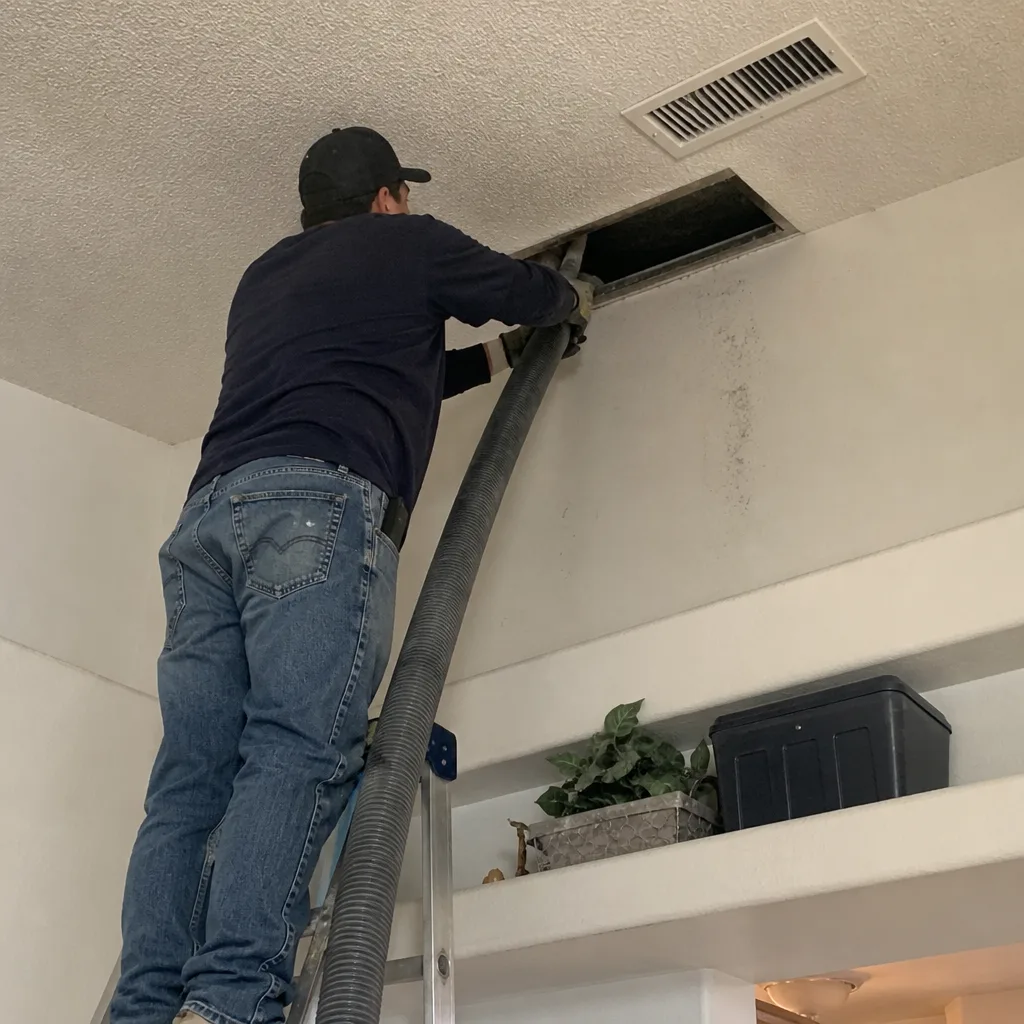 Before
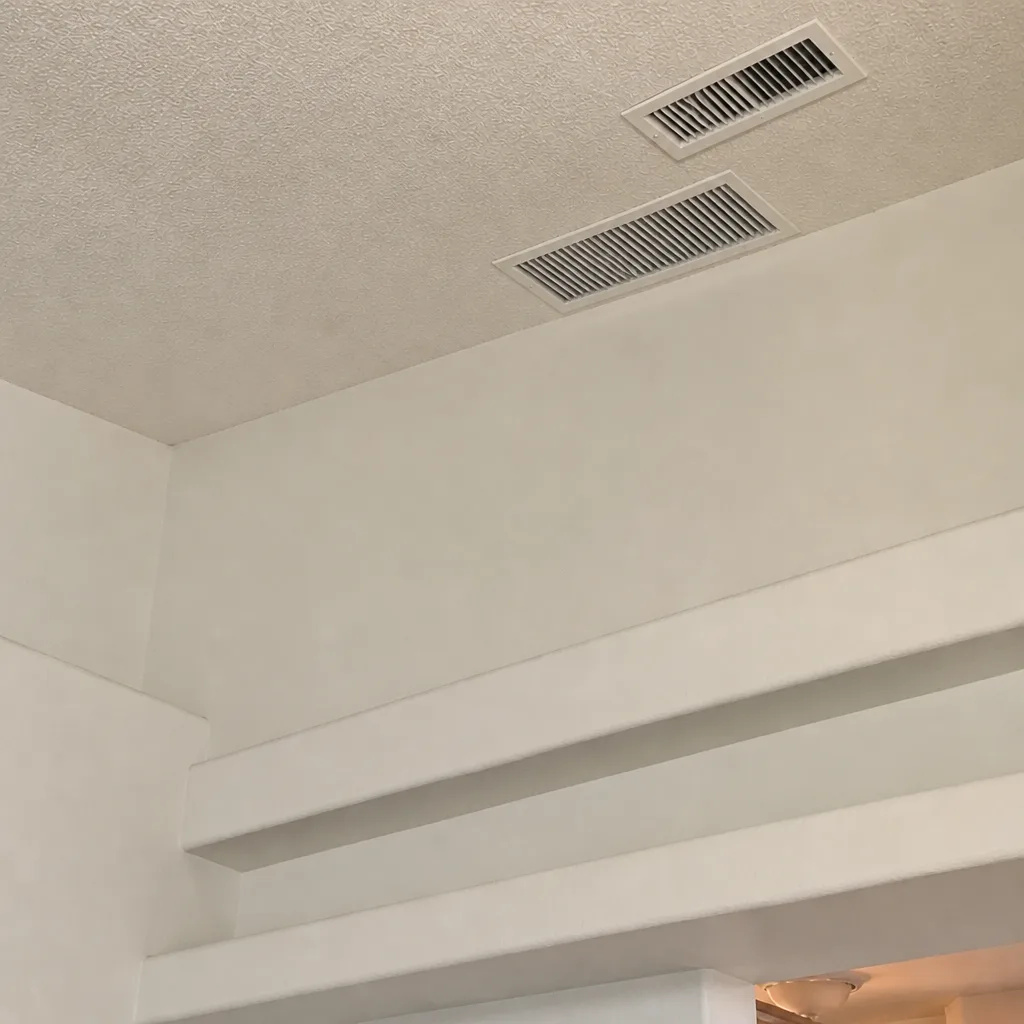 After
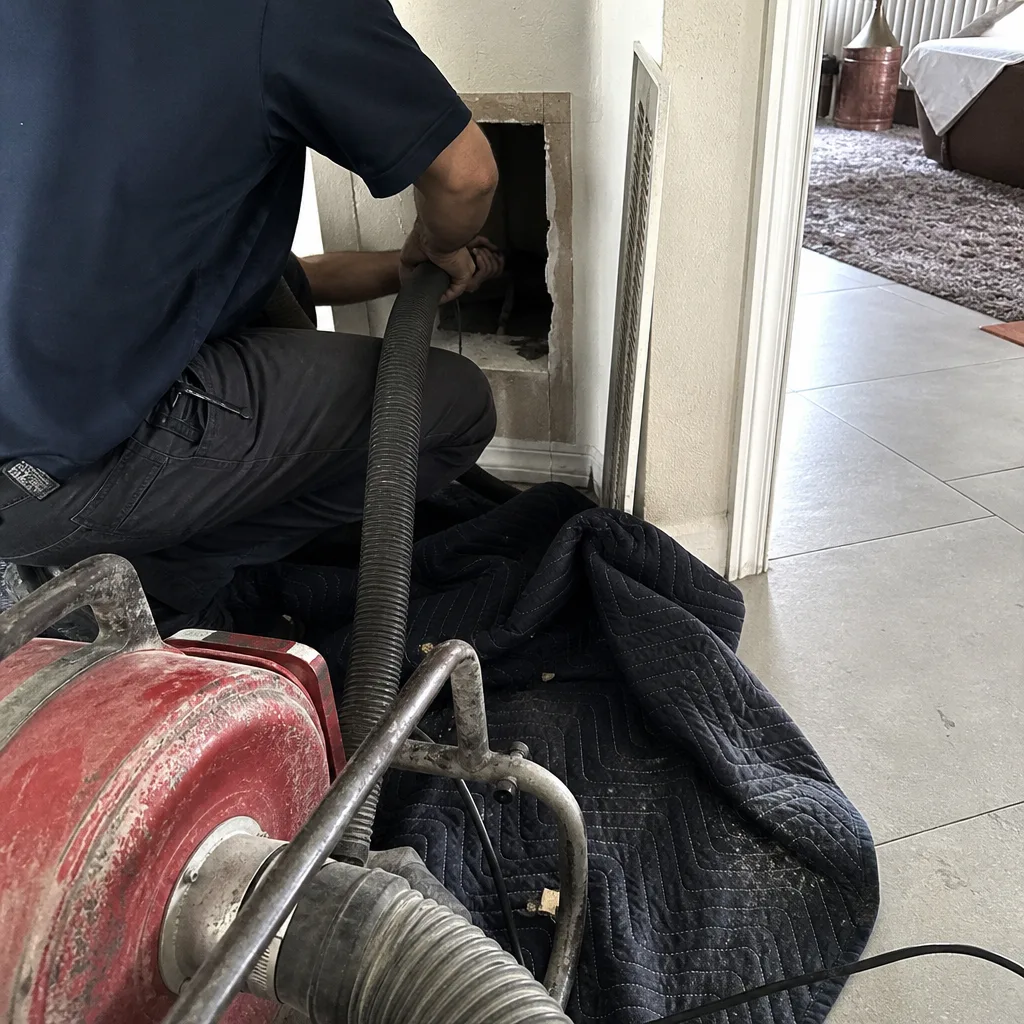 Before
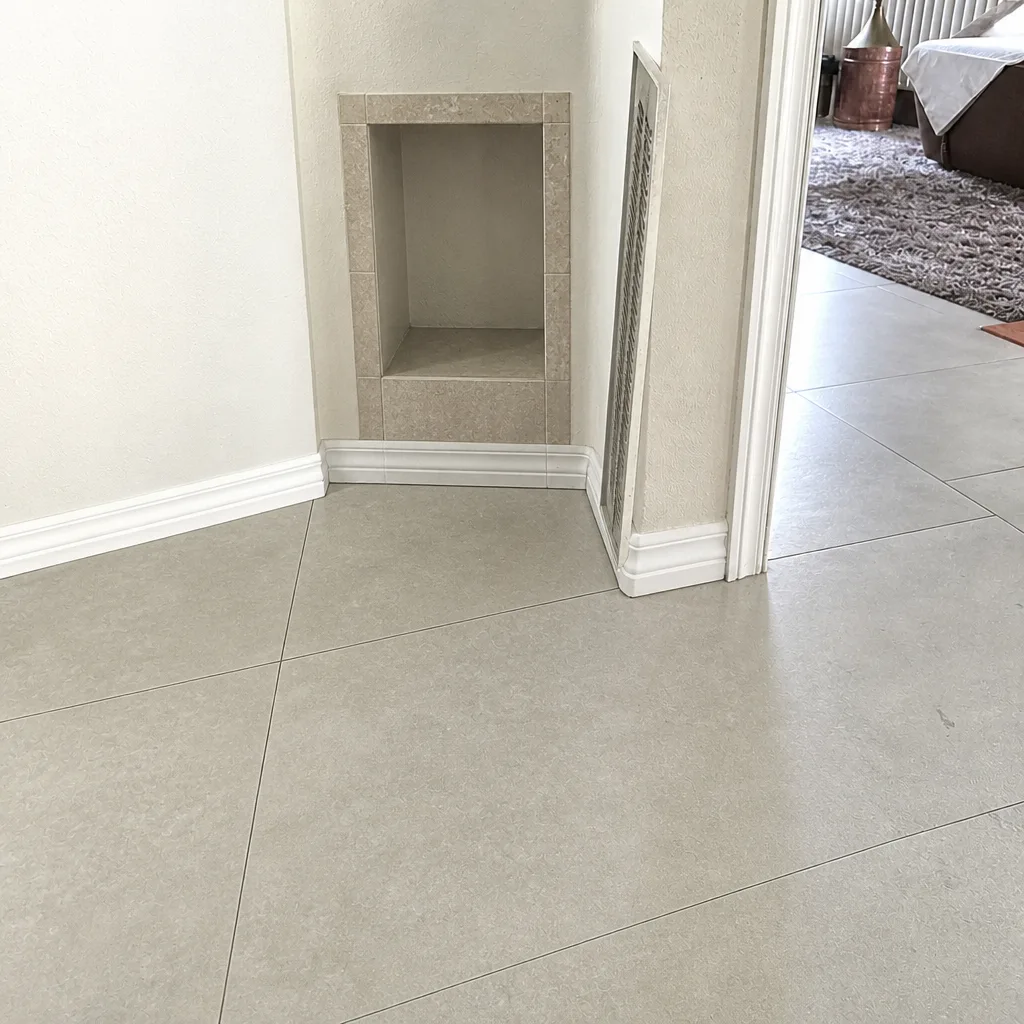 After
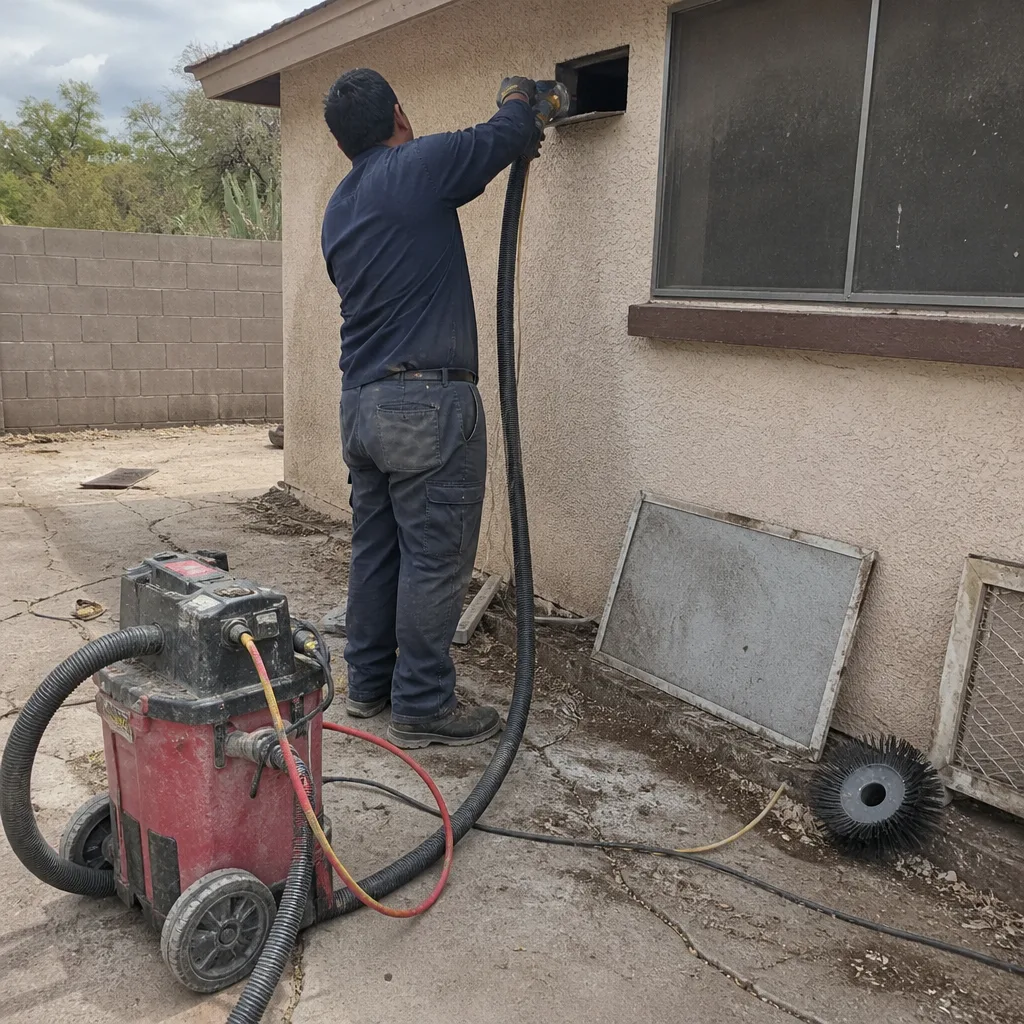 Before
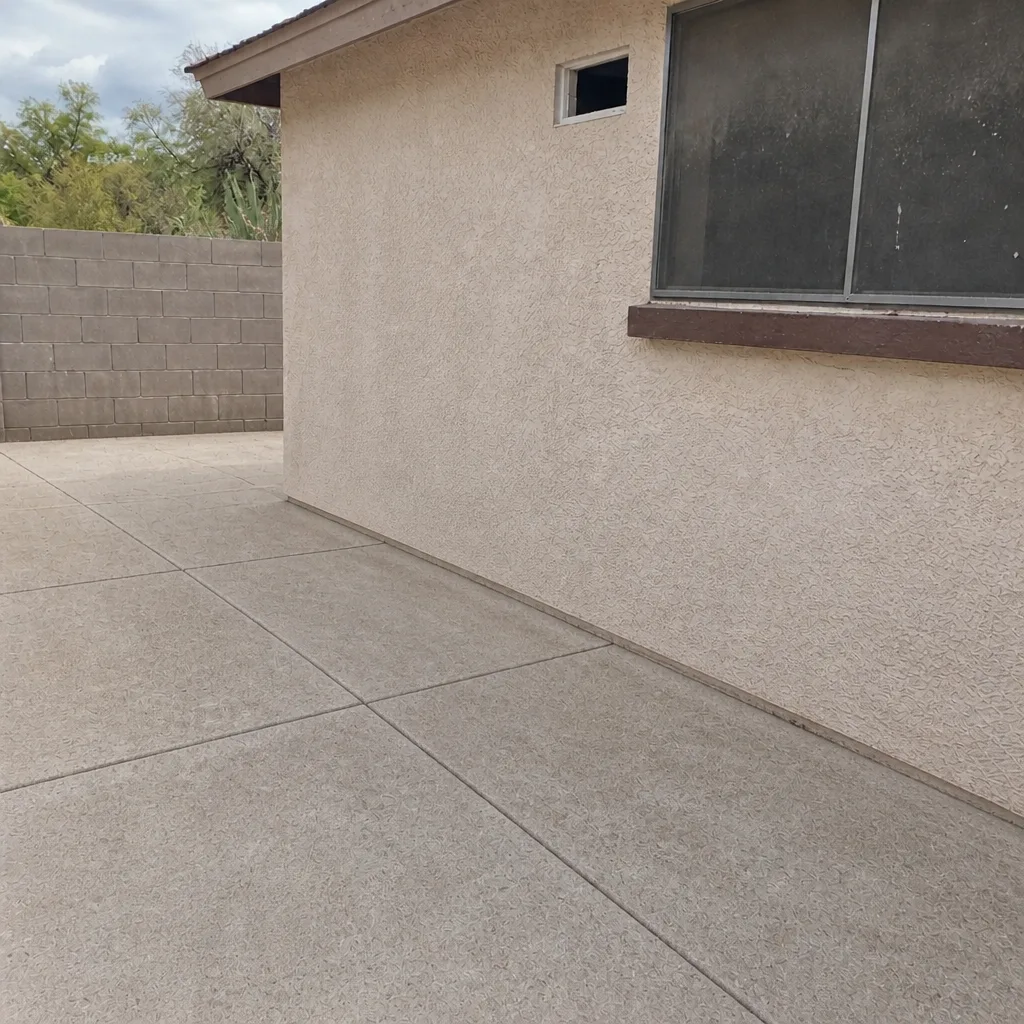 After
When to Call a Professional
Call a professional when the symptoms point to something you can’t fix with a filter change and a register adjustment. A single room that underperforms year-round, a burnt or electrical smell from the ducts, visible loose tape or sheet metal at the air handler, rodent activity or droppings at a register, or a cleaning that was done and didn’t change anything: each of those needs an inspection with the right tools. Homes in Tucson with under-slab ducts, attic flex runs, and evaporative cooler penetrations have more entry and failure points than most, so the visual-only inspection a generalist does misses a lot. Blackwell Air Duct Cleaning offers free estimates in Tucson. Call (855) 618-0955. We answer 24/7. Fast dispatch from 7am to 7pm, Sunday through Friday. Bring us a description of the symptom and we’ll tell you which of the three problem categories it fits before we quote a price.
Frequently Asked Questions
Look for even dust and a steady tissue flutter across registers: that points to cleaning. Look for one weak room, whistling, visible loose tape at the air handler, or droppings at a register: that points to repair. A camera inspection confirms the answer when the visible signs are mixed. Call (855) 618-0955 for an exact quote; estimates are free.
In our experience, weak airflow in one room almost always comes from a crushed or disconnected flex run, a closed damper, or an undersized supply branch, not from dirt. The fix is a duct repair, and a cleaning won’t touch the cause. Call (855) 618-0955 for an exact quote; estimates are free.
A musty smell in the ducts means moisture somewhere in the system, usually on the evaporator coil, in a wet duct liner, or at a dried-out p-trap. Cleaning removes surface growth but doesn’t fix the moisture source, which has to be found and dried. Call (855) 618-0955 for an exact quote; estimates are free.
Turn the system off and call for service on the air handler. A burnt smell points to a failing blower motor, a run capacitor, or a wire junction, all of which are fire and safety issues before they’re duct issues. Don’t try to solve a burnt smell with a duct cleaning. Call (855) 618-0955 for an exact quote; estimates are free.
Caliche is hard enough that rodents don’t burrow through it, so they go around it, following the foundation edge and roof penetrations. Once inside the attic they find dried tape and split flex duct and chew through in minutes. Repair has to include sealing the entry point; otherwise the problem returns. Call (855) 618-0955 for an exact quote; estimates are free.
A standard single-story home in Tucson typically runs $350 to $600, and a two-story home runs $500 to $850. Duct repair runs $150 to $450 per defect depending on access. We set one flat price per system, agreed before work starts, and take before-and-after photos of your own ducts. Call (855) 618-0955 for an exact quote; estimates are free.
Cheap quotes usually reflect a smaller scope: supplies only, no return or plenum, and no containment. A specialized cleaning runs a rotary-brush system with negative-air containment so nothing escapes into the room. That equipment costs more to run, and the result is different. Call (855) 618-0955 for an exact quote; estimates are free.
Ask for before-and-after photos of your own ducts, taken during the job. A specialist should be able to show you what was cleaned and what was found, not just hand you an invoice. We shoot those photos on every job as a matter of course. Call (855) 618-0955 for an exact quote; estimates are free.
Most homes need it every three to five years, sooner after a renovation, a rodent intrusion, or a system that’s been running with an improperly fitted filter. Homes that have never had it done at all usually need a thorough cleaning once the root cause of any airflow problem is repaired. Call (855) 618-0955 for an exact quote; estimates are free.
Yes, and you should. A tissue test at each register, a look inside the air handler return boot, a check of the filter fit, and a look for sooty rings around ceiling registers tells you a lot. What you can’t see is a crushed run ten feet into a chase wall. That’s where a camera inspection comes in. Call (855) 618-0955 for an exact quote; estimates are free.
The Bottom Line
Duct problems in Tucson break down into three categories: cleaning, repair, and design. The symptom tells you which one you’re dealing with before you spend a dollar. Even, heavy dust and steady airflow across registers point to cleaning. One weak room, whistling, visible tape failure at the air handler, or droppings at a register point to repair. A musty smell means moisture, a burnt smell means call for equipment service right away, and a chemical smell needs the duct material inspected. Whatever you do, match the fix to the symptom. Cleaning a crushed run or repairing around dirt produces the wrong outcome at the right price. Blackwell Air Duct Cleaning is Blackwell Air Duct Cleaning, and we work on ducts, dryer vents, and duct repair with professional-grade systems, not generalist equipment. Our technicians have up to 11 years of experience. We quote one flat price per system, agreed before work starts. If you’d like an honest read on which category your home falls into, call (855) 618-0955. We answer 24/7. Fast dispatch from 7am to 7pm, Sunday through Friday.
Written by the team at Blackwell Air Duct Cleaning.