
Last updated November 15, 2026
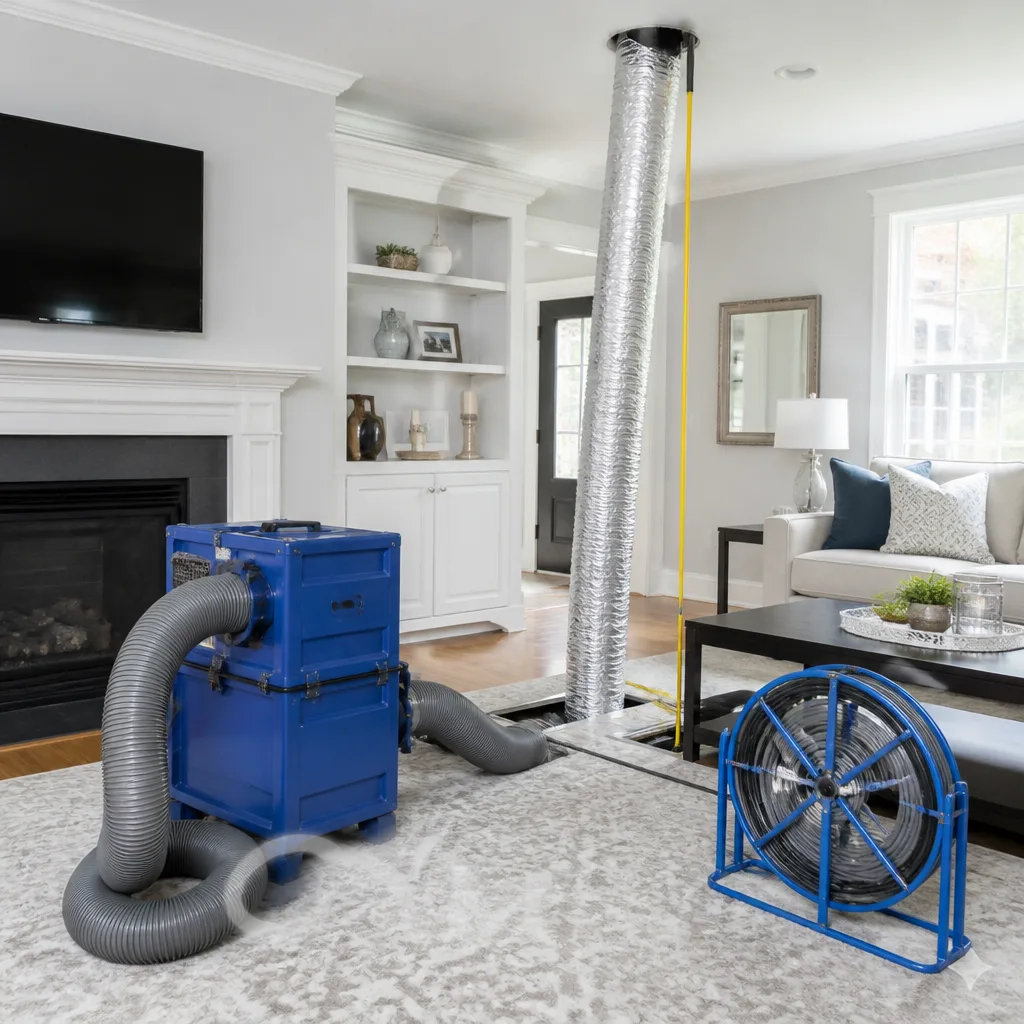 Whole-home duct cleaning
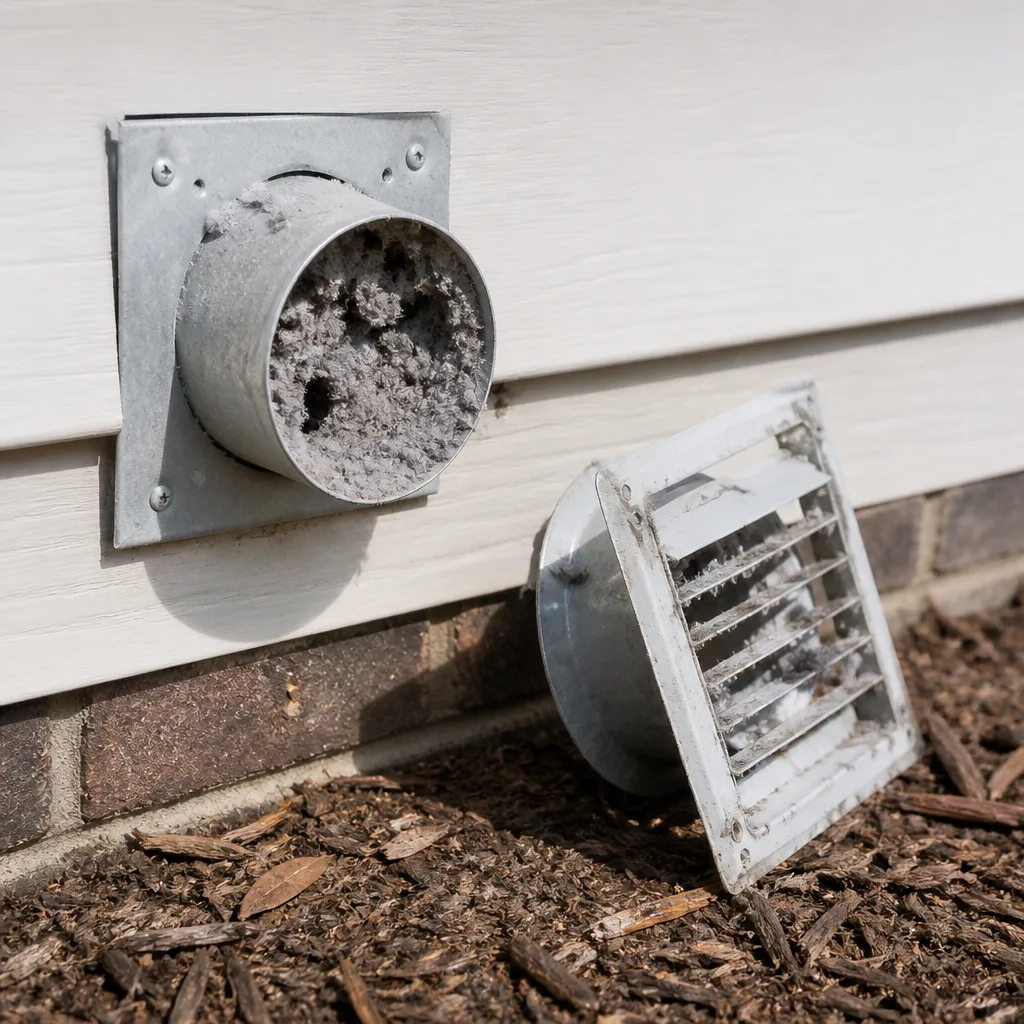 Dryer vent cleaning
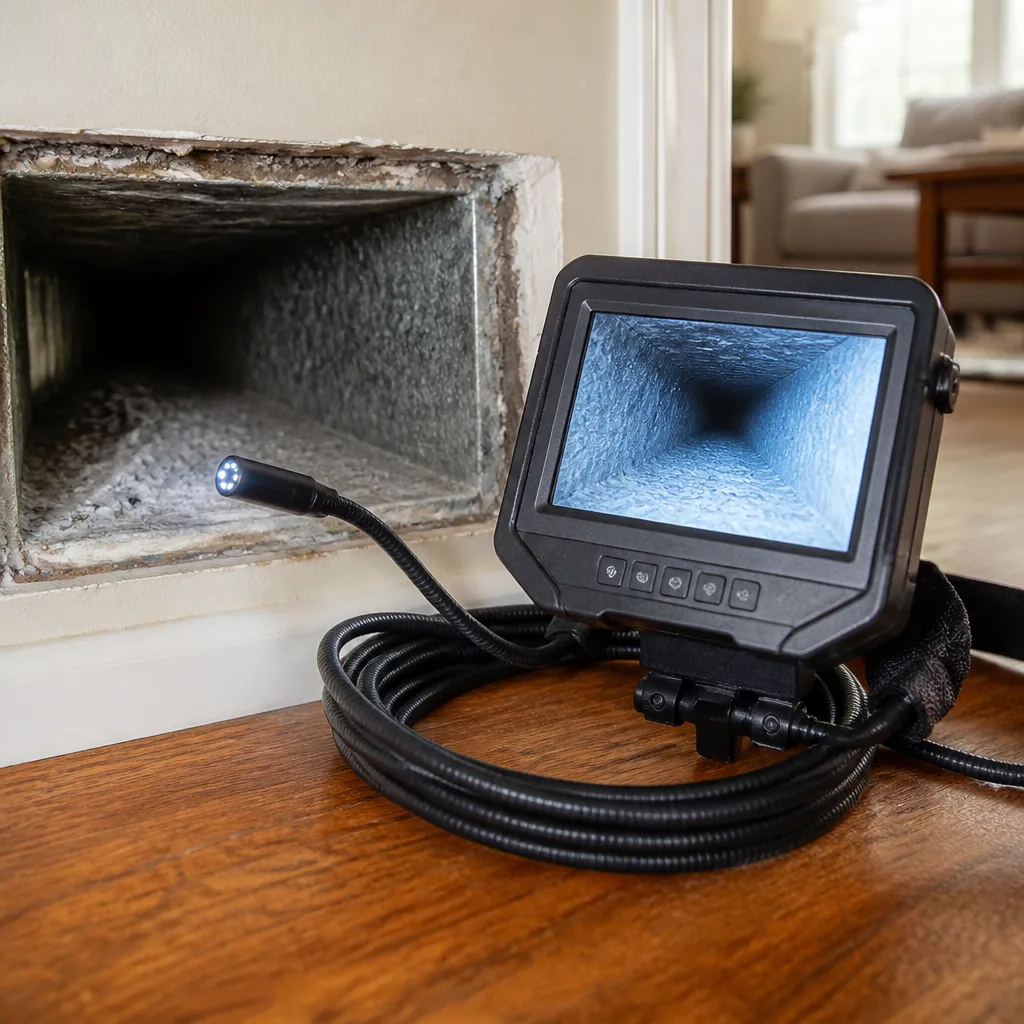 Camera inspection
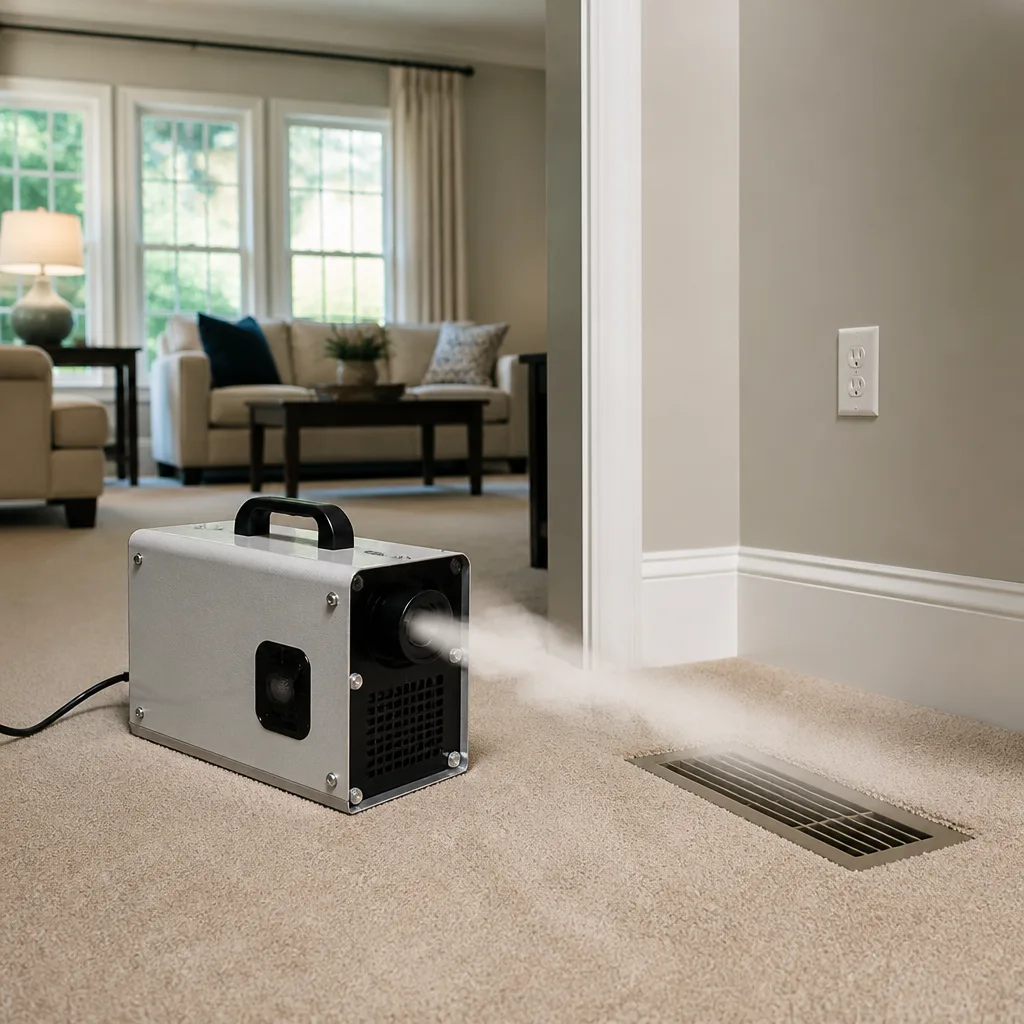 Sanitizing & deodorizing
Whole-system duct and dryer vent check with before-and-after photos - you see exactly what came out of your vents
That "$99 whole-house special" is a bait ad - the real number appears once they are in your hallway, or the "clean" is a shop-vac at the register. We photograph the inside of your ducts before and after instead.
How to Hire an Air Duct Cleaning Contractor in Tucson: A Step-by-Step Guide
Here’s the uncomfortable fact most Tucson homeowners never hear: Arizona does not require a duct-cleaning-specific license. Anyone with a business card, a magnetic sign, and a wet/dry vac can legally advertise duct cleaning in this state. That puts the weight of qualification squarely on you, the person writing the check. It also explains why the same service can be quoted at wildly different numbers by different companies, and why so many people end up paying for a twenty-minute vacuum pass that never touched the real problem. This guide walks you through the exact equipment questions to ask, how to read a quote line by line, how to verify a contractor’s registration, and the Southwest-specific red flags that separate a real specialist from a van with a hose. We’ll also explain what a genuinely thorough job looks like in Tucson’s climate, where dust, pollen, and monsoon-season grit put real demands on a home’s ductwork.
Quick Answer
To hire an air duct cleaning contractor in Tucson, verify the company’s Arizona ROC registration, ask specifically what negative-air machine and agitation tools they use (not whether they “have equipment”), get a written scope of work that names your access points and supply and return line counts, and confirm whether they’re a dedicated duct specialist or a generalist HVAC company. A credible quote states a fixed price per system, not a per-vent teaser, and the technician should be willing to show you before-and-after photos of your own ductwork. If a company can’t answer equipment questions clearly, that silence is your answer.
Styles & brands we work with
- Whole-home duct cleaning
- Dryer vent cleaning
- Camera inspection
- Sanitizing & deodorizing
Table of Contents
- Why Arizona’s Lack of Duct-Specific Licensing Matters
- The Equipment Questions to Ask Before You Book
- What NADCA Membership and ACR Standards Actually Mean
- How to Read a Duct Cleaning Quote Line by Line
- How to Verify a Contractor’s ROC Registration in Tucson
- Red Flags Specific to the Southwest Market
- What Tucson’s Climate Does to Your Ductwork
- Duct Specialist vs. Generalist HVAC Company
- Common Mistakes to Avoid
- When to Call a Professional
Why Arizona’s Lack of Duct-Specific Licensing Matters
Most states handle trades through a licensing board that issues a credential specific to the work. Arizona does not issue a duct-cleaning-specific license. There is no state exam on duct cleaning, no required equipment standard, and no minimum training hour count. What this means in practice is that the barrier to entry is essentially zero. A crew can buy a used truck, print a flyer, and be at your door the next day.
That isn’t a reason to despair. It’s a reason to change how you vet. Because the state won’t do the qualifying for you, the qualification has to happen in the conversation you have before booking. Three things carry that weight:
- Registration. Even without a duct-specific license, a contractor doing work in your home in Arizona generally still needs to be registered with the Registrar of Contractors (ROC) at the appropriate class. Registration is not the same as a trade license, but it establishes a legal entity accountable to a state body.
- Equipment disclosure. A specialty operator can describe, without hesitation, the vacuum and agitation platforms they run. Van-with-a-vacuum operators cannot, because they’re making it up as they go.
- Scope in writing. A quote that lists your access points, your supply versus return line counts, and the sanitizer status is a quote that can be verified after the fact. A flat-rate coupon number with no scope cannot be.
We bring up the licensing gap early because it reframes the whole job of hiring. You aren’t choosing between credentialed professionals and uncredentialed ones, because Arizona’s credential structure doesn’t work that way. You’re choosing between operators who can prove their equipment and process and operators who’d rather you didn’t ask. The rest of this guide is about how to tell the difference.
The Equipment Questions to Ask Before You Book
The single best filter for a duct cleaning contractor is a set of direct equipment questions asked over the phone. A specialized operator will answer every one of them without a pause. A lead-generation call center or a generalist company won’t, because they’re reading from a script.
Ask these, in this order:
- “What negative-air machine do you use?” You’re looking for a named platform, not a vague “commercial vacuum.” Professional operations run negative-air units capable of pulling the whole system under vacuum, which is what keeps loosened debris from being pushed back into your living space during cleaning. When a technician can name the machine (for example, an Abatement Technologies negative-air unit or a Nikro system), that’s a signal they’ve actually worked with the gear and not just marketed it.
- “Do you use mechanical agitation or air-whip only?” Mechanical agitation means a rotary brush or a compressed-air whip driven through the duct to physically break loose the adhered dust film, not just blow air through it. Air-whip-only cleaning dislodges surface dust and leaves the contact film. Rotobrush rotary-brush systems are the industry standard for this reason. Brushing is slow, so it costs more, and that’s why cheap quotes skip it.
- “What filtration is on the extraction side?” HEPA filtration on the vacuum exhaust is the difference between a contained job and a distributed-dust job. If your whole house smells like attic after the crew leaves, the filtration wasn’t real.
- “Will you clean the furnace and air handler or just the plenums and runs?” If the machine that moves the air isn’t part of the scope, the cleaning has a gap. Ask specifically.
- “What’s your access plan?” A serious operator will cut access points at the main trunk and at several individual runs, then reseal them. If a company plans to clean from the register grilles only, that’s a red flag.
Any of these questions answered with a brush-off (“we’ve been doing this a long time,” “we use the best equipment”) is a company that doesn’t actually own the equipment you’re asking about. The right answer takes fifteen seconds and names specific gear.
What NADCA Membership and ACR Standards Actually Mean
The National Air Duct Cleaners Association (NADCA) publishes a standard called ACR (Assessment, Cleaning, and Restoration of HVAC Systems), which is the accepted industry reference for what a proper duct cleaning job looks like. NADCA membership is a meaningful signal because members commit to ACR-aligned practice and have access to training and certification built around that standard. But “NADCA member” and “NADCA certified” are not the same thing, and neither is a guarantee.
Here’s how to read the language carefully:
- NADCA member means the company is a dues-paying member of the association. That’s a positive signal, but it’s an organizational affiliation, not an individual skill credential.
- NADCA certified typically refers to Air Systems Cleaning Specialist (ASCS) certification, which is an individual credential held by a person at the company. Ask who is certified and whether that person is on the crew that comes to your house.
- “Certified” used loosely is the danger zone. Some companies describe themselves as “certified” without naming a body, and that phrasing can mean a two-hour online course, a manufacturer’s product-training badge, or nothing at all. Ask the follow-up question. “Certified by whom?”
If a company can’t answer “certified by whom” without getting defensive, the certification is marketing. That’s a polite way to bow out. Even the best credential doesn’t substitute for the equipment checks in the previous section. NADCA affiliation plus a named rotary-brush and negative-air platform plus a written scope is the combination worth trusting. One of those alone is not.
How to Read a Duct Cleaning Quote Line by Line
A legitimate quote for duct cleaning is a scope document, not a price tag. The difference matters because per-vent teaser pricing is the most common bait-and-switch structure in the trade: a low headline price that becomes a much larger invoice once the technician is on site and renegotiating scope in your living room. A written whole-system quote is the structural fix.
Here’s what a real quote includes:
- The number of supply and return lines being cleaned. Your home has a specific count, and the quote should reflect it. If the quote doesn’t say how many runs it covers, you’re likely paying per additional run once work starts.
- The access points. Where the crew will cut in, and whether resealing is included. Resealing should be included.
- Whether the furnace and air handler are in scope. Not always, but it should be stated either way.
- Sanitizer disclosure. Whether a sanitizer is included, what product it is, and whether it’s optional. Any chemical that goes into your ductwork should be disclosed in writing before the job, not sprayed after.
- The price per system, fixed. Not a coupon number plus “extras as needed.” A fixed price agreed before work starts, with the written estimate holding the final number.
- A guarantee. Job satisfaction should be stated on the quote, not promised verbally.
Most trustworthy operators quote a whole-system range, not per-vent pricing, because the labor is driven by the system construction, the number of runs, and the level of contamination, not by the raw count of registers. If a quote is built around per-vent pricing, ask what happens if the technician opens a run and finds it substantially dirtier than expected. A well-built quote is designed so that question doesn’t change the number.
For professional air duct cleaning that bundles scope, access plan, furnace, and resealing into a single fixed price, ask for the quote in writing. That’s the standard.
How to Verify a Contractor’s ROC Registration in Tucson
In Arizona, the Registrar of Contractors (ROC) is the state agency that registers contractors and handles complaints against them. Duct cleaning doesn’t require a duct-specific license, but the company doing the work is still generally expected to be registered with the ROC at the appropriate class for the work it performs. Verification takes about two minutes and is the single quickest way to disqualify a scam operation.
- Ask the company for its ROC registration number, in writing (email or the quote itself).
- Go to the Arizona ROC website and use the license lookup tool.
- Confirm the name on the registration matches the name on your quote, not just the trade name on the truck.
- Check the complaint history and the current status (active vs. suspended). A single complaint isn’t disqualifying, but a pattern is.
- Confirm the classification covers the work being quoted.
Why this matters even though duct cleaning doesn’t need a duct-specific license: ROC registration establishes that there’s a legally accountable entity behind the job, with a filed address and a state complaint process. A company that exists only as a website, a phone number, and a series of paid leads has none of that. If something goes wrong, there’s no state agency and no legal entity to file against.
We’ve seen this pattern repeatedly in the Tucson market. A caller gets a fast, low quote from a Southwest lead-gen operation, the crew shows up in an unmarked vehicle, the invoice lands higher than quoted, and the next time the homeowner tries to reach the company the number has changed. ROC verification plus a written fixed-price quote plus verification of equipment is a three-part defense against that outcome. None of the three parts is difficult. Together they filter most of the risk out.
Red Flags Specific to the Southwest Market
The Southwest has a distinct bait-and-switch ecosystem driven by lead-generation networks. Calls route to a call center, the call center sells the lead to a local crew, and the crew’s economic model depends on upsell conversion inside the home. That model has recognizable fingerprints:
- A quote given over the phone without asking about your home. A real operator wants the square footage, the HVAC system type, and the approximate number of registers before quoting. A specific price with none of that is a lead-in number.
- A coupon or teaser price that only “covers” a fraction of the house. Often the coupon price covers a minimum vent count, then extra vents, the furnace, and the returns are all quoted on site.
- An immediate “inspection” that finds urgent mold, soot, or biological contamination. Contamination is real and exists, but a real operator will show you what they found (or the photos) before recommending a higher-priced service. A recommendation made before evidence is a sales tactic.
- Unmarked vehicles and no company identification. Legitimate operators arrive with company-marked equipment and identification. If the truck has no branding, ask why before letting the crew in.
- A pitch to clean a different home for a discount. Referral programs exist, but pressure to sign up a neighbor while the crew is still on your property is a red flag.
- No written quote, cash-only payment terms, no receipt beyond a handwritten slip.
- Anyone who claims a duct-specific Arizona license. There isn’t one. If a company claims a state duct-cleaning license, the claim is fabricated.
The honest version of this story is simpler than the scam one. Duct cleaning done properly takes time, requires real equipment, and has a fixed price. If the quote seems low for what’s involved, the gap will show up as either an upsell onsite or a job done with less equipment than the job required. And when the job is done with less equipment, the money spent on it was spent for nothing, because the ducts weren’t actually cleaned. That’s a worse outcome than not calling at all.
What Tucson’s Climate Does to Your Ductwork
Tucson’s climate puts particular stress on residential HVAC systems. Three factors drive it:
- Dust. The Sonoran Desert’s soil is fine and airborne. It enters through windows, doors, and exterior returns, and settles into return duct runs, the air handler, and the furnace cabinet. Ductwork in Tucson accumulates a heavier dust load than in most of the country simply because there’s more dust in the air to settle out.
- Monsoon season. Between roughly July and September, monsoon storms drive significant dust and moisture into outdoor air intakes. Fine particulate gets pulled into the outdoor unit and into any system with a return near an exterior wall. If your ductwork has deteriorated connections around an exterior return, that particulate migrates into the house.
- Year-round cooling load. Tucson’s cooling season is long. The system runs more hours per year than in a typical climate, which means more air passes through the ducts and the plenums during the year and more dust film accumulates. Same reason dryer vent buildup accelerates here: more run time per year.
Those three factors change what an appropriate cleaning interval looks like. In most of the country, duct cleaning is recommended every three to five years depending on household conditions. In Tucson, we’ve seen homes that clearly need it on a shorter cycle because the dust load and continuous running make the buildup faster. Homes with pets, recent remodeling, or a smoker in the household push that interval shorter still. And a duct system with leaking or disconnected joints in Tucson doesn’t just underperform, it pulls desert dust directly into the supply stream, which is why duct and vent work that includes repair is a different service from cleaning alone.
Duct Specialist vs. Generalist HVAC Company
Most HVAC companies offer duct cleaning as one of many services. They’ll service your AC, replace your compressor, install a new system, and add duct cleaning to the menu. That’s fine for an AC replacement. It’s a problem for duct cleaning, for a reason worth understanding.
Duct cleaning equipment is a specialty investment. The rotary-brush systems and HEPA-filtered negative-air machines used by certified specialists cost in a different bracket than the shop vacuums a generalist might keep in the truck. Training on that equipment is also specialized: anyone can point a vacuum at a register, but running a rotary brush through a return trunk without damaging the flex or the plenum requires knowing what’s in there before pushing the tool. That’s a different skill than hooking up a refrigerant gauge set or brazing a line.
The practical consequences of choosing a generalist break down like this:
- Equipment ceiling. A generalist’s duct cleaning is often limited to what fits on their truck, which is not the same as what the job requires.
- Scope ceiling. If there’s a disconnected duct or a damaged joint in the system, a generalist will clean around it or skip it. A specialist operator repairs as part of the job.
- Post-clean diagnosis. The point of cleaning is cleaner air, which requires understanding filtration. A specialist operator works alongside air-quality brands like Honeywell and Aprilaire and understands how a whole-home filter, a media cabinet, or an Aprilaire humidity system interacts with duct hygiene. That’s contextual awareness a duct-only or HVAC-only operator may lack.
Blackwell Air Duct Cleaning is a focused duct and vent specialist. We do three things: air duct cleaning with a full negative-air and rotary-brush system, dryer vent cleaning as a dedicated fire-safety service, and air duct repair as its own service because repair is often the actual root of the problem. Our technicians have up to 11 years of experience on those specific equipment platforms. When we hit a disconnected duct, we fix it. We don’t hand that off.
Common Mistakes to Avoid
Here are the specific errors that most often turn a duct cleaning job into a wasted spend, drawn from the patterns we’ve seen repeatedly while working in Tucson.
- Booking on the price alone. The cheapest quote is almost always the quote with the smallest scope. If the number is significantly below the market for a full-system clean, the number reflects the work that isn’t being done.
- Skipping the equipment questions. The single most reliable filter is asking specific equipment questions. Anyone who hedges on “what negative-air machine do you use” has told you the answer by not answering.
- Not asking for the scope in writing. A quote that doesn’t state access points, supply and return counts, furnace inclusion, and sanitizer disclosure can’t be verified later. Verbal-only scope is the setup for an onsite upsell.
- Not verifying the ROC number. Arizona’s ROC lookup takes two minutes. It’s the simplest thing you can do to protect yourself, and it’s the thing most homeowners skip.
- Assuming “certified” means something. Ask “certified by whom?” Note that the answer is a name (NADCA, ASCS, a named manufacturer’s training program), not “we’re certified.”
- Cleaning around damage instead of repairing it. In Tucson, disconnected flexible duct and deteriorated connections are common. Cleaning a leaky system and walking away is closer to a waste of money than it looks: the system will pull dust right back into the supply stream.
- Ignoring the dryer vent. Dryer vent buildup is a leading cause of residential house fires. A dedicated dryer vent cleaning is a distinct service from duct cleaning and is called for on its own schedule.
When to Call a Professional
You don’t have to wait for a system failure to book duct cleaning, but several conditions justify a call ahead of the usual interval. Noticeable dust buildup on return grilles or a visible dust film on the supply registers that returns within days of wiping is a sign the system is cycling dust, not just accumulating surface dust. Unexpectedly higher energy bills without a change in use, a persistent musty or dusty smell when the system starts, or a recent renovation that produced drywall dust or sawdust all justify a professional assessment. Visible mold inside the ductwork or a pest infestation in the ductwork also warrant a call, and the latter should go to a specialist operator rather than a generalist. Ongoing allergy symptoms inside the home that improve outside are another signal.
For homes in Tucson with pets, recent remodeling, or a duct system that’s clearly aging, an assessment is worth the call even outside those conditions. Blackwell Air Duct Cleaning offers free estimates in Tucson. Call (855) 618-0955. We answer 24/7. Fast dispatch from 7am to 7pm, Sunday through Friday. Every job is priced per system by written estimate agreed before work starts.
See the difference
 Before
 After
 Before
 After
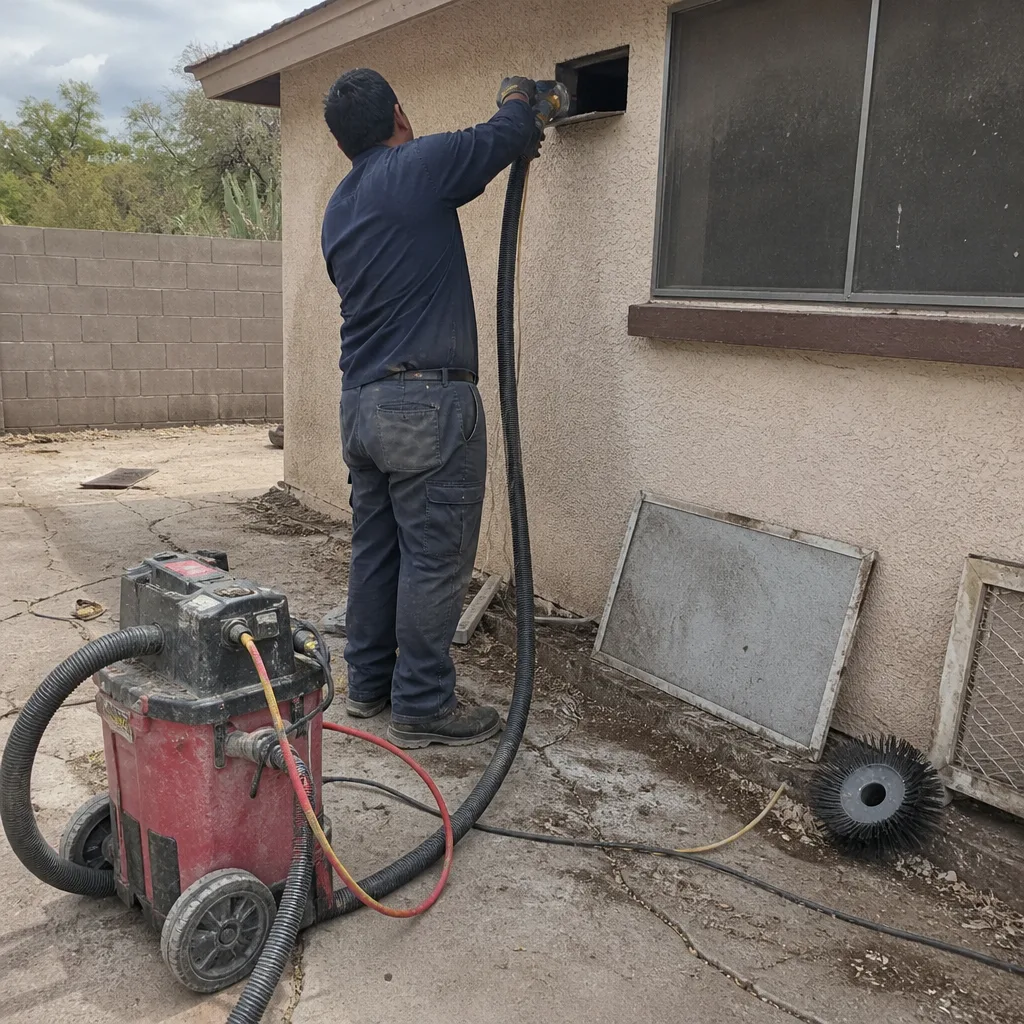 Before
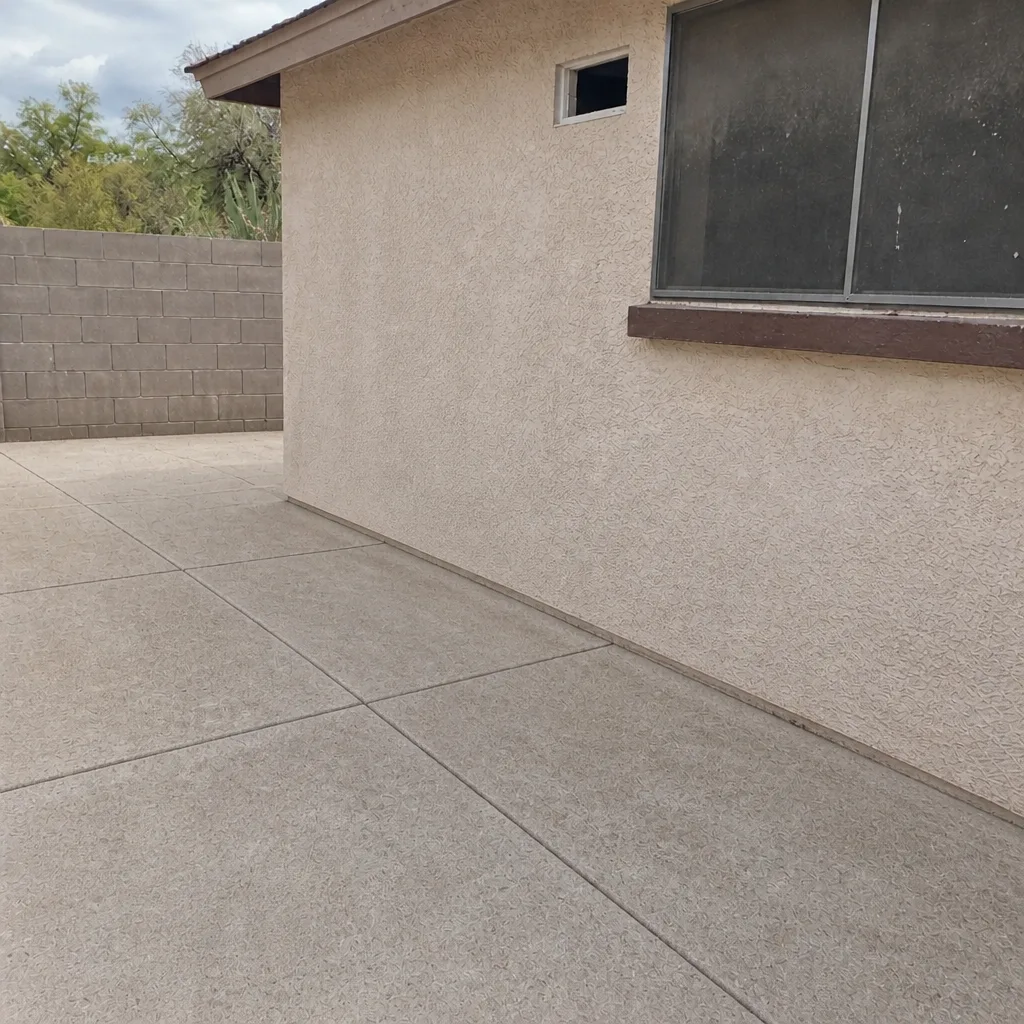 After
Frequently Asked Questions
Duct cleaning in Tucson is priced per system, not per vent, and the range depends on the system’s construction, the number of supply and return runs, and whether furnace and plenum cleaning are included. Typical estimates for a whole-home system are set in writing after the scope is confirmed. Be skeptical of per-vent teaser pricing; the honest quote for this work is a fixed number per system, agreed before work starts, with the written estimate setting the final price. Call (855) 618-0955 for an exact quote; estimates are free.
Cheap quotes are cheap because they use less equipment and less scope, not because the operator is more efficient. A quote built around a $79 teaser price typically covers a limited vent count and clean-only access, with the furnace, the returns, and the additional runs billed onsite. A quote built around a full-system fixed price includes the negative-air unit, the rotary brush, the furnace, and the resealing, because those are the steps required for the job to actually clean the ducts. The two quotes aren’t the same service at two prices.
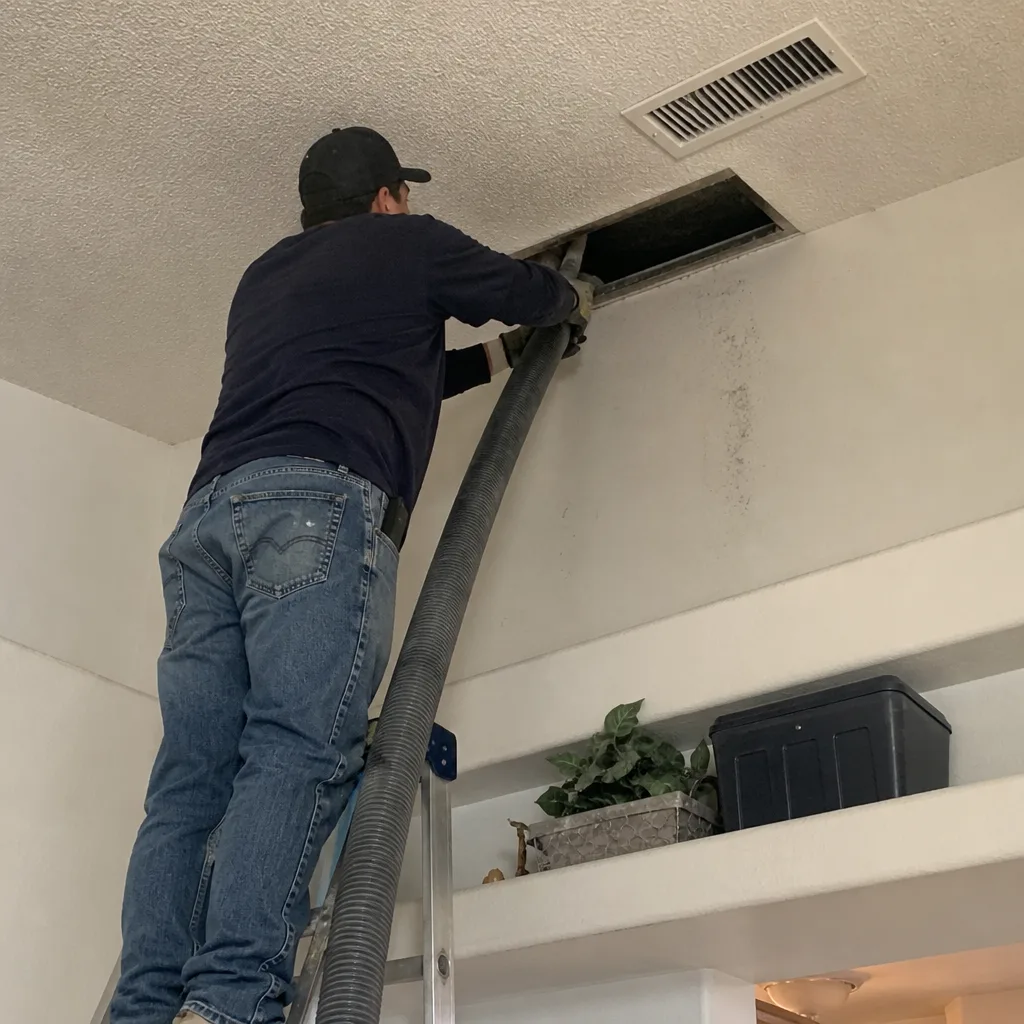
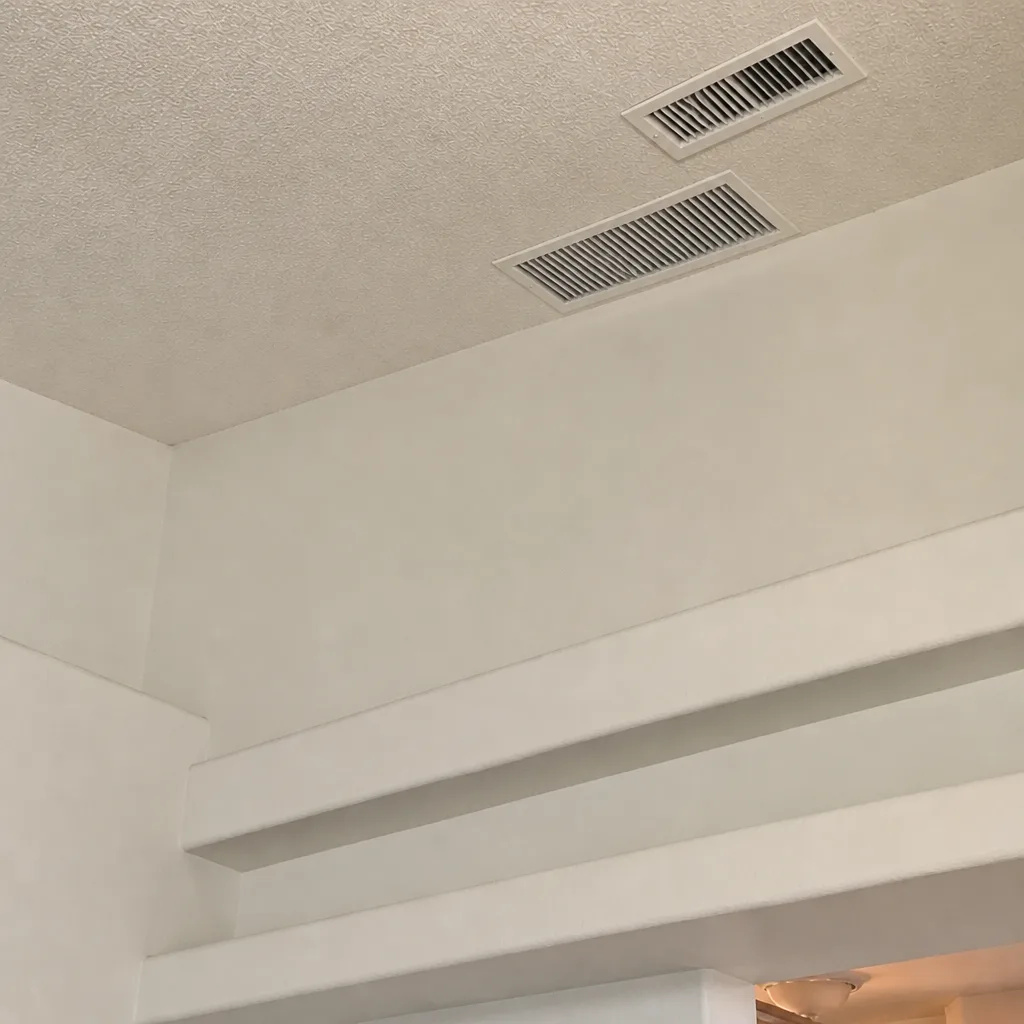
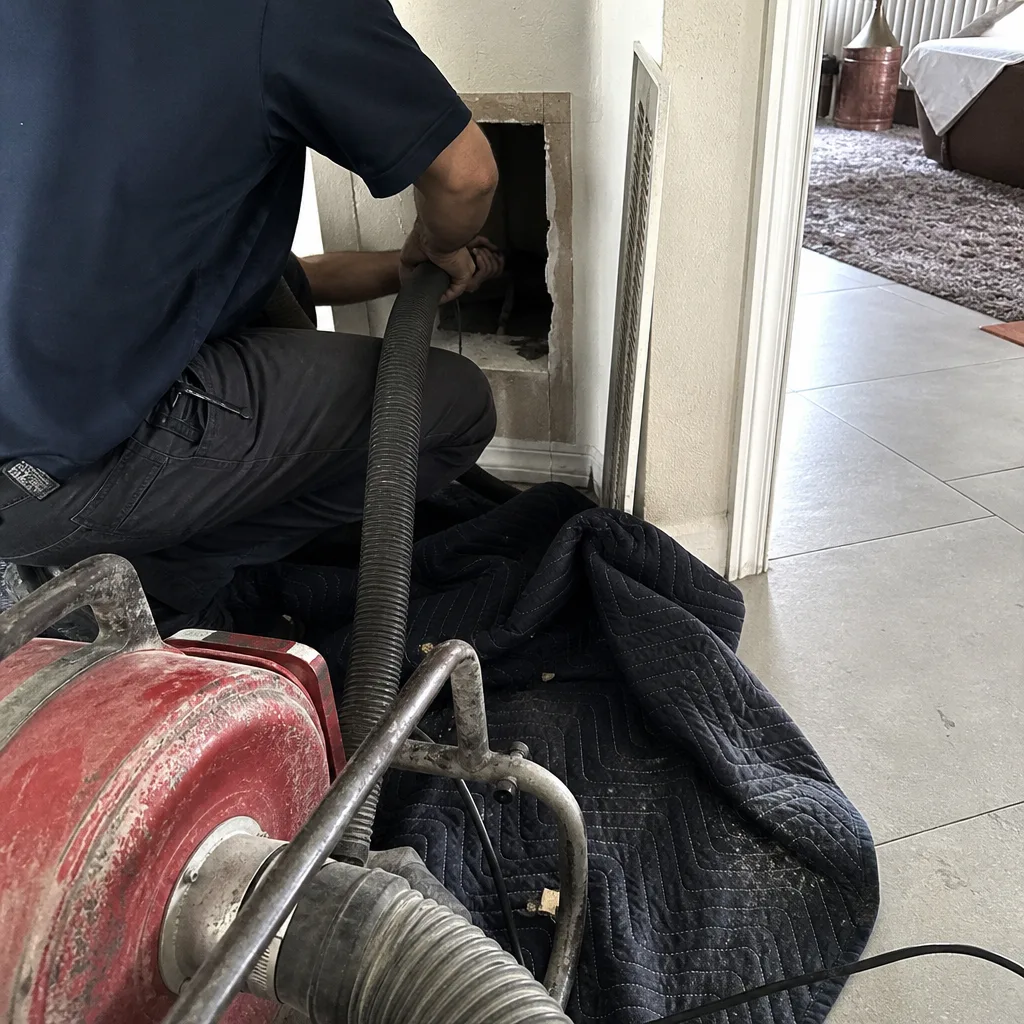
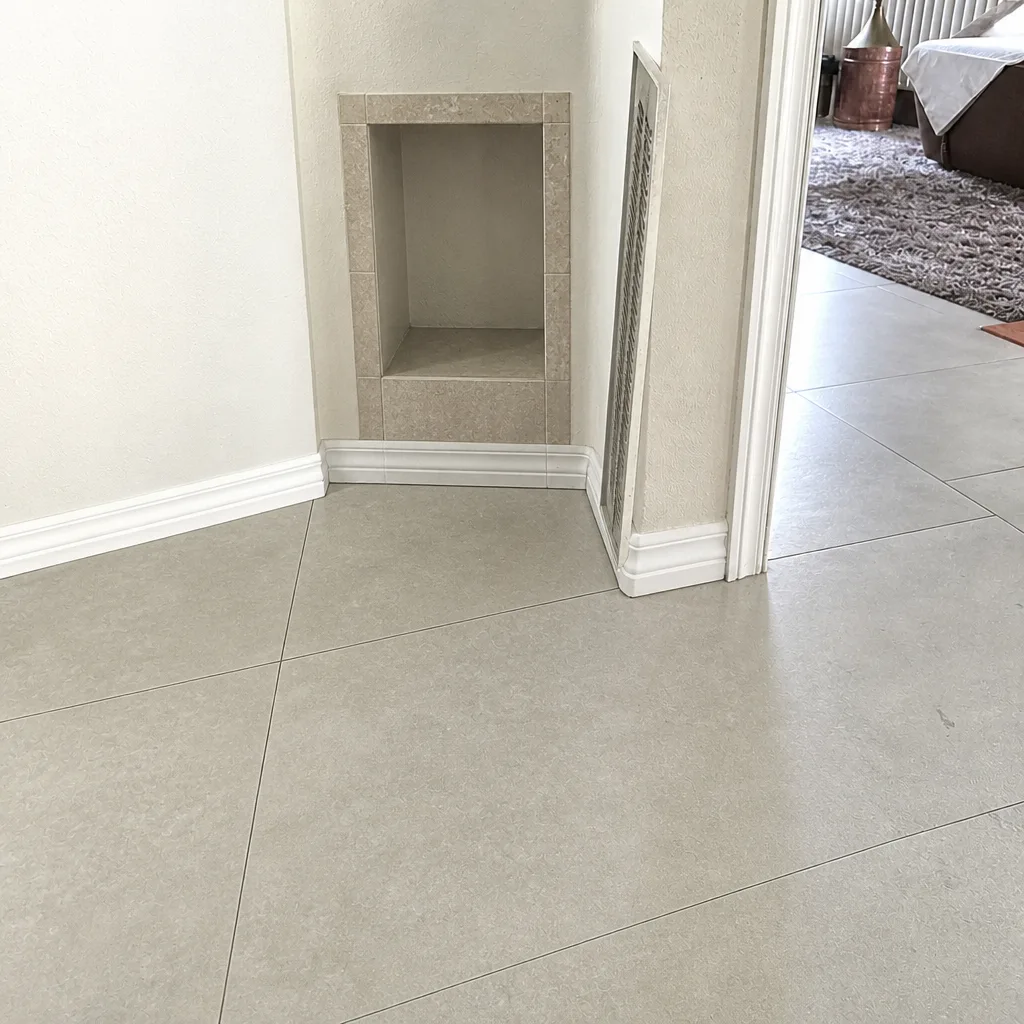
Ask for before-and-after photos of your own ductwork. A specialist operator can and should show you what the duct looked like before cleaning and what it looked like after, with the register grilles labeled to show which run is which. If a company refuses or shows you generic stock photos from a manufacturer’s website instead, the work cannot be verified. Make the request in writing when you book, and again when the crew arrives.
The usual industry guidance of every three to five years is a reasonable starting point, but Tucson’s dust load and long cooling season mean many homes here need it on a shorter cycle. Homes with pets, recent remodeling, or a smoker, or homes with a visible dust film returning to the registers within days of cleaning, push that interval shorter. A specialist operator will assess the system on-site and give you a real recommendation based on what’s there. Call (855) 618-0955 for a free estimate and an honest assessment.
Arizona does not issue a duct-cleaning-specific license, so there is no state credential specific to the trade. What exists is ROC registration for the contractor entity, which establishes a legally accountable business and a complaint process through the Registrar of Contractors. Any company claiming a state duct-cleaning license is making a claim that cannot be verified because the license doesn’t exist. Verify the ROC registration number in writing and check it yourself on the ROC website before booking.
A dedicated duct specialist is generally the better choice for duct cleaning and duct repair, because the equipment investment and training are specific to that work and aren’t usually carried by a generalist HVAC company. Where a generalist is the right call is on the HVAC mechanical side: refrigerant, compressors, and system replacement. If you need duct cleaning in Tucson and you want to know what your existing system actually looks like inside, Blackwell Air Duct Cleaning runs the full negative-air and rotary-brush platform for the job. Call (855) 618-0955 for a free estimate.
The Bottom Line
Arizona’s lack of a duct-specific license isn’t a reason to give up on vetting. It’s a reason to vet differently: verify ROC registration, ask the specific equipment questions, get the scope in writing, and confirm the before-and-after photos will be shown. Those four steps filter out the lead-generation operations and the van-with-a-vacuum crews that make up a meaningful slice of the market. The rest is matching the right service to your home, and in Tucson that means accounting for the dust load and the long cooling season that drive a shorter cleaning interval than the national average. Choose equipment, not a coupon number. Ask what’s inside your ducts, not just whether they’ll be cleaned.
Blackwell Air Duct Cleaning connects homeowners with independent local professionals who use professional-grade equipment from Rotobrush, Nikro, and Abatement Technologies, work with Honeywell and Aprilaire air-quality systems, and handle air duct cleaning, dryer vent cleaning, and air duct repair as focused specialties. For a free estimate in Tucson, call (855) 618-0955. We answer 24/7. Fast dispatch from 7am to 7pm, Sunday through Friday. Every job is a one flat price per system agreed before work starts, with the written estimate setting the final price.
Written by the team at Blackwell Air Duct Cleaning.